

Written by:

Our Legal Heritage: Viscount Horne of Slamannan
 Reading time: 4 minutes
Written by:

The Scottish bar and the solicitor branch have produced many interesting and successful lawyers, some of whom have succeeded elsewhere. Yet, some of the historic stars may well have been lost from sight with the passage of time, or for other reasons. There is one such neglected candidate for consideration.
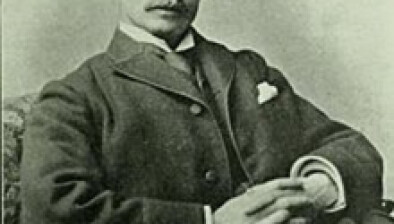
Robert Stevenson Horne was born in 1871 in Slamannan, Stirlingshire, the son of a Church of Scotland minister. He was educated at George Watson’s College, Edinburgh, and the University of Glasgow.
At Glasgow, Horne studied arts and law. He was the John Clark Scholar in philosophy 1892 and graduated MA with first class honours in Philosophy in 1893. He held the Ewing Fellowship at the University of Glasgow in 1894 and graduated LLB in 1896.
He spent a year teaching philosophy at the then University College of North Wales, before being admitted to the Faculty of Advocates and called to the bar in 1896. He specialised in commercial and shipping cases, and took silk in 1910.
During the First World War, Horne became director of railways on the Western Front with the rank of lieutenant-colonel in the Royal Engineers. In 1917, he joined the Admiralty as assistant inspector-general of transportation, becoming director of materials and priority in 1918, and director of labour, and third civil lord at the Admiralty later the same year.
He was unsuccessful in both general elections of 1910, but Horne was elected as member of Parliament for Glasgow Hillhead in 1918. He was a director of the Suez Canal Company, chairman of the Great Western Railway Company and director of other companies and banks.
He served as minister of labour, president of the Board of Trade and Chancellor of the Exchequer in the government of Lloyd George after the First World War. Horne was chancellor for 18 months from April 1921 to October 1922. When the coalition government fell in 1922, Horne declined to join the new government of Andrew Bonar Law.
Two years later Stanley Baldwin offered to make Horne the minister of labour once more, but he declined, preferring to concentrate on work in the city where he held directorships of the Suez Canal Co Ltd, the Peninsular & Oriental Steam Navigation Co Ltd, Lloyds Bank, and the Commercial Union Assurance Co. In 1934, he became chairman of the Great Western Railway Co. These appointments suggest remuneration beyond any judicial office.
Horne remained a member of Parliament until 1937, but he did not hold any others ministerial office. He was knighted in 1918 for his war services, and then raised to Knight Grand Cross in the 1920 civilian war honours for his services as minister of labour. He was ennobled as Viscount Horne of Slamannan, of Slamannan in the County of Stirling in June 1937.
Horne was elected lord rector of the University of Aberdeen in 1921 and he received honorary degrees from the Universities of Glasgow, Edinburgh, Aberdeen, and Birmingham.
Some historians mention that Horne was referred to by a senior colleague as “a Scottish cad”; others state, perhaps more accurately, perhaps not, that he was “that rare thing: a Scottish cad”. He died in Surrey in 1940, and as he never married his viscountcy became extinct.
The true place of Horne has been neglected. His loyalty to Lloyd George is notable, given the antipathy that is often associated with the Welsh solicitor. Horne moved from the mining village of Slamannan to university achievements and then to the legal profession.
In each of Horne’s successive employments - academic, legal, administrative, political, and business - he displayed the ambition, intellectual application, practical common sense, and social assurance said to be common among Scottish ‘sons of the manse’, and no doubt others as well. The remarkable point, however, is Horne’s ability to move into different areas and excel at each.

Share this article:

Subscribe to our newsletter to not miss articles like this one:
 SUBSCRIBE