
Written by:

Our Legal Heritage: Lord Shaw Of Dunfermline — lawyer, politician and judge
 Reading time: 5 minutes
Written by:
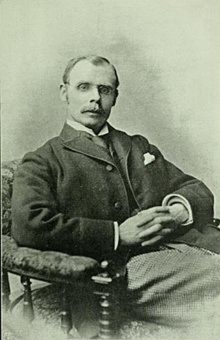
Lord Shaw Of Dunfermline
In the scheme of things in Britain, a political career has never been regarded as wholly inconsistent with later judicial appointment. Lord Salisbury wrote, and warned, in 1897 that “the judicial salad requires both legal oil and political vinegar: but disastrous effects will follow if due proportion is not observed”.
In the same year, he also observed more prosaically: “There is no clearer statute in the unwritten law than the rule that party claims should always weigh very heavily in the disposal of the highest legal appointments.”
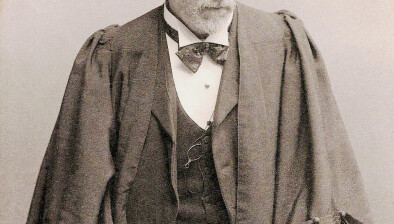
The career of Tommy Shaw encompassed that of lawyer, politician and appeal judge in the course of a long life. He was born the son of a baker in 1850 in Dunfermline in West Fife. Shaw was five-years-old when his father died, aged 53, and he was an only child. He went to local primary schools and Dunfermline High School. He was brought up in the United Presbyterian Church and started work at the age of 14 as a clerk in a solicitors’ office. He completed an apprenticeship and qualified as a solicitor, but he had his eye on the bigger picture. He attended the University of Edinburgh and graduated MA LLB; he was admitted to the Scots bar in 1875.
Shaw took to advocacy; a contemporary wrote, “with a jury he was superb. Some indefinable charm in his most suasive voice always seemed to sway them to his client. And in the art of cross-examination no one at the Scottish bar has approached his subtle, insidious way of extracting the truth.”
His legal practice was, however, greater than merely that of court work; for many years, for example, he held a general retainer to act as counsel to Glasgow Corporation. There was little in the way of quick advancement in the legal profession for Shaw; in his time Crown counsel were entirely political appointments. Shaw, having sided with the Liberal Party, was then linked with the political fortunes of that party. It was thus not until 1886 that Shaw was appointed as Crown counsel, but then only for the short period of Gladstone’s third administration. His next appointment was of a different magnitude, for in 1894 he was made solicitor general for Scotland. By that time he was a member of Parliament representing the Hawick District of Burghs from 1892 to 1909.
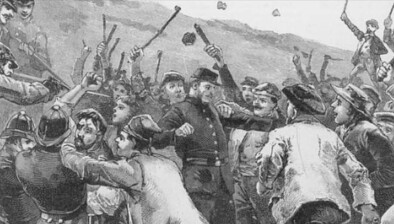
In politics Shaw was a strong Gladstonian: in particular he supported home rule, he was an ardent land reformer and later he was marked out as being a vociferous pro-Boer (anti-war) speaker. Shaw came closest to losing his parliamentary seat at the election of 1900, most probably on account of his anti-war stance. He spoke out at several public meetings against the war amidst scenes of disorder, and both he and his house in Edinburgh were attacked He also had close political connections, some thought too close, to Sir Henry Campbell-Bannerman.
Shaw became a government law officer, as lord advocate, in the Liberal administration of 1905–09. Few other Scots lawyers had the legal knowledge and the necessary acceptable political experience that Shaw had at that point. Although he was not in the cabinet, it seems clear that Shaw was close to the centre of power.
Shaw’s resignation as lord advocate brought with it a minor incident that has generally overshadowed his judicial appointment. An unexpected death of a Lord of Appeal in Ordinary left a vacancy for an appeal judge in the House of Lords.Two aspects might have been thought of as preventing Shaw taking up the post: first, there was another judge with a stronger claim, applying the ordinary rules of professional succession. Secondly, Shaw had never been a judge at first instance (a trial judge). because as lord advocate he had been the senior public prosecutor for Scotland. Even then it was thought preferable to have had some experience as a judge at first instance before becoming an appeal judge.
Shaw left Edinburgh and went to see the prime minister, by then Asquith, and secured the appointment as lord of appeal, which he took up in February 1909. Commentators sought to make much of this; there were suggestions of clients having been left in the lurch, but that is doubtful. In any event, Shaw served for twenty years as a lord of appeal and his speeches in appeal cases have been said to demonstrate a Scottish tradition within the judicial committee – a tendency to avoid pure legal analysis in favour of a keen sense of the political and social conditions bearing on the questions faced by the appeal judges. Shaw had political sense and courage and his whole attitude towards the law was said to be more that of a politician than a lawyer.
Shaw maintained an interest in literature and history. In later life he wrote several books. When he retired as an appellate judge in 1929 he was advanced from a judicial life peerage to the rank of viscount, becoming known as Lord Craigmyle. It has been said that Shaw’s contribution has been denigrated over the years.
He seems to have been rather outspoken and abrasive at times, especially towards his political opponents, many of whom were his legal colleagues. Shaw maintained a diplomatic silence on contemporary domestic political issues during his time as a lord of appeal, although he was an ardent supporter of the League of Nations. It is remarkable, however, that he made his way from a modest and probably impecunious background, via the advanced wing of the Liberal Party, to so senior a legal position. In his personal life Shaw married Elsie Stephen of Aberdeen and they had a long and seemingly happy marriage. They had one son and three daughters. The son,
Alexander Shaw (1883–1944) was Liberal member of Parliament for Kilmarnock from 1915 to 1923, later became a director of the Bank of England, and succeeded to the viscountcy on the death of his father on 28 June 1937.

Share this article:

Subscribe to our newsletter to not miss articles like this one:
 SUBSCRIBE