

Written by:

Graham Ogilvy
Managing Editor
Our Legal Heritage: France finally fully honours Dreyfus
 Reading time: 3 minutes
Written by:
Graham Ogilvy
Managing Editor
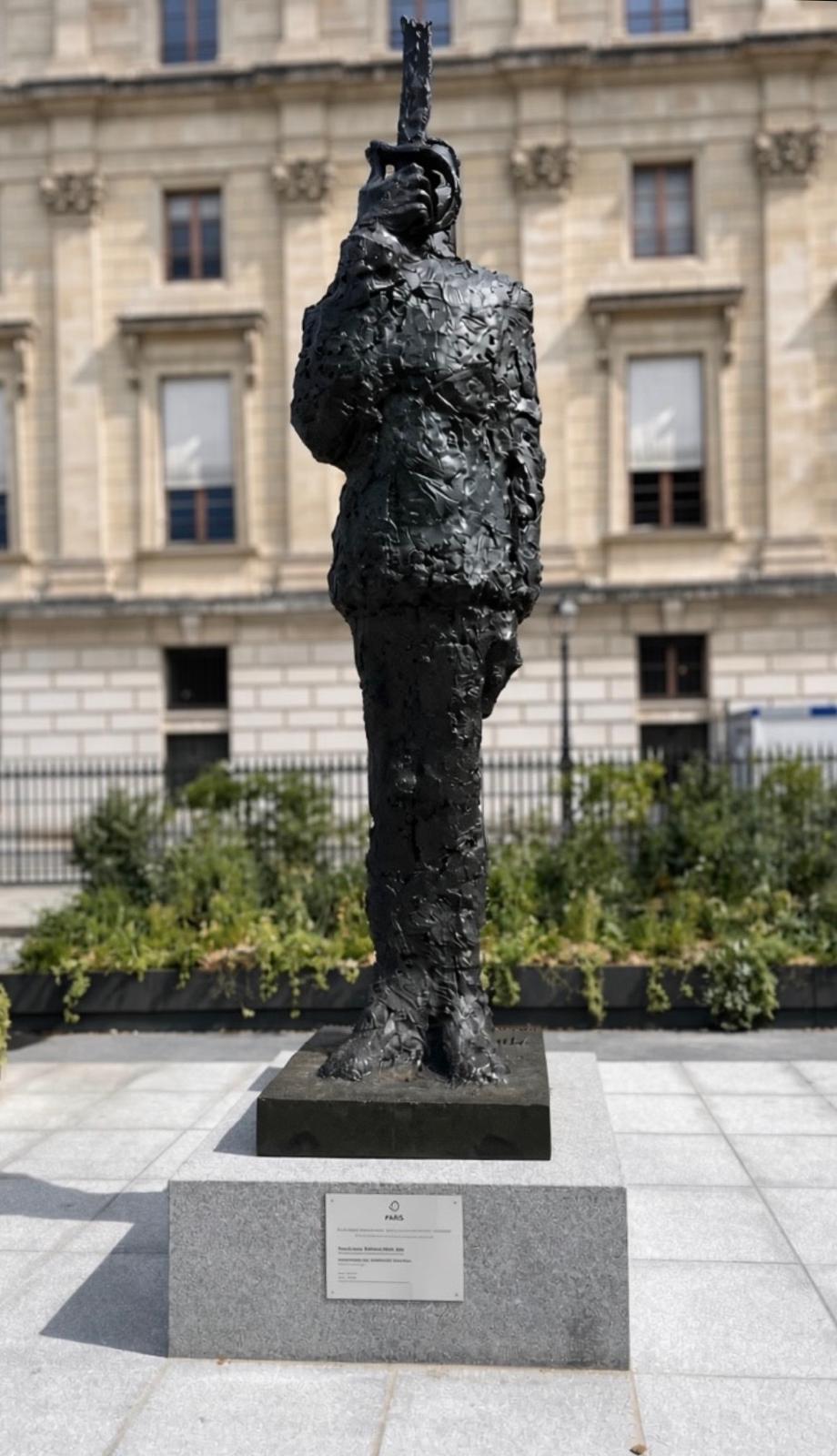
Last month, 120 years to the day after Alfred Dreyfus was finally exonerated by a French court, a statue was unveiled outside the court that cleared him and President Macron announced that July 12 will be an annual national day of commemoration of Dreyfus and the injustice that was inflicted upon him.
At the same ceremony, Mayor of Paris Emmanuel Grégoire, announced that a square named after Maurice Barrès, a nationalist writer and politician who wrote antisemitic tracts denouncing Dreyfus, would instead be called “Place Lucie Dreyfus” in tribute to the officer’s wife, who campaigned fiercely on his behalf.
The case that bitterly divided France began in 1894, when a torn French military document was discovered in the German embassy. Dreyfus, a capable 36-year-old captain from Alsace, was wrongly identified as the author. The fact that he was Jewish meant that he was targeted by an anti-semitic military establishment supported by nationalist press campaigns. No solid evidence was presented at trial, yet Dreyfus was convicted, publicly degraded, and sentenced to life on Devil’s Island.
It was only after handwriting analysis implicated another officer, Ferdinand Walsin Esterhazy, that efforts to reopen the case gained momentum. Yet when the new evidence was presented, military officials turned on the intelligence chief who uncovered it, jailing him while clearing Esterhazy.
Support for Dreyfus grew, most notably through Émile Zola’s open letter J’accuse, which condemned the injustice and propelled the case into the national spotlight. The affair polarised French society between the anti-Dreyfusards, who maintained his guilt, and the Dreyfusards, who fought to clear his name.
A second trial in 1899 ended in another conviction, though Dreyfus was quickly pardoned. Not until 1906 was his name formally cleared and his rank restored. He was promoted to major and served in the First World War before his death in 1935, aged 75.
Last year, Dreyfus was posthumously promoted to the rank of Brigadier.
In the presence of Charles Dreyfus, the grandson of Alfred, President Macron said: “The Dreyfusards formed the army of the Enlightenment and bequeathed to us that precious legacy known as Dreyfusism, this mystique we must preserve and uphold. Embracing it teaches us that a state governed by the rule of law is not measured by its ability to never err, but by its ability to correct itself. The French judiciary ultimately faced up to its own error, undid it and then repaired it. To do justice to Dreyfus was to honour the spirit of 1789.”
He added: “Dreyfusism is not just a memory; it is a state of mind that refuses to allow a person’s religion, origin, or community to become an excuse for delivering them up to blind justice and public opinion. Dreyfusism reminds us that antisemitism – whatever its roots or supposed explanations – is the enemy of the Republic. Yet we know that the old demons of antisemitism have never completely disappeared from our country. We know this because antisemitic acts, far from fading away, have continued to target people simply because of what they are.”

Share this article:

Subscribe to our newsletter to not miss articles like this one:
 SUBSCRIBE