
Written by:

Our Legal Heritage: The Old Minute Book of the Faculty of Procurators in Glasgow
 Reading time: 3 minutes
Written by:
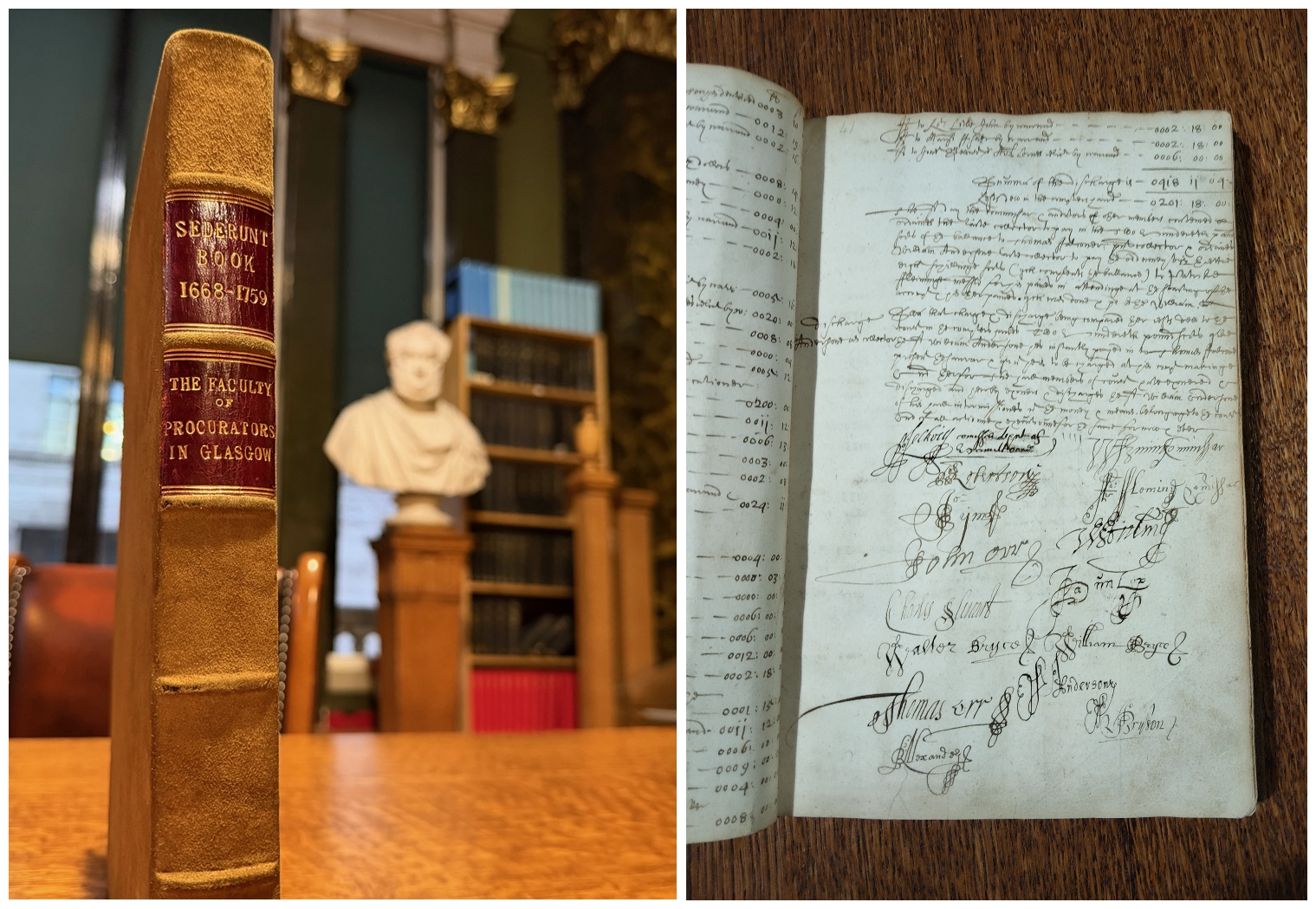
One of the real treasures in the Faculty’s archives is its oldest Minute Book, which opens rather abruptly with the words “The Tuell of November, 1668”. There’s no grand introduction – just a practical list of names and contributions, collected to support “poore decayed breithrein and servandis” of the courts, along with their widows and children. From the very first page, it’s clear that the Faculty was about more than professional status: it was a community that looked after its own.
While the surviving records begin in 1668, the Faculty itself was already long established by then; a point picked up beautifully in an 1897 article by David Murray (former dean of the Faculty), written for the centenary of the Faculty’s Royal Charter. Murray reminds us that although the Charter dates from 1796, the Faculty was already centuries old at the time. The Minute Books, he explains, begin in 1668 not because the Faculty was newly formed, but because earlier records have simply been lost to time.
The Minutes reveal a close-knit legal world. Early rules set out how procurators (and even their clerks) should behave in court – no swearing, no shouting, and “clatering within the bar” under pain of a 2 shilling fine. Legal business in those days was not confined to offices or courtrooms. Much of it happened in taverns or private houses, often with accounts settled in drink rather than cash. Murray paints a lively picture of procurators moving through the city on court days, between the Trongate, the Cathedral, and their favourite haunts, conducting business as they went.
Alongside its colourful social life, the Faculty took standards seriously, introducing apprenticeships, examinations, and training requirements to ensure new procurators were properly qualified. As these rules evolved over time, the Faculty also worked with the Commissaries on court procedures and fees, helping to shape both the conduct of practitioners and the wider practice of law in Glasgow while protecting its quality and reputation.
The Faculty’s charitable role also grew. What began, as the Minute Book shows, with small contributions each session developed into a substantial Widows’ Fund, supporting those in need within the legal community to the present. Even when legal reforms removed some of the Faculty’s exclusive privileges, Murray argues that it emerged stronger, larger, and more influential than before.
More than three and a half centuries after that first Minute Book entry, these records still give us a wonderfully human view of the profession - one rooted in mutual support, lively personalities, and a strong sense of shared responsibility. They remind us that today’s Faculty is built not just on law and learning, but on generations of community, care, and collegiality.

Share this article:

Subscribe to our newsletter to not miss articles like this one:
 SUBSCRIBE