

Written by:

Our Legal Heritage: The busy life of Sheriff Hugh Barclay LDD
 Reading time: 4 minutes
Written by:
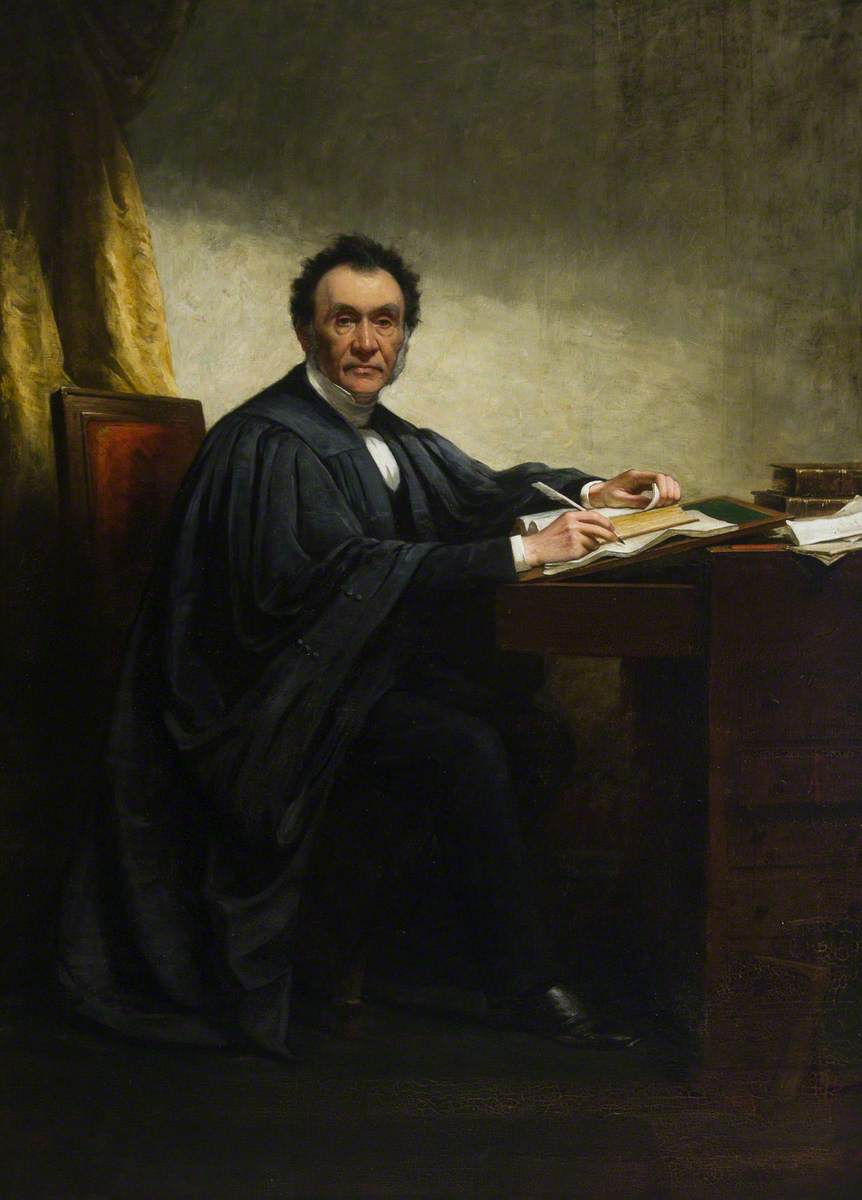
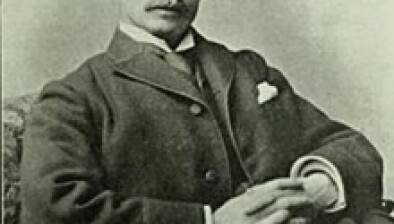
John MacLaren Barclay (1811-1886) – Hugh Barclay (1799–1884), LLD, Sheriff Substitute
Credit: Perth Art Gallery
Hugh Barclay, during his time as a sheriff-substitute, is perhaps the prime example of a local judicial office-holder who did far more than the terms of his appointment required him to do.
He was born in Glasgow in 1799, the son of a merchant. He attended classes at the University of Glasgow while he served his apprenticeship. He was admitted to the Royal Faculty of Procurators in Glasgow. Later, he was Parliament House Clerk to a WS firm in Edinburgh for some time. Then he worked on his own account for a while before becoming a partner in Russell and Barclay in Glasgow.
Barclay was in the Volunteers for a while at the time of the Radical disturbances in 1819. He was a member of and ‘an active helper’ in all schemes and work of the Church of Scotland. He was appointed sheriff-substitute for the western district of Perthshire in 1829, and in 1833 for the whole county. In 1855, he received the degree of LLD from the University of Aberdeen.
Barclay was an ex officio director of the Murray Royal Institution at Perth for many years, perhaps as many as 45 or so, from 1836, participating in administration and social events. He was also active in a variety of social reform movements, authoring a book on juvenile delinquency and helping to draft the earliest Scottish legislation on industrial schools.
Barclay’s publications were endless: some were law books, some reprints of public lectures, and others periodicals. These included The law of fugae warrants (1832); The law of Highways (1847); Juvenile delinquency; it’s causes and cure by a country magistrate (1848); A Digest of the Law of Scotland, with special reference to the Office and Duties of the Justice of the Peace (1852, and later editions); Patronage and Popular Rights (1857); Parole Proof (1858); and Public House statutes (1862).
There were also On the administration of criminal law in Scotland (1862); Judicial Procedure in Presbyterian Church Courts (1876); Hints to Legal Students (date unknown); The Local Courts of England and Scotland compared (date unknown); and Curiosities of the Game Laws and Curiosities of Legislation (date unknown).
Theology was not (and could not be) avoided then: Thoughts on Sabbath Schools (1855); Notes on the Psalm Book (1878); The Sinaitic Inscriptions (1866); Heathen Mythology Corroborative Or Illustrative of Holy Scripture (1884); and The Outline of the Law of Scotland against Sabbath Profanation (date unknown). See also WB Dunbar ‘Lotteries, past and present, legal and illegal: being a reprint of articles from The Bulwark [the Journal of the Scottish Reformation Society] revised etc., by Dr Barclay’ (1866).
Barclay contributed to the Journal of Jurisprudence and predecessor publications and also, amongst others, The Glasgow Herald with the nom de plume of Nestor. The latter may be extensive.
A fuller list of his work is likely to reveal other variable material and his Curiosities of Phrenology (1864) was reviewed, harshly, in The Spectator of 14 May 1864, p.22: “This gentleman, […], seems irresistibly attracted to the odd. His pamphlets are curious and amusing, but lead to no result, and are not even materials by which others may arrive at any.”
People with an interest in the countryside may have preferred Curiosities of the Game Laws and Curiosities of Legislation (dates unknown). Barclay republished a series of articles from The Glasgow Herald as Rambling Recollections of Old Glasgow (dates unknown).
Barclay, retired from the bench on 1 October 1883, on the 54th anniversary of his first appointment. He was married and had two sons and a daughter, and he died at home in February 1884. There are at least two representations of him with a photograph of c.1865 and, in Perth Art Gallery, a painted portrait, with a somewhat strained posture, by JM Barclay, of c.1868.
There remains a real sense that the true extent of the contribution of Sheriff Hugh Barclay to legal literature, social reform and the independent thought of judicial officers is yet to be uncovered.

Share this article:

Subscribe to our newsletter to not miss articles like this one:
 SUBSCRIBE