

Written by:

Graham Ogilvy
Managing Editor
Our Legal Heritage: The Battle of the Braes
 Reading time: 4 minutes
Written by:
Graham Ogilvy
Managing Editor
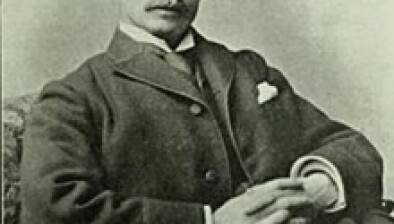
In April 1882 Kenneth Macdonald (see below), an Inverness solicitor, wrote to the lord advocate requesting a jury trial for his clients and took the highly unusual step of releasing his letter to the public. The letter in which Macdonald drew parallels with the treatment of his clients, Skye crofters, and that of the advocate Thomas Muir and the radicals who had infamously been tried for sedition in the 1790s, became a poster in the campaign to gain justice for the oppressed and impoverished people of the Highlands.
The case of the five men of Skye, charged with the deforcement of a sheriff officer seeking to serve eviction notices, became a national cause celebre and the circumstances of their arrest are celebrated still in Highland history as The Battle of the Braes, a momentous moment of resistance when the people finally turned against heartless absentee landlords.
Landlords across the Highlands and Islands had spent decades replacing tenant crofters with more profitable sheep farms, often through forced eviction in the Highland Clearances. By the 1880s, crofters on Lord MacDonald’s Skye estate near Braes had lost access to common grazing on Ben Lee, land they had used for generations. When they petitioned to have grazing rights restored and were refused, they responded with a rent strike. The estate’s factor obtained eviction notices but the crofters forced the sheriff officer delivering them to burn the papers on the spot.
The brutal wickedness of an earlier Lord MacDonald was exemplified in 1739 in the case of the Ship of the People when he conspired with his brother-in-law Lord Macleod to kidnap Skye men, women and children and sell them as indentured slaves in America.
The Battle of the Braes was seen as the worm finally turning not just by an infuriated Highland population but also by people across Scotland.
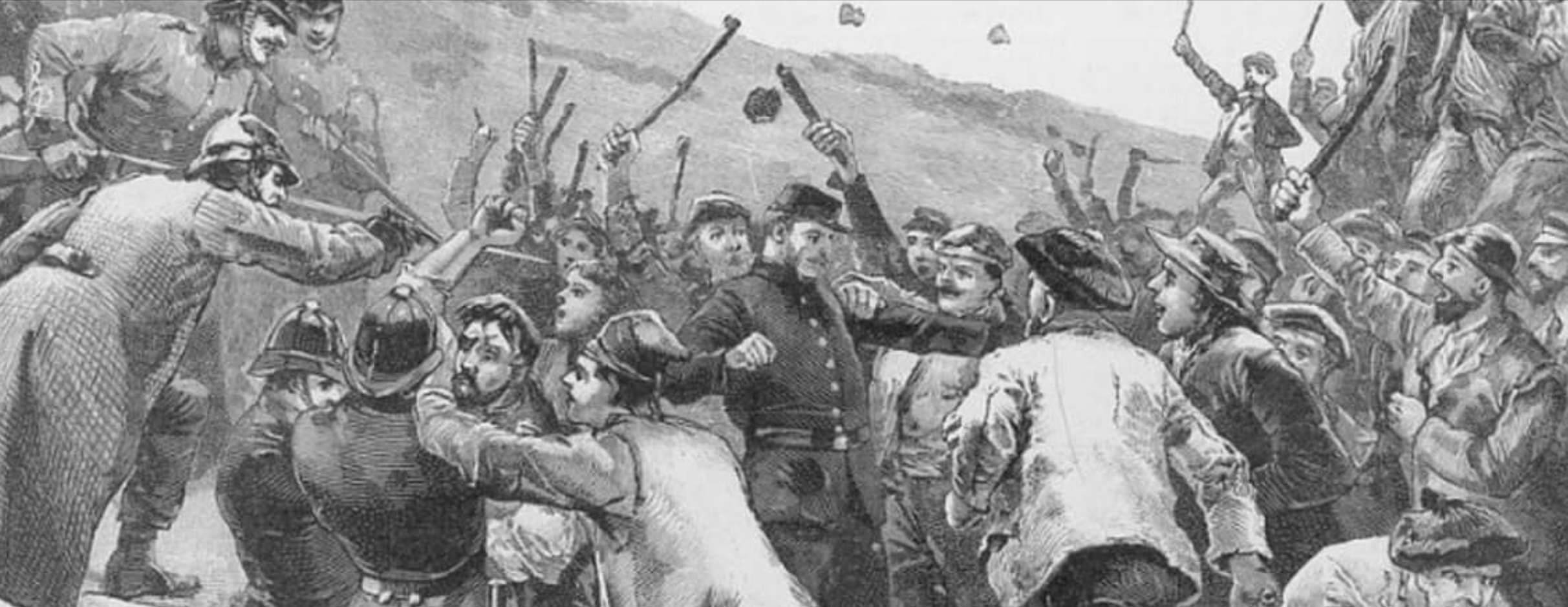
On 19 April 1882, a force of 47 Glasgow police officers led by two sheriffs and a fiscal left Portree to apprehend the ringleaders. In the resulting conflict hundreds of crofters armed with sticks, stones and farm implements, and led by women, forced the police into a fighting retreat. The crofters were unsuccessful in liberating the prisoners but the skirmish was favourably covered by the national press, appalled at the thought of a force of city police being sent in to a rural area and beating women.
An enormous crowd gathered at Inverness Sheriff Court to greet the five prisoners when they emerged from the castle, their bail having been met by sympathisers. Macdonald’s plea for a jury trial was rejected by the lord advocate. Conviction by a Highland jury would have been virtually impossible to attain. But the charge of deforcement did require a jury trial.
All of the accused pleaded not guilty and the charges of deforcement were dropped in court. Two of the accused were convicted of assault and the other three were found guilty of being accessories. The fines and legal costs were met in full by the Federation of Celtic Societies, sparing the impoverished men possible imprisonment.
Sheriff Patrick Blair was seen to have been lenient and declared from the bench that he himself would have preferred a jury trial to relieve him of “a considerable deal of personal responsibility.” But the entire process was seen as oppressive and the Battle of the Braes, as the opening skirmish in ‘The Crofter’s War’, was a triumph for the Skye people. It began a movement which would eventually result a year later in the establishment of the Napier Commission – formally the Royal Commission of Inquiry into the Condition of Crofters and Cottars in the Highlands and Islands – chaired by Francis Napier, 10th Lord Napier.
The commission spent five months touring the Highlands and Islands, taking evidence from around 800 witnesses at 71 meetings; its first testimony, fittingly, came from a Braes crofter, Angus Stewart, given in Gaelic.
The commission’s own report was cautious and, in the eyes of many crofters, failed to address root causes.
But it supplied Parliament with an evidential record it could not dismiss, and continued agitation by the Highland Land League, the Liberal Party and others, pushed reform further than the commission itself had recommended.
The result was the Crofters’ Holdings (Scotland) Act 1886, a landmark piece of legislation that gave crofters security of tenure, fair-rent arbitration through a Crofters Commission, and the right to bequeath their tenancies to their heirs – rights that had no equivalent for tenant farmers elsewhere in Britain at the time.

Share this article:

Subscribe to our newsletter to not miss articles like this one:
 SUBSCRIBE