

Written by:
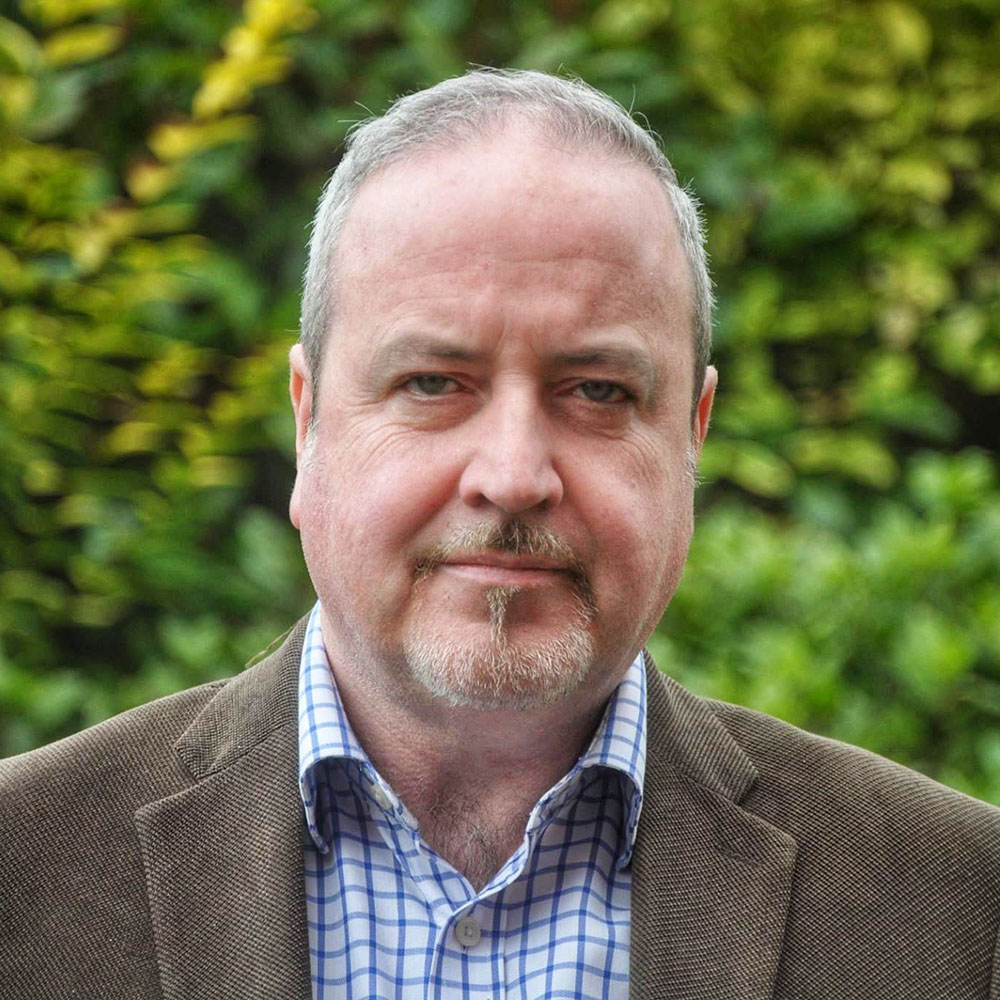
Lawyer of the Month: Paman Singh
 Reading time: 7 minutes
Written by:

Paman Singh
This year has singularly demonstrated to Paman Singh that a lawyer’s life can change dramatically in the space of a few short months.
In April, after just three years with the firm he was made a partner, while last month these professional achievements were complemented by a significant personal occasion when he was married in London, surrounded by friends and family.
“I thought it was a small wedding but was told that with 300 people on the day, it couldn’t really be described as such,” Mr Singh laughs.
For most lawyers, any one of those events would stand as a defining moment of the year. For Mr Singh, they came in rapid succession, transforming the first half of 2026 into a period of extraordinary change.
The year marks, he says “a significant milestone in a career that began with me turning up to my first ever hearing as a first-year trainee in 2015 with the right pen, the right selection of highlighters and entirely the wrong level of confidence”.
At Weightmans he has gained a reputation for his knowledge of employer and public liability, advising on matters that include unfair dismissal, discrimination, whistleblowing and TUPE, while also supporting clients with day-to-day advisory and strategic planning.
Mr Singh is dual-accredited in employment law and discrimination law and often appears at Employment Tribunal hearings in England and Wales. As a fee-paid employment judge he no longer appears at Scottish tribunals.
His route into the law was not a conventional one. After receiving a bursary to attend secondary school he went on to study law and French at the University of Strathclyde but quickly dropped out, then worked with his parents at their post office and corner shop at Peterson Park, between Drumchapel and Yoker in Glasgow.
“At that stage I didn’t feel very comfortable with the prospect of being a lawyer, and I was too immature to be entrusted with advising people on legal matters,” he recalls.
There followed a somewhat circuitous route which saw him return to law, completing an LLB then LLM in human rights run jointly at Strathclyde and Glasgow and then the diploma in legal practice at Strathclyde.
After a gap in his legal career which saw him working in property maintenance, carrying out plumbing, roofing and tiling, he joined Law At Work, a spin-out of the then ‘Big Four’ practice Maclay, Murray & Spens (which merged with Dentons in 2017).
“I’d completed two law degrees and didn’t think I was going to take it any further when Professor Charles Hennessy, who taught at Strathclyde Law School’s Law Clinic (whose student volunteers provide free legal assistance to people unable to get legal help by other means) saw me re-slating the roof of a building at Charing Cross,” he says.
“I heckled him, he gave me some back and then told me about an information evening at the university. That resulted in me joining the diploma course at Strathclyde, explains Mr Singh, who initially picked advanced criminal law and took employment law as an elective.
“The employment law elective included an element of advocacy and I considered that any advocacy opportunity was a good opportunity. The course was well run and interesting and I got to experience the mix of working on the corporate side of things alongside the contentious aspect,” he says.
Clients report that Mr Singh is both practical and personable. “I aim to get back with a solution that works rather than just quoting the relevant section and sharing a wall of text” he adds.
The Employment Rights Act 2025 which received royal assent in December last year, marked a pivotal moment in UK employment legislation. It has already begun to take effect, marking the first phase of an overhaul that will be rolled out through 2026 and into 2027 and will, says Mr Singh, significantly change the landscape in that area of his expertise.
Companies, for instance, are now are obliged to tell their employees of their rights to trade union membership, rights regarding dismissal and re-engagement (“fire and rehire”) are being tightened up, unfair dismissal law is being completely revamped, as are the laws around zero hours workers, while third party harassment liability will be introduced – whether related to sex or any other protected characteristic.
According to the Ministry of Justice’s Tribunal Statistics Quarterly for January to March 2026, Employment Tribunals received 50,000 single claim receipts during the 2025/26 financial year.
This represents a significant increase in pressure on the system. Single Employment Tribunal receipts rose by 39 per cent compared with 2024/25, while disposals fell by 12 per cent. The open caseload for single claims increased by 55 per cent over the same period. Including multiple claims, the open cases number is around 531,000.
The rolling out of one of the most consequential periods of regulatory change in decades for the labour market involves a particularly busy period for employment lawyers but Mr Singh is driven by a rigorous work ethic.
“Anyone who has dealt with me will tell you that that’s it’s normal to receive emails from me at various times, just as I work through my case load. Sometimes having to work into the wee hours and weekends is what it takes.”
This work ethic extends to Mr Singh being an employment law tutor at the University of Glasgow and a tutor on the diploma in legal practice at the University of Strathclyde.
He’s also been employment law committee convenor at the Law Society of Scotland for the past two years and is a mentor.
“My background and faith represent a huge part of who I am, and being active in the community and being able to help people in wider society is something we are required to do as Sikhs,” he says.
One of the traditions of Sikhism, he adds is langar, a communal meal served to anyone, regardless of their background. He is also a founder member of SEVA Scotland, where the gurdwaras in Glasgow club together to cook hot meals and take them out to feed the homeless in the city.
“I’m proud to be born in Scotland and to be Scottish. Sikhs have been a rich part of the Scottish tapestry for more than 150 years and I went as ‘tonto’ as anyone when McGinn scored against Haiti in the World Cup!”
Becoming a partner at Weightmans has been a goal since he joined the firm. “To be honest, the day job hasn’t changed that much as they have always given me the autonomy to bring in clients and work in a method which my clients know and prefer – but it’s important in terms of breaking down barriers and opening doors, something which Weightmans and my manager Jawaid Rehman have strongly supported.
At Weightmans in Glasgow, he’s still genuinely enthused about employment law. “No two days are the same: I’m currently advising a client on transferring 8,000 employees into their business and an appeal on bad practice in retail while I’m soon in London doing training on updates to the law regarding third party harassment and sexual harassment, before heading to Birmingham to deal with a large-scale industrial relations matter.
“I still get excited about employment law and discrimination law and seeing my junior colleagues developing and becoming tenacious practitioners in their own right – a generation of protégés, if you will!”
For someone who was initially markedly unconvinced about his prospects as a lawyer, the thrill of the job is clearly still there for Mr Singh.

Share this article:

Subscribe to our newsletter to not miss articles like this one:
 SUBSCRIBE