

Lawyer of the Month: Professor Helen Duffy
 Reading time: 8 minutes
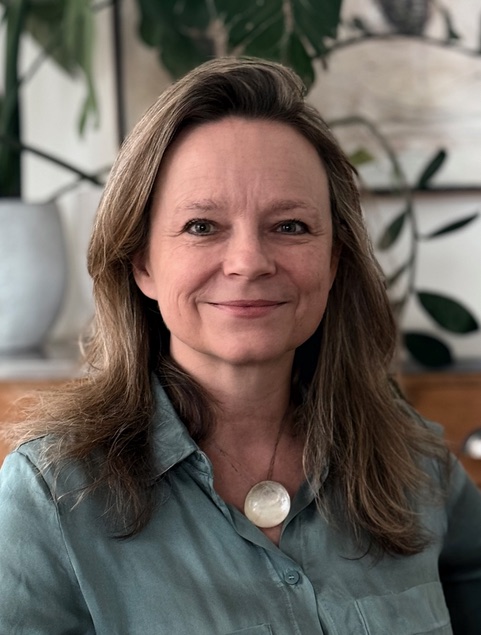
Professor Helen Duffy
Helen Duffy has been interested in human rights and driven by a desire to redress injustice since her youth. She now works as an international human rights lawyer, both as a professor of international human rights and humanitarian law at the University of Leiden in the Hague (Netherlands) and as head of Human Rights in Practice (HRiP), an international law practice specialising in strategic human rights litigation before international courts like the European Court of Human Rights.
Augmenting an already intensely engaged portfolio, she’s also an honorary professor at the University of Glasgow and teaches courses at the University of Melbourne (terrorism and human rights), the American University (international justice) and Oxford University (climate justice).
“We all multitask nowadays, don’t we, so it’s not a problem that’s unique to me,” she laughs somewhat self-deprecatingly while conceding: “It is challenging though, as in legal practice, you’re dealing with litigation deadlines and pressures, while there’s also the teaching and all the writing that academic work entails.”
She believes though that the two strands are complementary. “What I teach to my students and write about in the academic world is often informed by what I’m doing in practice, while academia gives me a chance to step back and reflect in a way we sometimes don’t have time for when we’re firefighting in our everyday jobs as lawyers.”
A recent high-profile case gained widespread coverage for Professor Duffy, who is international counsel for Guantanamo detainee Abu Zubaydah. She has won several cases on his behalf at the European court, and he was recently paid substantial compensation by the UK government in settlement of a civil claim in the English courts.
Zubaydah was subjected to brutal “enhanced interrogation” techniques by the CIA after the September 11, 2001, attacks and remains imprisoned after 24 years without charge or trial. She says his situation shows how far basic legal safeguards have been discarded for some people, and how blindly their allies were willing to support them. His legal claim against the UK was brought on the basis that its intelligence services were “complicit” in his torture and the government chose to settle rather than fight the case.
Professor Duffy has practiced international law in various contexts for more than 25 years. Her passion about human rights dates to her schooldays in Bishopbriggs.
“Growing up in the 1980s, we were surrounded by injustice all over the world, whether it was apartheid in South Africa, dictatorships in South America, social injustice closer to home or nuclear threats to world security – which we’re sadly seeing again today.
“Basically, we could become depressed by it all or try to do something about it. I knew nothing about law, but it occurred to me that it would be a useful course of study to help bring about change.” So she studied law at Glasgow university, before doing a masters in human rights law in London and the diploma at Edinburgh.
After qualifying and completing her legal traineeship she lived for several years in Guatemala, where she worked with indigenous communities that had survived a genocide.
“The military had wiped out whole communities that were seen to be supportive of the guerilla during the armed conflict there and I was among those working to bring cases to the Inter-American Court of Human Rights to try to get some recognition and reparation.”
Professor Duffy has also been the legal officer in the prosecutor’s office of the International Criminal Tribunal for the former Yugoslavia as well as working on the extradition of the Chilean dictator, General Pinochet, from Britain to stand trial for crimes against humanity. She has represented victims of slavery, was assistant secretary to the UK’s Scott Inquiry into “arms for Iraq” and worked with Human Rights Watch in New York on the establishment of the International Criminal Court (ICC).
Much of her career has involved representing victims of what she describes as the so-called war on terror, which was the subject of her doctorate and which, she says, continues to spread and cause violations of human rights around the world.
“While terrorism is a real problem and countering it is certainly important, we increasingly see it being used to target people such as judges, human rights defenders, NGOs, journalists and others that governments want to silence or delegitimise,” she says.
“It’s stunning how people are accused of being terrorists simply because they are prepared to criticise the state, because they are acting independently as judges and lawyers, or reporting on events that governments around the world don’t want them to report on.”
Professor Duffy credits investigative journalists and civil society with bringing abuses to light, which in turn enables legal and political accountability. “With so much suppression of dissent and misinformation, and democracy being so vulnerable, it’s vital to support a strong free press. Human rights litigation is one of the ways in which we’re trying to try to ensure that anti- terror frameworks stop being instrumentalised against those whose work we all need. Otherwise, the law loses its force too – if everyone is a terrorist no one is.”
She cites a case she recently filed at the European Court of Human Rights on behalf of Şebnem Korur Fincancı, a Turkish academic and former president of the Turkish Medical Association. During a press interview the medic had called for an investigation into claims that Turkey may have used chemicals in its conflict with the Kurdistan Workers Party (PKK) .
“She was prosecuted and convicted of terrorism exclusively because it was considered that she had brought the state into disrepute by suggesting there should be an investigation into credible allegations’”.
“That’s an extreme case, but it epitomises something I’ve often encountered in Turkey and elsewhere regarding the targeting and prosecuting of democratic actors through counter terrorism laws – which is a real assault on democracy and the rule of law.”
Today’s world she says presents a deeply troubling landscape. “There are more armed conflicts than there have ever been, and accountability for violations of human rights and the enforcement of international law seem more fragile, despite the legal frameworks we now have. Climate change exacerbates all the other threats. And there is a real lack of human rights leadership in the world.
While acknowledging the challenges are huge and the lack of easy solutions, she views the role of lawyers and international human rights law as an essential part of the ongoing struggle for human rights and justice.
“The issues I focus on in my practice – violations in armed conflicts and counterterrorism, attacks on judicial independence, inequality or climate justice - are ones that the law won’t solve alone, so we shouldn’t generate misplaced expectations. But depending on how we do it, human rights litigation can play a role. It can at least make it impossible to ignore the law with complete impunity, increase pressure for change or make sure victims are seen and recognised. Like all lawyers, at the end of the day the work is about defending the rule of law. One challenge is for people to understand that defending human rights of the most vulnerable is essential to defend all of our rights. It’s important to show that what happened to people like Abu Zubaydah is wrong and learn from it.
“There is no denying that it is a particularly challenging time for human rights right now and there’s a lot of work to be done. It is hard but I think we need to see the current threats as a call to action for all of us that believe in the rule of law.”
She remains motivated by the courage of the individuals she represents. “Mostly, I’m energised by the people I work with, some of whom have been subject to atrocious human rights violations and injustices, but they keep trying to use the law so that others won’t suffer what they have suffered,” she adds. “The resilience of people is very, very inspiring and motivating.”

Share this article:

Subscribe to our newsletter to not miss articles like this one:
 SUBSCRIBE