

Written by:
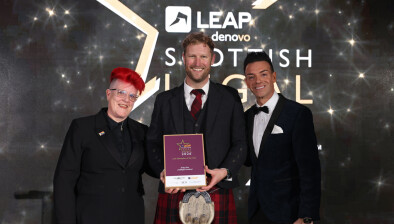
Lawyer of the Month: Nadine Montgomery Allam
 Reading time: 7 minutes
Written by:
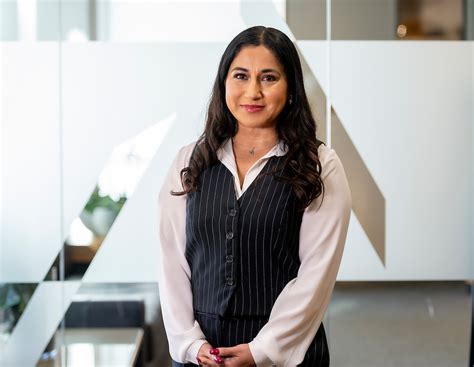
Nadine Montgomery Allam
There are many and various routes into the legal profession. For some, the law is a family tradition, inherited across generations. For others, it comes from an interest in debate discovered in lecture halls and university societies, where they first honed their skills in developing persuasive argument.
For Nadine Montgomery Allam, though, her journey into the law was driven by a deeply personal motivation, one sparked by family tragedy and her determination to ensure that others might find the kind of medical advice to which she sadly did not have access when her son, Sam, was born with cerebral palsy and left-sided Erbs Palsy, following a 12-minute delay to his birth due to shoulder dystocia.
Though she was deemed high risk due to her type 1 diabetes and had raised concerns about her ability to deliver a large baby she felt her questions had been left unanswered. She was subsequently induced and after a lengthy period was eventually advised that she would need to go to theatre for a trial of forceps and provided with a consent form to sign – but with no discussion.
That was in 1999 and, after facing rejection in the Scottish courts, she achieved a unanimous victory at the Supreme Court in 2015 as the pursuer in Montgomery v Lanarkshire Heath Board, when seven justices found her obstetric consultant to be negligent after failing to provide appropriate information regarding options and risks with respect to the mode of delivery of her baby.
It was a ruling that fundamentally changed the law on informed consent, a shift from a doctor-led model to one that respects patient autonomy. It was also an event that led Nadine into a significant career move, one that saw her becoming a solicitor with a special interest in medical negligence at Levy & McRae, the Glasgow-based specialist litigation firm where she has been involved in several high-profile cases, advising clients on a variety of civil claims.
“When Sam was born with brain damage, I couldn’t imagine how that could have happened,” she recalls. “The risks just weren’t explained, and I couldn’t get that out of my head. It’s since become my life’s work to ensure that every patient understands the potential risks of what they are agreeing to before undergoing a procedure.”
“I’ve come across some horrendous stories which have involved people being operated on incorrectly or coerced into having surgery – but everyone should be able to make their own decisions because we all have the right to exercise autonomy,” she says.
Nadine graduated from university with a BSc in molecular biology at the University of Glasgow. “Though I come from a family of doctors, when I was going to university, I looked at the prospectus, saw the term ‘DNA’ and thought, that’s it, I’ll do molecular biology,” she laughs.
She had been working in a pharmaceutical company before Sam’s birth: “When he was born I was very unwell and stopped work when he was 10 as I was becoming heavily involved in the case.
“I had to learn about legal matters quickly as the case was progressing and read up on seminal cases such as Hunter v Hanley – one of the most famous medical negligence cases in Scotland in which the Inner House of the Court of Session considered whether a doctor had fallen below the requisite standard of care and was, therefore, liable for the injuries suffered by the pursuer – as well as Sidaway and Bolitho.
“When it concluded in the Supreme Court, Sam was finishing school and needed a lot of assistance, so I was there for him as his disability prevented him from taking buses or trains by himself.
“When he was accepted by the University of Strathclyde to study software engineering, the disability services there explained they would take care of that and I suddenly felt redundant. It was a ‘what do I do with my life now?’ moment.”
The answer, after her years in court, was obvious: study law. “I applied to Strathclyde for its accelerated law degree and was accepted so I found myself studying law at Strathclyde while Sam was studying software engineering.”
She started her traineeship with Levy & McCrae in 2017 having been inspired by Elizabeth Rose, who founded L&M MediLaw, a specialist division of the firm. “I recognised that she wasn’t just another lawyer but someone with a real passion – and decided that was where I wanted to work.”
It was a natural progression for her to specialise in medical negligence. “Some people gravitate to commercial law or criminal law – but I had gained a lot of knowledge about medical law through personal experience and acquired a list of contacts in the area so it just fell into place for me.”
Meanwhile, she was gaining a reputation as a campaigner advocating informed consent and in 2019 became the first patron of Birthrights, a charity whose mission is to protect human rights during pregnancy and childbirth and whose Basic Birth Rights factsheet is available in 20 languages including Arabic, Urdu, Polish, Punjabi and Ukrainian. “Basically, informed consent should be a dialogue,” she says. “It’s a conversation between the doctor and the patient, discussing the risks and reasonable alternatives for the procedure involved.
Nadine also became an ambassador for the charity Baby Lifeline in 2020 and joined forces with their team to help deliver accredited, high-quality multi-professional training for the maternity sector, aiming to ensure safety for mothers and babies through promoting best practice.
Unsurprisingly, her drive and passion don’t leave much time for leisure or entertainment. “My whole life is consumed in doing this work,” she admits wryly. “I’m constantly in demand for speaking engagements – not because of who I am but because there are relatively few people who are as involved in this area of the law.”
Nadine maintains an impressively energetic workload outside the office: she was recently invited by Sir Jeremy Hunt MP to speak at the House of Commons on behalf of the All Party Parliamentary Group on Patient Safety.
She regularly speaks at medical conferences on the importance of valid patient consent last year was awarded an honorary fellowship of the Association of Surgeons of Great Britain and Ireland.
She was a member of a small working group party updating the national “Consent for Anaesthesia Guidelines” for all UK patients and completed a three-year term on the Health and Medical Law Sub-Committee at the Law Society of Scotland.
She has been published in The Lancet, BMJ and The Medical Journal of Australia and co-authored a chapter for Oxford University Press (4th edition), Oxford Textbook of Shared Decision Making for which she also wrote the foreword.
She is currently studying for an MPhil in medical ethics at the University of Strathclyde.
It’s a demanding schedule but her dedication to ensuring patients understand medical risks stems from her own personal experience. “Plus, my daughter has a baby so I’m a granny now which keeps me occupied at the weekends,” she laughs.
And it’s an area of the law of which the public is becoming more aware: figures in 2025 showed that 11 of Scotland’s 14 health authorities paid out £49,663,786 in medical negligence between 2019-20 and 2023-24 and In 2023-24 alone, £15,250,939 was paid to settle 115 claims.
“Sometimes you find your life’s purpose through your own tragedy. And while Sam’s experience has had very sad consequences, advising others who have had suffered in similar ways is what I love doing.”

Share this article:

Subscribe to our newsletter to not miss articles like this one:
 SUBSCRIBE