


Written by:
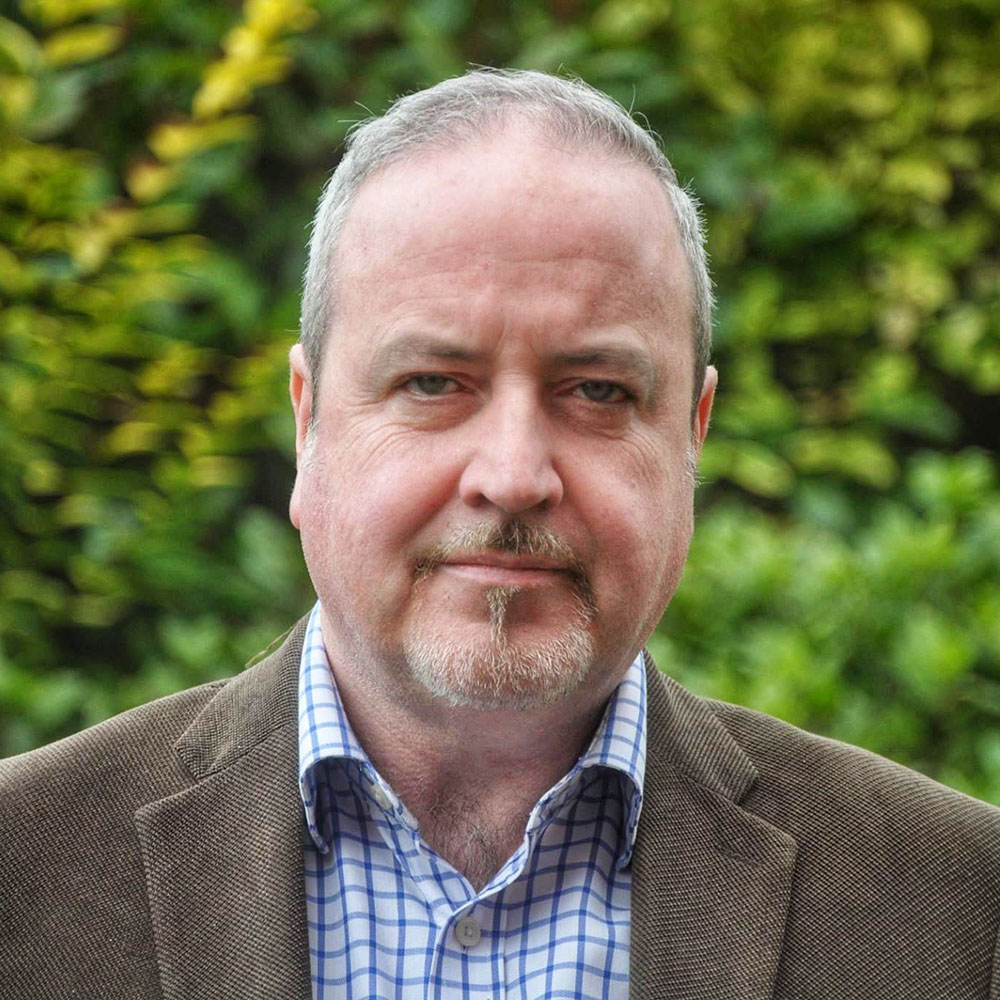
Lawyer of the Month: Jamie Dunne
 Reading time: 8 minutes
Written by:

Jamie Dunne
Jamie Dunne’s focus is advising on technically complex matters in a clear, understandable and useful way. Which is something of a relief: as a lawyer working across competition law, public procurement and subsidy control he operates in one of the profession’s most technically demanding areas.
It’s one that requires a mastery of multiple interconnected legal regimes and sector-specific regulation – and as he himself concedes, his remit is one that “can be quite daunting and complicated”.
The legal director at Brodies in Edinburgh advises on contentious and non-contentious public procurement matters, subsidy control and State aid, merger control issues (including CMA and European Commission clearance processes), competition damages actions and competition compliance.
He also has a particular interest in sectors subject to economic regulation, including energy, water, telecoms, rail, ports and airports, financial services, housing and health services, and further and higher education.
“I do a lot of work around of public sector borrowing, revenue raising and spending rules and financial regulation of that sector while the other side of my work is in the private sector and the systems that regulate how private companies compete fairly in the economy,” he explains.
Competition law, he adds is about making sure that businesses compete fairly and don’t enter into agreements with each other that distort competition and about regulating how the biggest companies use their market influence.
He cites the recent example of Google being fined €4.1 billion euros by the European Commission because of an EU antitrust ruling over agreements that forced phone manufacturers to pre-load only Google products such as Search and Chrome on their products to the exclusion of rival products from competitors.
Other sectors of the economy such as water, electricity, gas, ports and airports involve special regulations and much of what he does involves advising public bodies, local authorities and the broader public sector – such as non-departmental public bodies – on what they do with their money and businesses that have contact with that sector.
Now highly experienced in an area of the law that demands an ability to break down difficult legal problems and construct logical, evidence-based arguments, what impelled him to specialise in that field?
As Dux of his year at Currie Community High School on the west side of Edinburgh and the first person in his family to have gone to university, his academic promise revealed itself at an early stage and in fact pursuing a career in academia was his initial inclination.
He graduated with an LLB from the University of Edinburgh in 2010 then progressed to complete a Diploma in Legal Practice and then an LL.M in European Law at the same university, while also working as a sales assistant at John Lewis during his studies.
“I originally did a master’s degree because I intended to be an academic specialising in European Union law and subsequently decided to do a traineeship so that I could also qualify as a solicitor,” he says. “The plan was to save some money before doing my PhD, but then Brexit happened, so getting a PhD in EU law was no longer such an enticing prospect.”
However, he adds: “All the things I currently do are based heavily on EU law – who government gives money to, how it picks contracts and the fair competition rules surrounding that. Because I was an EU law expert, those were the areas that I picked up on when I qualified as a solicitor and those are the areas I’ve been specialising in ever since”.
Like many others in the legal profession, the field is a fast-changing one. “We’ve had the Subsidy Control Act 2022, the Procurement Act 2023 and the Digital Markets, Competition and Consumers Act 2024 so recent years have seen big changes in replacing EU law with new UK systems,” he says.
The main challenges for lawyers in his field will be around all those new pieces of legislation, whether in competition, public procurement or subsidy control, he adds.
“Every principle of the legislation is new. Even if it’s similar to the previous rules, everything has been back on the table for people to argue about and litigate and it will be years before we really begin to know what that entails, so these areas of the law will continue to move very quickly.”
As UK law evolves post-Brexit, divergences between public procurement rules in Scotland and the rest of the UK are set to grow wider. That, and his acknowledged expertise, led Bloomsbury to engage Mr Dunne to write a textbook on Scottish public procurement rules, titled “The Law and Practice of Procurement in Scotland”, which is aimed at procurement professionals and in-house lawyers in the public sector. It is currently anticipated for publication in early 2027.
Mr Dunne’s secondment experience at a major economic and competition regulator, including drafting subordinate legislation and guidance has been, he says, both useful and interesting. He has subsequently become one of a panel of five external drafters of legislation for the Scottish Parliament.
“I spent some of my early career working for Ofwat, the water regulator (set to be abolished as part of reforms in the water sector in favour a new integrated regulator for England and a similar one for Wales) when the water sector was opened to competition,” he says.
“I got to help write the regulations, codes and so on that govern the water sector there – so whenever I’m asked to pick up anything associated with water regulation in England and Wales, it’s always quite fun to see something that I helped to write.”
He is also convener of the Law Society of Scotland’s competition law sub-committee and a current member of the Scottish Competition Forum’s steering group. “It’s been a really interesting and exciting time to be doing that, and to speak on behalf of the Scottish legal profession when it comes to all the new developments,” he says.
And, if that weren’t an entirely engaged schedule, he has also tutored at the University of Edinburgh for the past 16 years in constitutional, administrative and EU Law, which he describes as a labour of love.
“I do it because I really enjoy my subject and it allows me to try to inspire the next generation of lawyers to find what I do as interesting and exciting and rewarding as I do. It’s also a good way to keep on your toes: every year you’re teaching new people from scratch about a subject that can be quite intimidating.”
There is, though, some limited downtime, which Mr Dunne spends singing with the Edinburgh Gay Men’s Chorus which recently performed at a choir festival in Brussels. “I took it up in my early twenties and it’s my favourite thing to let me unwind from the day job.
“We have a broad repertoire. Our music director does his own arrangements, and we sing everything from traditional Scottish folk tunes all the way through to recent pop hits adapted for four-part male voice harmony,” he says.
While Brodies’ origins go back to 1739 in Edinburgh when Thomas Brodie was admitted as a Writer to the Signet, Brodies LLP was established as a limited liability partnership in 2004 and says Mr Dunne: “It has grown so much over the past 20 years in particular with staff across Scotland and England and with clients all over the world that it’s now a truly modern, international law firm”.
To explain his personal motivation, he returns to his early days at John Lewis: “In addition to dealing with orders I used to repair lights. People brought something in that wasn’t working as intended and I helped to fix it.
“What I do now is what I’ve always done. My job is problem solving and I still enjoy helping people resolve difficulties. One of the reasons I love my job is that every day brings something new that I’ve not tackled before – and while it will probably be in one of the areas that I specialise in, it’s never the same problem twice.”

Share this article:

Subscribe to our newsletter to not miss articles like this one:
 SUBSCRIBE