

Written by:

OLH: Histories of private environmental law: part II - Earth
 Reading time: 7 minutes
Written by:
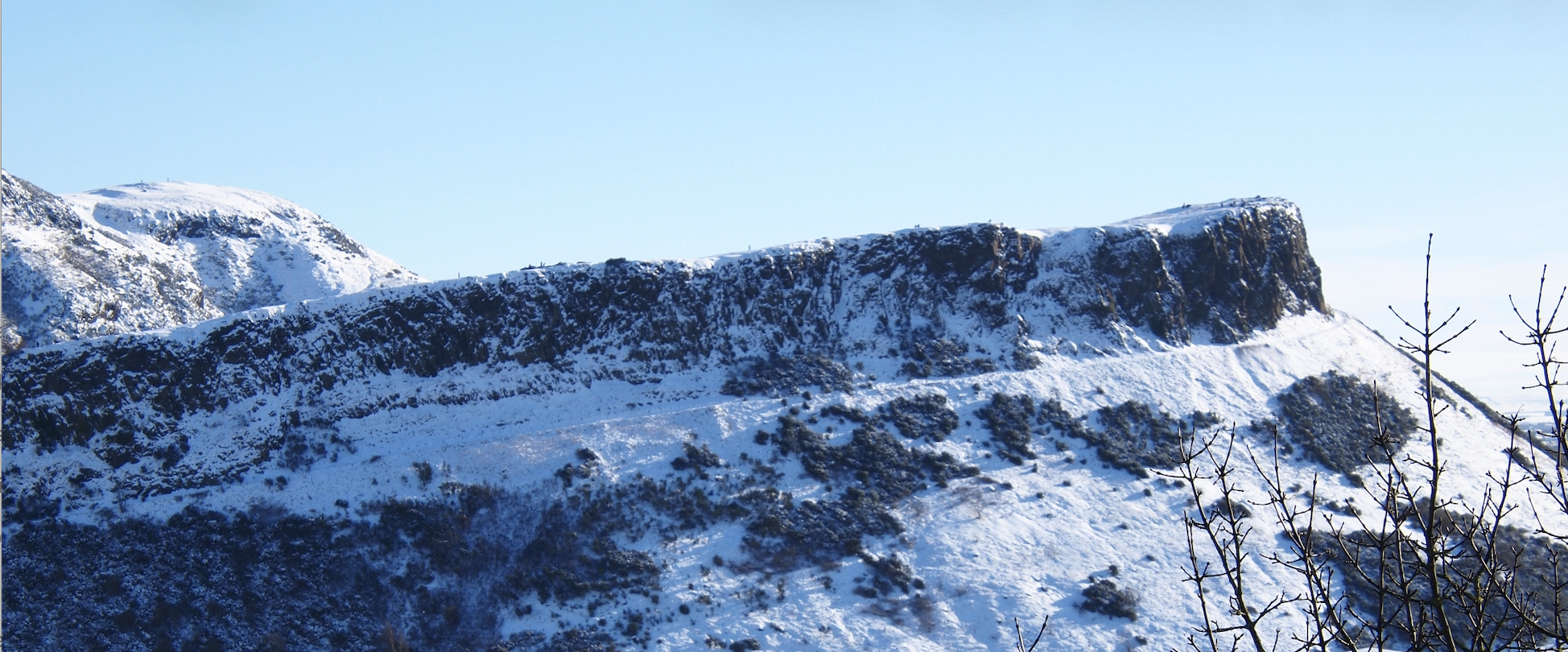
Salisbury Crags
Officers of State v Earl of Haddington, (1823) 2 S. 420, (1830) 8 S. 867 & (1831) 9 S. (HL) 13
The second element of the ancients, Earth, provides the theme for the second in this quartet of weekly articles about the use of private law to protect the environment. Today we see property law invoked to defend the stones of Scotland.
The Lothians have known little geological drama these last three hundred million years; almost a whole fourteenth of the life of the planet. The main activities have been deposition and erosion by water in its liquid and frozen forms. But the constancy of the process is equal to its immensity; the depth of material that has been removed may be measured in vertical miles. The current ice ages have brought the surface so far down as to expose the roots of volcanic structures of Carboniferous age; Edinburgh’s summits such as “Arthur’s Seat” and the Castle Rock, which solidified as magma pipes beneath the surface, on which rose the volcanic complex they fed, itself maybe three thousand feet in height. Likewise one of the youngest of these striking features: the massive horizontal intrusion by molten dolerite, which some 325 million years ago forced a way laterally between older sedimentary rocks. One glacier-shattered edge of this, we now call Salisbury Crags.
Settlement of Edinburgh began on these hills which we have mostly abandoned. Before the tenth century, by when the mountain seems to have become known as Craig nam Marbh or the Hill of the Dead, the King’s Park of Holyrood was home to at least four Iron Age hill-top settlements. Then folk moved to the lowlands. They climbed back up only to win building stone to raise a low-ground city. Salisbury Crags were quarried from at least the sixteenth century. Between 1529 and 1536 much of the Palace of Holyroodhouse was built with stone from the overlooking crags. “Houses rise and fall, crumble, are extended”: the next three centuries saw a great deal of Edinburgh’s buildings and roads made with Salisbury stone. Much as the sandstone at Craigleith was the source of choice for the New Town to the north, the Crags were handier for the city’s south side. The main quarries are still plain to see: Camstone on the eastern dip slope, and the South Quarry at the end of Radical Road. From the latter alone some 300,000 tons of dolerite were dug: “old stone to new building”.
So there was money to be made. Nowadays, where benefits are placed in the gift of a man by giving him a public office, we tend to think ill if he sells them for private profit. Lately Historic Environment Scotland (HES) has had rough publicity, but nothing compared to what would ensue if, say, as the manager of the King’s Park, its chief executive leased the crags to quarrymen and pocketed the rents. Yet the proper border between public office and private profit is not always set in stone. No private man of business is more respectable than a Writer to the Signet, but the Writers began as civil servants living from the fees that they charged to citizens for transacting public business.
In such more relaxed times, from the seventeenth to the nineteenth centuries, the Hamilton Earls of Haddington were the Keepers of the Royal Park of Holyroodhouse. Not everyone finds absentee landlords a bad thing. With the monarch safely distant in England, the Earls took the Parable of the Unjust Steward literally: they dealt with the Park as their own, for instance by granting leases of the quarries designing themselves as the proprietors
The benefits were not just the construction of roads such as Edinburgh’s Regent Road and Waterloo Place, but also for science. The South Quarry uncovered Hutton’s Section. Now in our brave new world HES purports to forbid walking under the Crags. The civil servants would have halted the Enlightenment, prohibiting one of the world’s foremost geologists, James Hutton (1726-1797), from spotting that the dolerite magma had shifted a piece of the underlying sedimentary rock, contradicting traditional notions of Creation by showing the truth: ancient rocks had moved rocks more ancient still.
However, by 1814 the eighth Earl’s exploitation had increased to annual sales of some 36,000 tons of stone from the Park, not just for use in Edinburgh, but for export to London and further.
It is interesting to imagine what Edinburgh’s eastern skyline would look like if that had continued down to today. The cliffs could all be gone, sparing HES. need of now squawking about risk of rockfall fit to make Chicken Licken look like Charles Bronson.
Sadly for our public servants, but happily for the rest of us, that did not happen. The increasingly destructive sights and explosive sounds of the quarrying were obvious in the city. Public protest led the authorities to act.
In 1819 the Officers of State took action against the Earl in the Court of Session for declarator and interdict. In defence Haddington pled his hereditary title as Keeper, explained and fortified by prescriptive usage. These defences Lord Pitmilly sustained with absolvitor. The Inner House adhered. The House of Lords allowed an appeal to the extent of a remit back for the Senators’ re-considered opinions. They were various. Lord President Granton (Charles Hope) with Balgray, Gillies and Corehouse was tersely and vaguely supportive of the noble defender; Lord Moncreiff gave clearer arguments to the same end. Lords Craigie, Cringletie and Mackenzie each at length articulated trenchant arguments for interdict. Mackenzie added that the Earl’s plea of prescription might as logically have been an argument that ownership of the Park had passed from the Crown to his family, presumably including the Palace itself. Meadowbank, Medwyn and Newton opined that the Earl could quarry only for use within the Park. Lord Glenlee devised a fine recipé for further litigation: work should stop if it injured the Park. As for Lord Pitmilly, happily he agreed with himself, standing by his original interlocutor.
The result was judgment that the Earl could not quarry for the purpose of general sale, and that, after 11 years of litigation, there should be further proof about the limits of his rights.
The Officers of State disagreed. So on a second appeal did the House of Lords. The Whig Lord Chancellor, Henry Brougham, took time off from leading Britain’s fight to abolish slavery worldwide to preside at the hearing. He was well-qualified to do so, as a Scots advocate educated beneath the Crags, when the Royal High School was still in High School Yards.
Brougham had a way of putting it:
“It was … certainly a strange proposition, that a party who was the keeper and preserver of the park on behalf of the Crown, could by any usage be entitled to say to the Crown, for whom he was bound to preserve, that he was entitled to carry off and destroy. It was impossible to construe his title to that effect … the judgment recognizing his right to work quarries at all must be reversed”.
The view of the massif that Edinburgh enjoys today is the gift of its son Henry Brougham, not to mention Carboniferous volcanism.
The Keeper of Holyrood Park Act 1843 stripped the ninth Earl of the Keepership. The Earls indeed mended their ways: in 1966 it was the twelfth Earl who raised in Parliament the breathtaking damage inflicted by the quarrying of Edinburgh’s predecessor as the capital of the Lothians, Traprain Law. But are we much better? After all, we are communally capable of turning a blind eye to such extraordinary visual atrocities as the Hillend Ski-slope.
I climb the Cat’s Neuk less often these days, but am glad still to have my father, Professor Brian Upton, FRSE, who at the age of 93 recounted the geology set out above. For further reading Upton, ‘Arthur’s Seat Volcano’ in Carboniferous and Permian Igneous Rocks of Great Britain, and Upton, Volcanoes and the Making of Scotland, are commended.

Share this article:

Subscribe to our newsletter to not miss articles like this one:
 SUBSCRIBE