

Lord Keen ends rector dispute at University of St Andrews
 Reading time: 4 minutes
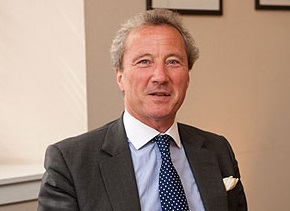
Lord Keen of Elie KC
A dispute between the University of St Andrews and its rector, Stella Maris, has been brought to a conclusion by Lord Keen of Elie KC.
Ms Maris will resume her position on the University Court of the University of St Andrews after agreeing to provide an undertaking that she is “bound by collective responsibility with respect to all decisions of the Court”.
In a note and determination published today, Lord Keen concluded that Ms Maris “should be dismissed from membership of the Court and removed as a charity trustee” unless she agreed to do so.
As Ms Maris provided this signed undertaking within the specified seven-day period, Lord Keen quashed the decision of the Court to dismiss her as a member of the Court and as a charity trustee.
A spokesperson for the University Court of the University of St Andrews said: “We are very pleased that the Court’s decision has been vindicated and that Ms Maris has given a formal undertaking that she accepts and will comply with Court’s decision and accepts collective responsibility.
“University Courts have an important duty and burden of responsibility to oversee the good governance and strategic decisions of our universities.
“That burden has never been greater given the considerable challenges facing the higher education sector just now.
“The rector’s attempt to exercise sole authority disrupted a key meeting held to focus on St Andrews University’s finances, and these matters have been a sustained distraction to operations over several months.
“Now this issue is behind us, it is our hope that all Court members will at all times act in the best interests of the University, its students, and staff.”
Ms Maris was elected rector at St Andrews in 2023. Her term in that role runs until October 2026.
In a statement this afternoon, the rector’s legal team told Scottish Legal News: “This is an important victory for free speech on campus. It establishes that governing bodies should not use the principle of ‘collective responsibility’ to silence dissent.
“This is the second time that the University Court has attempted to dismiss the rector and the second time its decision has been quashed on appeal. Both occasions raise important issues of free speech.
“The Court’s first attempt to remove the rector concerned her criticism of human rights abuses in Gaza. That decision was overturned and is now subject to a claim in the Court of Session for discrimination and breach of free speech rights.
“The Court’s second attempt concerned whether Ms Maris was entitled to disagree with the majority opinion of the Court.
“The University argued that the principle of ‘collective responsibility’ in the Code of Conduct meant that the rector could not express disagreement with the decision that only the Senior Lay Member can, inter alia, select who speaks in Court meetings on certain issues. The Senior Lay Member wrote to her demanding that she withdraw her disagreement and never repeat it.
“The rector didn’t accept that version of collective responsibility. She said she would comply with the decision but maintained her right to disagree.
“Lord Keen upheld this. He explicitly stated, in a clarification email, that the rector was required to comply with the decision but she was not required to silence her disagreement. This upheld the position advanced by the rector, not by the University.
“It is concerning that the rector was, in effect, denied legal advice throughout the dismissal process (until the appeal). When the Senior Lay Member first sent his demand (9 December) the rector asked to take legal advice. Since she couldn’t afford to pay, she could not obtain the advice until January. The University refused to allow her time to take advice and conducted an ‘emergency’ dismissal process that concluded before the point at which, they knew or ought to have known, that such advice would be available.
“It is regrettable that the University appears to have inadvertently omitted these important points from its public statement.
“The rector was represented in the appeal by the Rt Hon Sir Robert Buckland KC and Dr Sam Fowles BL instructed by Good Law Project. Lawyers acted pro bono in light of the important issues of free speech at stake.”
This article was updated after publication to include a comment from the rector’s legal team.

Share this article:

Subscribe to our newsletter to not miss articles like this one:
 SUBSCRIBE