

Written by:

Kapil Summan
Editor
Interview: Lord Reed reflects on UKSC Glasgow sitting, changing times and AI
 Reading time: 8 minutes
Written by:
Kapil Summan
Editor

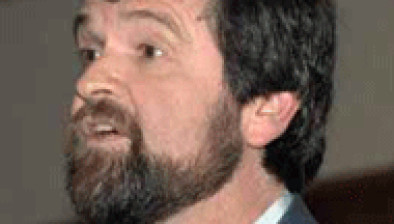
Lord Reed
Fresh from the UK Supreme Court’s Glasgow sitting, president of the court, Lord Reed of Allermuir, spoke to SLN editor Kapil Summan.
Upon his appointment as president of the Supreme Court in 2020, Lady Elish Angiolini recalled that in her practising days she once asked Robert Reed to write a paper on public interest immunity, which she suggested he take a few weeks to do. He appeared in her office with the completed paper the next day. He had, she said, produced a “masterpiece”. His erstwhile colleague on the bench, Lord Sumption, said that Lord Reed is “not a swaggerer” and that “he is not a bully”. “He doesn’t raise his voice. But he doesn’t need to because he’s highly respected as a thoughtful and highly intelligent judicial figure.”
The court sat in Glasgow’s City Chambers last week, following the previous regional sitting in Manchester in 2023 and before that Cardiff, Belfast and Edinburgh. Asked about the value of these regional sittings Lord Reed says that “a large part of the thinking behind setting up the Supreme Court was to bring the processes of the highest court in the country into the public gaze and make it more transparent – and we’re not going to achieve that by sitting all the time in London” and that he was keen to bring the court to Glasgow before he retired. The justices had a “very full programme of events” meeting with students, the public, community leaders. “I think the message came over that we’re a court that exists to serve all the people of the UK – the people of Scotland just as much as anywhere else.”
He says it was also an opportunity to dispel misconceptions the public have about the court’s constitutional role, which is more important than ever in an age of Magna Carta enthusiasts and so-called sovereign citizens.
“During the Q&As over the course of the week, people would ask things like why the Supreme Court was blocking Scotland’s right to independence. You explain to them: do you agree the Supreme Court’s job is to apply the law? ‘Yes’. Do you know that the law governing the powers of the Scottish Parliament is set out in an Act of Parliament? ‘Yes’. So do you think it’s the Supreme Court’s duty to implement what the Act says? ‘Yes’. And then you tell them what the Act says, and they come away understanding why we decided the case the way we did.”
This points to a general problem with how the court’s function and its judgments are often misunderstood by the public. I suggest to Lord Reed that last year’s judgment in For Women Scotland was received by the public as a verdict on the ontological claims of transgender people rather than what it was: a clarification of the correct interpretation of ‘sex’ in the Equality Act and that, despite the media relaying what comes from the courts, there is perhaps an explanatory layer missing.
He says that the topic of communication with the public is “something we and other courts are giving a great deal of thought to” and that he is meeting his opposite number in Canada soon to discuss ideas on how to address it. He also says they have to consider that young people are “getting their information from media which cater for – or actively encourage – the dissemination of information in a very short and very visual format”.
“We need to develop ways of communicating with them in the way they communicate with each other, otherwise we’ll be speaking past them – and frankly, we won’t be defending the rule of law adequately unless we engage with them effectively.”
For example, the Supreme Court’s exhibition space deals mainly with the “reasons for the move from the House of Lords to the Supreme Court”, yet the typical visitor is 15-years-old – and this event now took place before they were born.
“We’re looking at ways of communicating that use very small amounts of text, and where text does appear, it presents information through personalised stories – the way even mainstream media tells a legal story, focusing on the individuals concerned and how the case affects the people involved, ending perhaps with a statement from a young person about how they think the case might affect their own life. It’s quite a radical departure from the traditional approach.”
The court is also working with the Attorney General’s Youth Ambassadors Programme which will “enlist young people with large followings on social media to act as ambassadors for the rule of law, explaining relevant events in a way other young people can relate to”, Lord Reed explains.
I put it to him that the judiciary has, in the wake of the Daily Mail’s ‘Enemies of the People’ headline, become more embroiled in politics – in the perception of the public – and that perhaps something stronger and more independent than the lord chancellor of the day, like an office for the rule of law, is needed to defend judges.
“The problem more recently has been the vilification of judges dealing with immigration cases – much more junior people in the legal system, far more vulnerable in all kinds of ways. They’re having to take potentially controversial decisions under intense time pressure, and they can be hung out to dry in the media. Some have actually faced very unpleasant and menacing behaviour towards themselves and their families – home addresses becoming known, for example. That is a serious worry. It’s something the lady chief justice has been giving a great deal of thought to, and I’ve been in discussion with the lord chancellor about whether there are ways of addressing it.
“Institutional ideas of the kind you’re suggesting – a rule of law office – have been given thought,” he says.
Yet he worries about disproportionate remedies.
“One of the difficulties is: how do we actually prevent it? Are we going to effectively reintroduce some form of contempt of court, or murmuring of judges – offences we’ve only just abolished within relatively recent times? If a politician decides there’s mileage in attacking the judiciary, are we seriously going to prosecute him for some offence? My own view is that any steps taken to protect the judiciary, in order to be durable, have to be based on a reasonable level of consensus within Parliament – at least the support of the major parties.”
Recent headlines on AI and law have frequently been about its misuse by practitioners but judiciaries around the world are recognising the need to embrace the technology.
Another Supreme Court justice, Lord Briggs, recently spoke about plans in Brazil to introduce court-approved AI for judges to use as the country faces a backlog of cases that stands at an incredible 80 million. Lord Reed thinks this is the “direction of travel for courts in the UK” too.
“We’re going to have to embrace AI for a variety of reasons, one of which is that litigants are already embracing it – resulting in a large increase in caseload for lower courts, which will eventually affect us. Using AI as a legal research tool isn’t particularly problematical, but using it to help produce work raises issues about confidentiality, which is why you don’t want to use a public system like ChatGPT. You need something bespoke – something like Copilot can be tailored for a particular organisation, and I think that’s the kind of model we’ll probably be adopting, though we haven’t got there yet.”
Lord Reed is stepping down from the court next January, when the Lords will benefit from his insight. What else does retirement hold?
“I would like to remain involved with the law. I enjoy problem-solving – that’s really the main attraction of being an appellate judge. I could sit in an armchair in my slippers doing Sudoku puzzles, or I could be working on legal problems, and I’d rather be doing the legal problems.
“I’m a member of the House of Lords, so once I retire from the bench I’ll be able to take part in the activities of the upper house, which is a great privilege. I’d also quite like to do some teaching if I get the opportunity. Besides that, I’m not entirely sure – but I think my wife and family would probably like to see a bit more of me than they have done in recent years, and I’d like to see more of them.”

Share this article:

Subscribe to our newsletter to not miss articles like this one:
 SUBSCRIBE