

Written by:

Supreme Court rejects investment manager’s appeal against tax treatment of LLP members
 Reading time: 6 minutes
Written by:
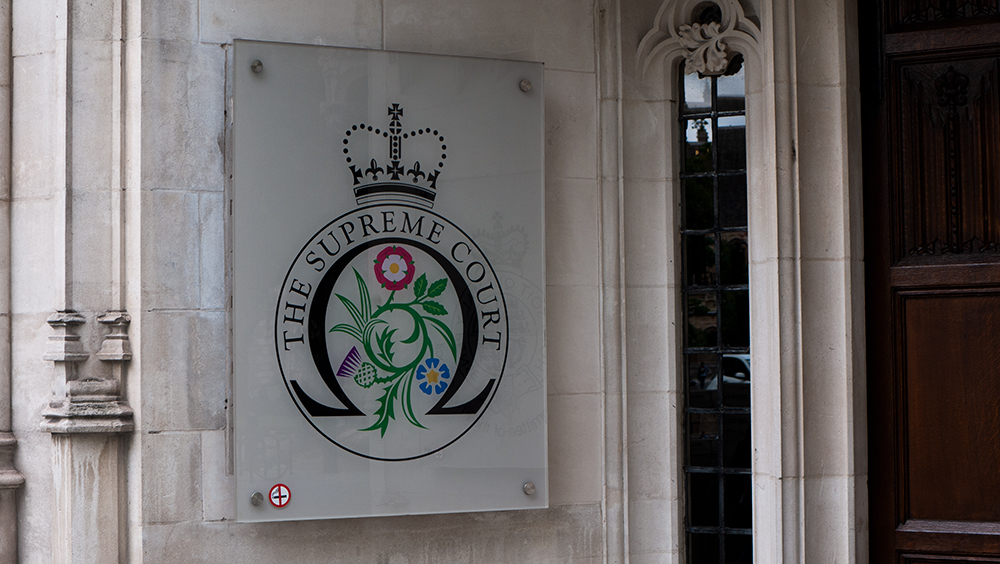
The UK Supreme Court has dismissed a London-based investment manager’s appeal against HMRC’s decision to treat the preponderance of its partners as employees for the purposes of tax and national insurance contributions pursuant to “salaried members” legislation.

About this case:
- Citation:[2026] UKSC 18
- Judgment:
- Court:UK Supreme Court
- Judge:Lord Richards and Lady Simler
The appellant, a London-based investment manager, incorporated as a limited liability partnership in 2009. Following the enactment of “salaried members” rules in the Finance Act 2014, HMRC determined that all but four of the appellant’s ‘members’ (a term equivalent in usage to ‘partner’) were to be treated as employees of the LLP for the purposes of tax and national insurance contributions. Now facing a tax liability of approximately £200m, the appellant challenged that determination, with its appeal reaching the Supreme Court by way of the First-tier Tribunal, Upper Tribunal and Court of Appeal.
The appeal was heard by Lord Briggs, Lord Hamblen, Lord Burrows, Lord Richards and Lady Simler, with Hui Ling McCarthy KC, John Machell KC, Jennifer Haywood and Barbara Belgrano appearing for the appellant and Richard Vallat KC, Laura Poots KC and James Kirby for the respondent.
Countering ‘disguised employment’
Under the reforms introduced by the 2014 Act, an LLP member is to be treated as an employee of the partnership for income tax purposes where the member satisfies three conditions, known as conditions A, B and C. Seeking to “counter the perceived unfairness” of businesses using the LLP structure to conceal “disguised employment”, the conditions aim to restrict the benefit of LLP members’ more favourable tax treatment to those whose engagement with the business resembles that found in a traditional partnership.
At the heart of the appellant’s challenge lay HMRC’s interpretation of conditions A and B. The former is met where “it is reasonable to expect that at least 80% of [the member’s] remuneration” will be “(a) fixed, or (b) variable, but varied without reference to the overall amount of the profits or losses of the LLP, or (c) will not, in practice, be affected by the overall amount of those profits or losses”. The latter is likewise met where the “mutual rights and duties of the [LLP members], and of the partnership and its members, do not give [the member] significant influence over the affairs of the partnership”.
The appellant argued that its investment managers should not be taxed as employees, for they failed to meet either condition. With regard to condition A, it argued that its policy to cap the total discretionary allocations of portfolio managers and desk heads at the level of its total profits meant that, contrary to paragraph (b) of the relevant test, its members’ remuneration was variable in accordance with the LLP’s profits and losses. In respect of condition B, it contended likewise that, while a member might enjoy influence over only one part of the LLP’s business (e.g., the management of a high-value portfolio), such a task could hold such significance for the business as to qualify as ‘significant influence’.
A reading so divorced from the legislative purpose
In a judgment with which their colleagues agreed, Lord Richards and Lady Simler began by establishing various preliminary points with regard to interpreting the relevant legislation: “[T]he pre-legislative material does show that the broad purpose of the salaried members legislation … was to address the particular disparity … in the tax treatment of an LLP as compared with that of a traditional partnership… It did so by providing for a newly created tripartite test without precise statutory or common law antecedents that sought collectively to encapsulate three typical factors for distinguishing a traditional relationship of partnership on the one hand from a relationship more like employment on the other: rights to profit-sharing, requirement to make a capital contribution, and mutual rights and duties giving significant influence over the affairs of the partnership.”
Rejecting the appellant’s arguments in respect of the standard to be applied to the assessment of condition B, they added: “[H]aving regard to the purpose of Condition B and the common law test from which it derives, we consider that the requirement that the member has influence over the affairs of the LLP does suggest having ‘a voice in the management of the affairs of the LLP’. It follows that the influence is likely to lie in rights to participate in high level or strategic decision making about the partnership’s affairs or at any rate, an ability to influence such decisions … [D]ay to day decision making on a purely operational level may well not qualify.”
Noting errors in the First-tier Tribunal’s approach, among which lay its focus on “members’ influence deriving from their personal qualities or their activities to the exclusion of their influence deriving from their mutual legal rights and obligations”, they continued: “These errors (alone or in combination) undermine the FTT’s evaluation that the influence of the relevant portfolio managers and desk heads was significant. This is plainly not a case where we could safely conclude that the errors are immaterial … In these circumstances, we consider that the Court of Appeal was right to hold that the case should be remitted to the FTT.”
Rejecting likewise the appellant’s submissions on the proper interpretation of condition A, Lord Richards and Lady Simler added: “It is clear that Condition A is, in general terms, designed to reflect one of the principal characteristics of a traditional partnership, that the profits and losses of the partnership are shared between the partners… Portfolio managers and desk heads employed by fund management funds or similar financial institutions are commonly remunerated by reference not to the profits of the firm as a whole but to the profits generated by themselves or by their team. This is precisely the way in which the remuneration paid to those members of [the appellant] occupying those positions is determined. It is not determined by reference to, or in any substantial way linked to, the overall profits of [the appellant]. While [the appellant’s] argument can just about pray in aid a literal reading of paragraph (b), it is a reading so divorced from the purpose of paragraph (b) or from any ordinary reading of its language that it must be rejected.”
The appeal was accordingly dismissed, with the issue of whether condition B is satisfied in relation to any of the appellant’s members remitted to the First-tier Tribunal for reconsideration.

Share this article:

Subscribe to our newsletter to not miss articles like this one:
 SUBSCRIBE