





Written by:

Supreme Court dismisses ‘manifestly disloyal’ company director’s appeal against unfair prejudice petition
 Reading time: 6 minutes
Written by:
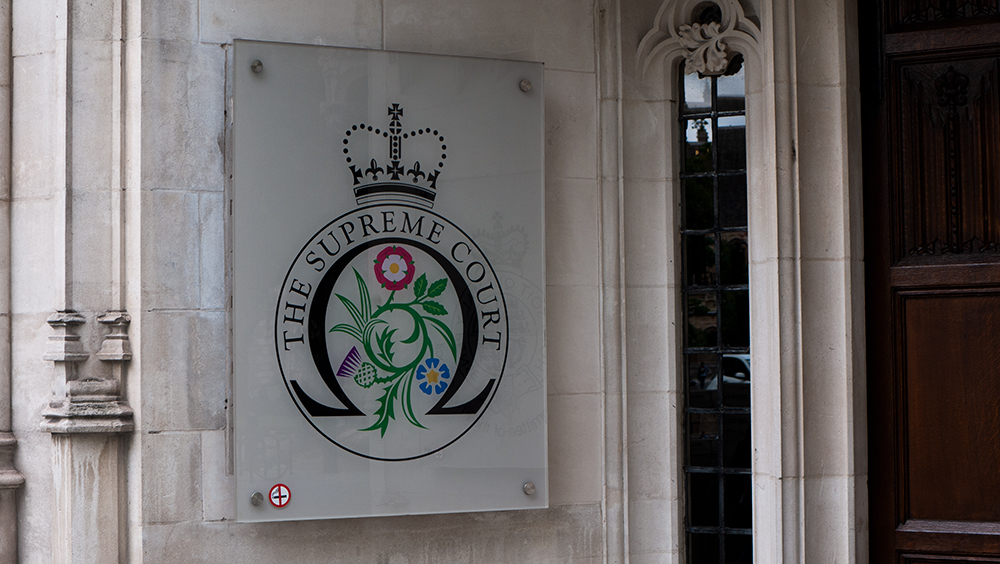
A company director has lost his appeal against a minority shareholder’s petition for an immediate buy-out after the UK Supreme Court found the director’s “covert single-handed campaign” to delay the sale of the company amounted to a breach of his duty of loyalty.

About this case:
- Citation:[2026] UKSC 21
- Judgment:
- Court:UK Supreme Court
- Judge:Lord Briggs
The appellant, the director of a holding company in the creative services industries, sought to keep his efforts to delay the sale of the company, at variance with the terms of an agreed strategy, secret from the company’s other directors and shareholders. After his conduct was uncovered, a minority shareholder brought a petition against the director alleging unfair prejudice.
The appeal was heard by Lord Sales, Lord Briggs, Lord Hamblen, Lord Burrows and Lady Rose, with Jonathan Crow KC and Lara Hassell-Hart appearing for the appellant and Edward Davies KC and Jack Rivett for the respondents.
‘They’ll thank me in the long run’
The appellant was a director of Spring Media Investments Ltd, a holding company for a group providing creative services in the fashion and beauty industries. In 2016, the company entered into an agreement with its shareholders to the effect that all parties would “work together in good faith” towards the sale of the company and its assets before the end of 2019.
Having been granted near-exclusive control of the sale process, the appellant diverged from the agreed strategy, it being his view that a sale later than the end of 2019 would generate a much better financial return for the company. At trial, it was found that the appellant had been aggressive in his efforts to deny the company’s shareholders and other directors any knowledge of the sale process, misled the company’s board in various respects, and had deliberately sought to delay the progress of the sale.
Operating under a mindset summarised by the trial judge as “they wouldn’t like it now if they knew, but they will thank me in the long run”, the appellant was successful in delaying the sale of the company beyond the end of 2019. By consequence, however, of the destructive impact of the pandemic on the company’s business, the appellant’s tactics failed to yield the desired effect.
In response, Saxon Woods Investments Ltd, an entity holding 22.33 per cent of the company’s shares, raised a petition against the appellant for relief from unfair prejudice under section 994 of the Companies Act 2006. Differing conclusions in the courts below on whether the appellant had breached the duty to promote the success of the company, codified in section 172 of the 2006 Act, led the appeal to reach the Supreme Court.
The appellant submitted that the question of whether he had acted in the way he considered, in good faith, would be most likely to promote the success of the company could only be answered by reference to a ‘subjective’ test; namely, one focusing on the appellant’s mindset alone, as opposed to its conformity with objective standards of honesty. The duty in section 172 would not be breached, he argued, simply by a director causing his company to act in breach of contract, so long as that course of action was genuinely seen by the director as being in the company’s best interests.
Manifestly disloyal to the company
Lord Briggs began his decision by framing the issue at hand: “This appeal is concerned with the standard of conduct required of a company director when the director genuinely disagrees with his or her fellow directors as to the best route to achieving success for the company … Can he simply act single-handedly in driving the company towards his preferred objective, if necessary concealing what he is doing from his colleagues, or is his status as a fiduciary owing a duty of loyalty to the company, and the requirement that he act in good faith, sufficient to require him to disclose his opinion to his colleagues, to discuss it with them and to assist them in forming a collective view as to the best way forward for the company?”
Reviewing the authorities prior to the codification of directors’ duties in the Companies Act 2006, Lord Briggs noted: “I have however been unable to trace any authority or any academic writing prior to 2006 which suggests that the court’s respect for the business judgment of directors extends to a case where one director has sought to pursue his own judgment as to the best way to promote the company’s best interests by a covert strategy (ie concealed from his fellow directors) to pursue an objective which directly conflicts with the business judgment and strategy already resolved upon by the board as a whole. I would have been surprised to find one, because such conduct would appear to be obviously disloyal by a fiduciary, and contrary to the mode of governance of the company laid down by its typical constitution.”
Taking the view that the requirement of good faith in section 172 extends to both the director’s thinking and his conduct, he continued: “The core duty … has generally, and rightly, been described as a duty of loyalty and the courts did not shrink from applying an objective test to determine, in any particular case, whether the fiduciary’s conduct fell short of the sometimes rigorous requirements of that duty. It was never enough for the fiduciary just to say that he genuinely believed that it did not. That essentially objective approach to the determination of the extent of a fiduciary duty, and of an allegation of breach of it, continues unabated to this day.”
Returning to the question posed at the beginning of his judgment, he added: “Is a director required by section 172 to act, or merely to think, in good faith? The notion that the careful and experienced framers of this important codification of directors’ duties thought only the latter is highly unlikely. Far from promoting corporate success in the modern world, it would be a recipe for chaos and paralysis in corporate governance, and destructive of the collegiality of the board of directors as a whole which all stakeholders in limited companies are entitled to expect.”
Applying that view to the appellant’s case, he concluded: “[The appellant] was given by the board the delegated power to undertake the task of securing the Exit strategy resolved upon by the board by causing the Company to enter into the [shareholder agreement]. To use his powers as director to procure an irreconcilably opposed strategy was a plain abuse of them … His conduct was manifestly disloyal to the Company, and he acted in bad faith towards the Company.”
The appeal was accordingly dismissed.

Share this article:

Subscribe to our newsletter to not miss articles like this one:
 SUBSCRIBE

