





Written by:

Supreme Court allows restaurant’s appeal against £15,000 illegal working penalty notice
 Reading time: 6 minutes
Written by:
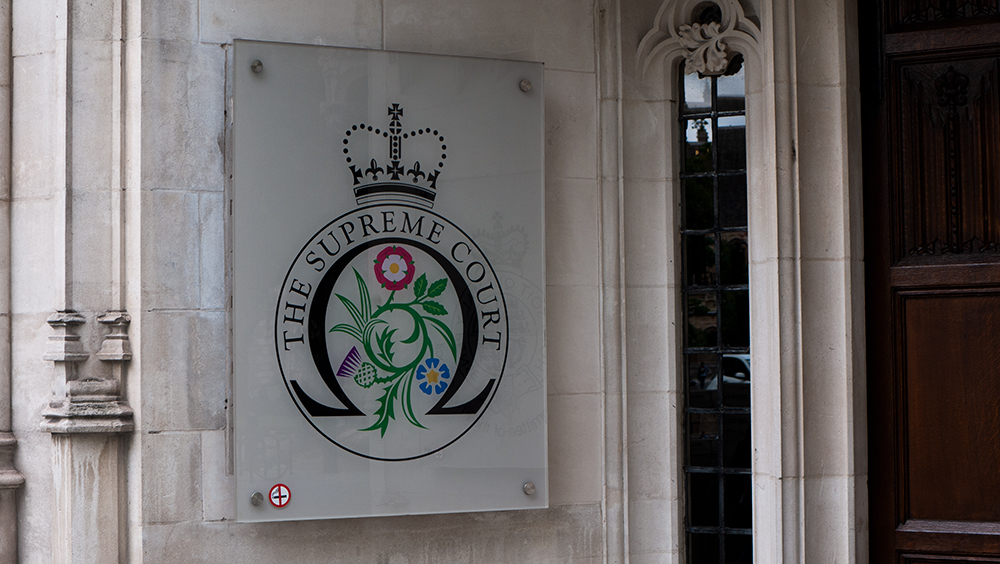
A South Asian restaurant in Middlesborough has won an appeal to the UK Supreme Court against a £15,000 illegal working civil penalty notice, after the court found the Secretary of State’s failure to specify the grounds on which the notice was issued to be fatal to its validity.

About this case:
- Citation:[2026] UKSC 26
- Judgment:
- Court:UK Supreme Court
- Judge:Lord Sales
The appellant, a Middlesborough restaurant serving South Asian food, was issued with a civil penalty notice after inspectors found that the restaurant had employed an immigrant without permission to work in the UK. Its arguments having been unsuccessful in the courts below, the restaurant’s case came before the UK Supreme Court on appeal.
The appeal was heard by Lord Sales, Lord Leggatt, Lady Rose, Lord Richards and Lady Simler, with Sohail Mohammed appearing for the appellant and Zane Malik KC and Iulia Stinga for the respondent.
Mutually exclusive grounds for issuing penalty
In January 2023, immigration officers visited the appellant’s restaurant in Middlesborough. On inspection, they identified a member of the restaurant staff as working illegally, his leave to remain in the UK having expired. After the secretary of state’s request to the appellant for more information went unanswered, a civil penalty notice in the amount of £15,000 was issued.
The notice letter stated that the appellant had violated section 15 of the Immigration, Asylum and Nationality Act 2006 by “employing an adult subject to immigration control who has a) not been granted leave to enter or remain in the UK, or b) their leave to enter or remain in the UK is invalid or has ceased to have effect, or c) who is subject to a condition preventing them from accepting the employment in question”. With the options enumerated as a), b) and c) in the notice letter mirroring the terms of section 15(1) of the 2006 Act, the notice did not specify on exactly which ground the member of staff was believed to be working illegally.
After the appellant filed an appeal in the county court against the notice in May 2023, correspondence between the appellant’s solicitor and the secretary of state revealed that the decision had been “issued pursuant to section 15(1)(b)(iii)”: that is to say, on the basis that the worker’s leave to remain in the UK was subject to a condition preventing him from accepting the employment in question. Nevertheless, prior to the county court hearing, the secretary of state filed evidence showing that the worker’s leave to remain had expired – a criterion for the issue of a penalty found in section 15(1)(b)(ii), as opposed to (iii).
The appellant argued that the notice was “defective and invalid for non-compliance with the 2006 Act”, since section 15(6) required the secretary of state to detail within the notice “why [she] thinks the employer is liable to the penalty”. Despite that argument having been rejected by the county court and Court of Appeal, it maintained before the UK Supreme Court that the secretary of state’s reference to numerous, mutually exclusive grounds in the notice had resulted in her failing to discharge her duty to explain why the penalty was due.
Important constitutional dimension
In a judgment with which each of his colleagues agreed, Lord Sales began by noting that: “The context in which section 15(6)(a) appears has an important constitutional dimension … [T]he interpretation of section 15 has to proceed against the background that the regime is penal in nature. Where the state imposes a penalty of this kind, it is to be expected that proper reasons should be given to explain why it is doing that and to show that its action is justified. The person affected is entitled to know why the penal power of the state has been invoked against them. The giving of reasons also imposes appropriate discipline on the state to ensure that such power is being exercised properly and serves as a practical safeguard against capriciousness.”
He continued: “The alternative cases described in section 15(1) are mutually exclusive. If a court was responsible for imposing a fine of £15,000 for breach of section 15, it would not be acceptable for it to give a judgment simply saying that the case before it fell within one or other of three mutually exclusive cases, without saying which one. Similarly, if a person was charged with an ‘offence’ of breaching section 15(1), it would be incumbent on the prosecution to state which limb of section 15(1) was being relied on … There is no good reason why the fact that the Secretary of State is the person who makes the decision to impose the penalty should make any difference as to the standard of explanation for that decision which is to be regarded as acceptable.”
Addressing the respondent’s argument that, by reference to R v Soneji (2006), the secretary of state’s subsequent clarification of the relevant criterion obviated the need to treat the notice as invalid, Lord Sales reasoned: “The recognition in R v Soneji of this new framework for analysis does not mean that the effect of procedural rules in every statutory context turns on detailed examination of the consequences arising from the breach of the particular rule. Nor does it mean that a test of substantial compliance applies in every case in order to determine the validity of some procedural step. Examination of the purpose served by a particular statutory procedural rule, such as a rule requiring notice to be given of some matter, may indicate that Parliament intended it should operate strictly, so that any failure to comply with it invalidates the notice and that procedural step.”
He added: “In my view, in the context of the regime in the 2006 Act, section 15(6)(a) sets out a clear condition for the validity of a penalty notice so far as is relevant in this case, namely that the Secretary of State has to specify which limb of section 15(1) is being relied on as the basis for the imposition of the penalty set out in the notice. The interpretive guidance from the constitutional context as set out above points strongly in this direction, as does consideration of the statutory regime as a whole and the way it is supposed to operate in practice … Where the Secretary of State is empowered to impose a penal sanction on a person, it cannot be inferred that Parliament intended that a basic error regarding the applicability of section 15(1) might have no real consequence in relation to the validity of the penal notice.”
The appeal was accordingly allowed.

Share this article:

Subscribe to our newsletter to not miss articles like this one:
 SUBSCRIBE

