


Rosalind McInnes: Strasbourg ruling exposes flaws in secret Scottish court hearings
 Reading time: 13 minutes
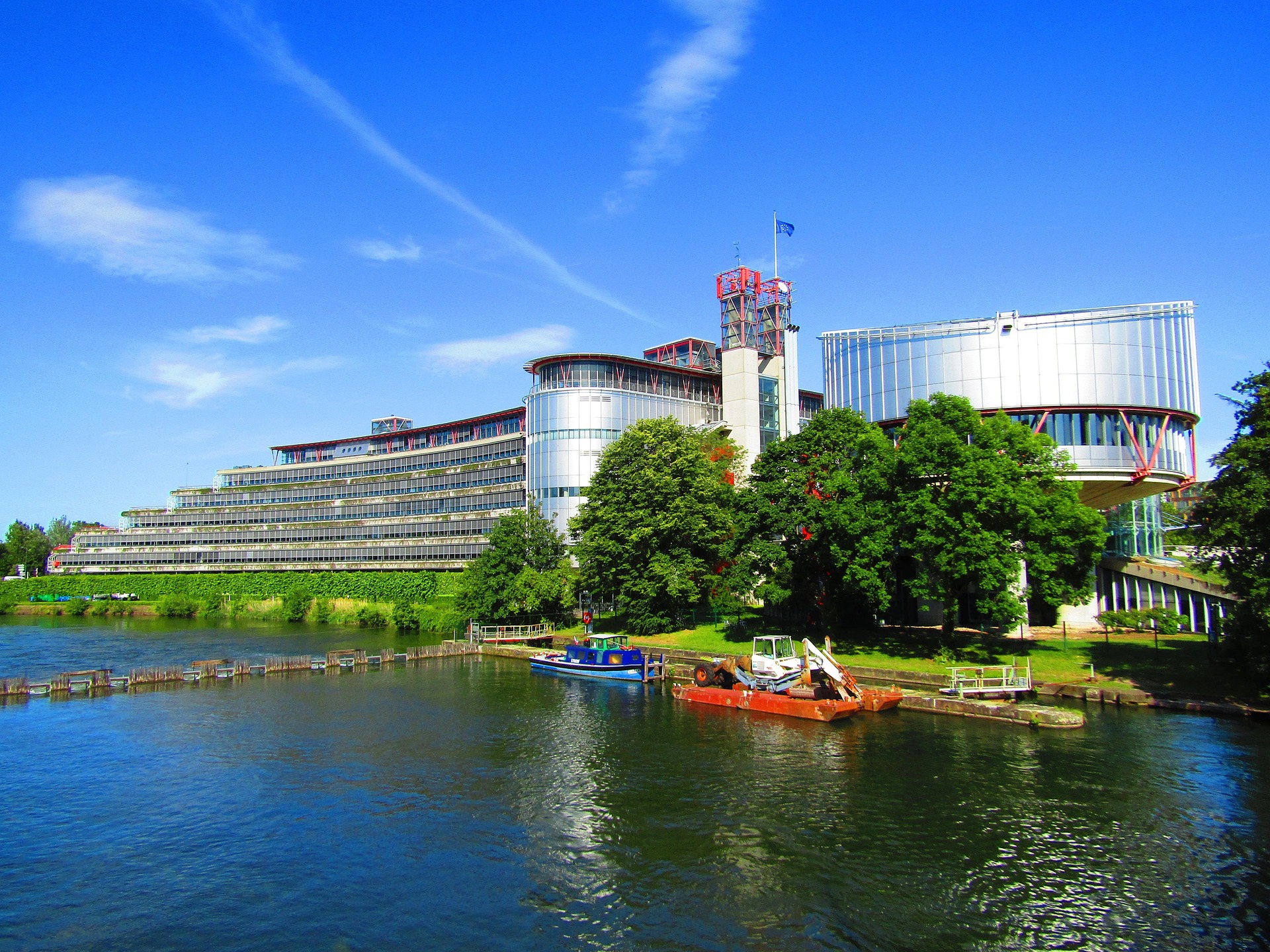
As the nights draw in and the shops silt up with Hallowe’en plastic, spare a thought for the poltergeist. Invisible to the human eye, dismissed as a noisy nuisance if making its presence felt. Court reporters in Scotland can empathise, writes Rosalind McInnes, legal director at BBC Scotland.
Duff - following MacKay in 2010 – is the second occasion on which BBC Scotland has resorted to the European Court of Human Rights to vindicate a violation of the Art 10 right to report on a court case. The ECHR unanimously held that the closure of Aberdeen Sheriff Court to the public and the exclusion of journalist Steven Duff was a violation of Article 10 and, since judicial review would not be an effective remedy, of Article 13.
The facts
The case concerned Muirhead Care Home, near Alford. Steven Duff had reported on 3rd August 2018 that the home might face closure, after a spot inspection in which the Care Inspectorate had found “highly distressing conditions”, including residents tied to chairs with belts and not getting enough food.
A hearing followed on 10th August, at which the Care Inspectorate was seeking interim orders to close Muirhead. The home’s QC made a motion at the beginning of the hearing, around 2.30pm, for it to be heard in private. This was on the basis, first, that details relating to very vulnerable residents would be disclosed, and secondly, that any order was likely to be catastrophic for the owners of the home, with economic consequences. The sheriff asked on what authority the motion was made. No authority was given. Counsel for the Care Inspectorate said that he did not object to the motion, but only on the basis of “vulnerability”. The sheriff then ruled that the court would be closed on this ground.
Steven Duff, the only journalist, was ordered to leave. I rang the court around 3pm and could not reach anyone who knew that the order had been made, as the sheriff and her clerk were still in the hearing. Around 4.45pm, I got a call from the court to say that the order had been made by the sheriff that the case be heard in private and that that hearing was still ongoing. When I asked that the BBC be heard in opposition to the order, I was referred to the comms team.
The hearing finished at 6.20pm, with the ruling also being made in private. No court officer or member of the legal teams was willing to tell Steven Duff what that ruling was, other than that an “interim order” had been granted.
On 10th August 2018, Ronald Clancy KC was heard for the BBC. The sheriff refused to lift the order on the basis that the hearing was over. When Mr Clancy pointed out that there were other hearings to come at which the same application would presumably be made, she said that the court would deal with that then.
The law
The European Court of Human Rights cites the Court of Session Act 1693, Scott v Scott [1913] AC 417 and the ringing endorsement of the Inner House in MH v Mental Health Tribunal for Scotland 2019 SC 432 that the exclusion of the media from court proceedings should occur in the “rarest of circumstances”. They reiterate their own case law: “The Court has repeatedly stated that freedom of expression constitutes one of the essential foundations of a democratic society and that, in that context, the safeguards guaranteed to the press are particularly important (MacKay and BBC Scotland v the United Kingdom…It has underlined the essential role of the press as ‘public watchdog’…”
None of these decisions was cited before the sheriff made her order. Nor was Sir Christopher Staughton’s observation in Ex parte P , The Times 31st March 1998, that “When both parties agree that information should be kept from the public, that was when the court had to be most vigilant”, nor the key case of Re S [2005] 1 AC 593 emphasising the importance of open court reporting. Just months before the care home hearing, in R v Sarker and BBC [2018] EWCA Crim 1341, the lord chief justice, in a unanimous Court of Appeal, had warned that “Judges must be on their guard against applications which are advanced at the last minute or without proper consideration of the principles in play.”
There was no apparent discussion in the Sheriff Court, either, of how the vulnerability of the patients could be protected short of a complete exclusion of the public – by, for instance – avoiding using their names or identificatory details in open court.
Nor was a shrieval eyebrow raised about the yoking of the care home residents’ vulnerability to the economic protection of the body suspected of neglecting them. Contrast Lord Lake at the interim interdict hearing in Simply Inverness Ltd Petr (22nd September 2025, Court of Session) when the privacy of care home residents were referred to in an unsuccessful attempt to stop the broadcast of “Care Home Undercover”, “There’s a little bit of tension, isn’t there, in the care home using residents’ rights to prevent scrutiny of what’s said to be residents’ mistreatment?” For a southern example, contrast BKM Ltd v BBC [2009] EWHC 3151 (Ch), where Mann J said that a care home company’s “commercial interests lie in playing down the allegations, not having them broadcast…I think that this might explain why a lot of the emphasis…was to prevent the broadcast of the programme at all, as opposed to a broadcast which did not render residents identifiable…”
At all events, none of this was raised before the sheriff made her order. After it was made, the “public watchdog” likely to have known of these authorities and to wish to make these arguments had been kennelled in the court corridor.
These issues did not come up in Strasbourg, either. The UK government simply conceded that the sheriff’s order to close the court constituted an interference with Article 10, and that it was not prescribed by law. It argued, rather, that domestic remedies had not been exhausted, because interim orders could have been requested in a judicial review petition: “Even if the judicial review petition might not have prevented a violation of the applicants’ rights from taking place, it was nonetheless an effective remedy. A declaration by Scotland’s superior court and involving a public statement as to what was required of the sheriff as a matter of law would have provided adequate redress for the violation that had occurred.”
This was dismissed as cold comfort: “In the present case, the applicants had no legal right to make submissions on the request to close the court…[T]he sheriff closed the court without, apparently, turning her mind at all to the need to respect the principle of open justice…[E]xclusion from court…had irreversible effects since their ability to report on proceedings that they had been unable to attend could not be restored by any future ruling that their exclusion was incompatible with Article 10.”
Although the judgment does not say so, it also meant that any information obtained from outwith the court would have been deprived of the usual legal protections in defamation and contempt for court reporting, since these protections are contingent on the open court status of the proceedings reported.
As in MacKay, where the nobile officium was proffered by the state as the answer to the lack of a right to challenge reporting restrictions, here in Duff, where judicial review was the suggested panacea for the ultimate reporting restriction of a secret hearing, Strasbourg took a very pragmatic approach: “The Court is of the view that it would have been practically impossible in this case for the applicants to have obtained an interim order of the Court of Session in judicial review proceedings in time to prevent the sheriff’s order closing the court…[Judicial review] would at best have offered them the possibility to challenge the lawfulness of their exclusion from the court after the full effect of exclusion had occurred.”
The UK’s argument under Article 13 was similarly based, and similarly fated: “The applicants argued…that the procedure available in respect of reporting restrictions could be extended to cover court closures. The Government argued that it would be impractical and unnecessary, in the context of the efficient conduct of court business, for the reporting restrictions procedure to be applied to court closures.” Judicial review, they repeated, would be an effective remedy. Not so, said the Second Section: “The Court has explained that the notion of an effective remedy in this case implied the possibility to make submissions on the request to close the court and to obtain a ruling before the hearing took place…”
Suggested learnings
1. There should be a rule of court :
a) that a court should never be closed to the public or media without prior notice save, possibly, in a truly exceptional application involving an immediate and real threat to life or national security in which prior notice cannot safely be given; b) even in such an exceptional circumstance, the proceedings should be recorded, with notice of their existence being given immediately after the hearing, so that the media can hear and report what was said as soon as the order be lifted.
This is potentially a revolution in procedure. The system of notification of interim reporting restrictions inviting the possibility of challenge is flawed in some respects: many reporting restrictions granted probably would not survive a court challenge, domestic or international, because they are overbroad, overlong, incompetent, otiose, inadequately reasoned or lacking in a cogent evidential basis. However, the system does mean that, at least, the media ought to know that an order has been made. No such comfort exists around the much starker realm of the secret hearing.
The UK government’s implication that the Aberdeen sheriff court’s exclusion of the media was an anomaly does not hold water. It is not a lone example even in Aberdeen, where another sheriff similarly excluded the media, this time from the criminal trial of a police officer later acquitted of assault: PF v Graham Duguid, 1st December 2010. In the process of challenging reporting restrictions, BBC Scotland has found craves for closure buried in writs unseen by anyone other than the parties or the court, and doors simply locked by clerks or macers. Whether this behaviour is rare or common, in an era where, as the Lord President said in MH ,”the court reporter is an endangered species”, is currently unknowable.
If the media are entitled to be heard before being excluded, they must be notified of their intended exclusion, except in the rarest of circumstances, and in those circumstances, they must have the right retrospectively to argue to be informed of what happened behind their backs.
2. The necessity of mandatory guidance for sheriffs on the open justice case law
The sheriff in Duff informed the UK government that she had not been aware that there were members of the press in attendance, had not noticed whether anyone was on the public benches, had not made any enquiry about whether journalists were there, and had no recollection of objections from anyone.
But the rights of the public to know what is going on in a court case – whether or not one of such self evident public interest as the one concerning Muirhead Care Home – cannot be contingent upon whether a third party lay person stands up in court to object to the evisceration of those rights.
This is not a uniquely Scottish problem. Journalists south of the border seem more frequently to be encouraged to advocate for themselves and to have their opinions actively canvassed by the bench, but this is no failsafe. In National Crime Agency v GKC (No 2) [2026] EWHC 929, the NCA’s KC had told a judge in an earlier hearing that his client was “conscious that sometimes journalists like to appear and to make submissions on these matters” and that it did not “look as though there is anyone intending to do that”. Fordham J retorted, “But how was the press supposed to have been in a position to do so?” when they had not been notified of GKC’s request for anonymisation or a private hearing, and where the case itself had been listed as “BOM v BMR…No member of the public or press would have a clue who ‘BOM’ was, or what application was being made.”
Sheriffs could be directed that any order made by them which would exclude or restrict media attendance must demonstrably address the key issues.
3. Go to the ECtHR as early as possible
The mills of Strasbourg grind exceeding small, but slowly enough to be lapped by the Paisley Snail. MacKay took six years from the High Court of Glasgow reporting restriction to the European Court of Human Rights. Duff took eight years from the Aberdeen Sheriff Court private hearing to the European Court of Human Rights. Ronald Clancy KC retired in the period, but thankfully continued to be involved. Duncan Hamilton started as junior counsel on the case, but took silk during the process. The credit for victory belongs to them both.
As conscious as the ECtHR clearly is of the importance of timescales to news, the requirement to exhaust domestic remedies, the mechanisms available to an international court and perhaps a reluctance to dictate timescales to sovereign states, can make for leisurely litigation.
An element accounting for some delay on the Duff case, was the applicants’ ultimately fruitless willingness to explore the Friendly Settlement route. This is no doubt a useful option in many cases, but where the issue is about systems, rather than money (see below at 4), and the respondent is the member state rather than the court of the constituent nation with the control over those systems, it may be futile.
4. They do things differently there, especially on finance
Both MacKay and Duff were dealt with on a paper procedure alone. The exploration of the issues involved in these two cases was not, in my view, hampered by the lack of oral advocacy or fact finding means. Importantly, a paper-only procedure keeps down the costs. Monetary awards are, almost by definition, not the point of an application to the European Court of Human Rights. In Duff, the finding of a violation was held to constitute sufficient just satisfaction, but Steven Duff and BBC Scotland were awarded 25,000 euros for “costs under all heads”. Although the process involves nothing akin to a Scottish taxation and the assessment is openly impressionistic, BBC Scotland’s submission included an element based on a quantification of in house legal work, which appears to have been accepted.
5. Fairly unusual procedures for challenging restrictions on reporting fairly usual cases are unlikely to commend themselves to the ECtHR as effective remedies.
6. If you are a judge or sheriff asked by both parties to exclude a third party who represents the public, hear that person before deciding whether to exclude them. Then keep your court open.
Rosalind McInnes is legal director at BBC Scotland

Share this article:

Subscribe to our newsletter to not miss articles like this one:
 SUBSCRIBE