
Ronnie Clancy KC: Ho Chi Minh v the King
 Reading time: 6 minutes
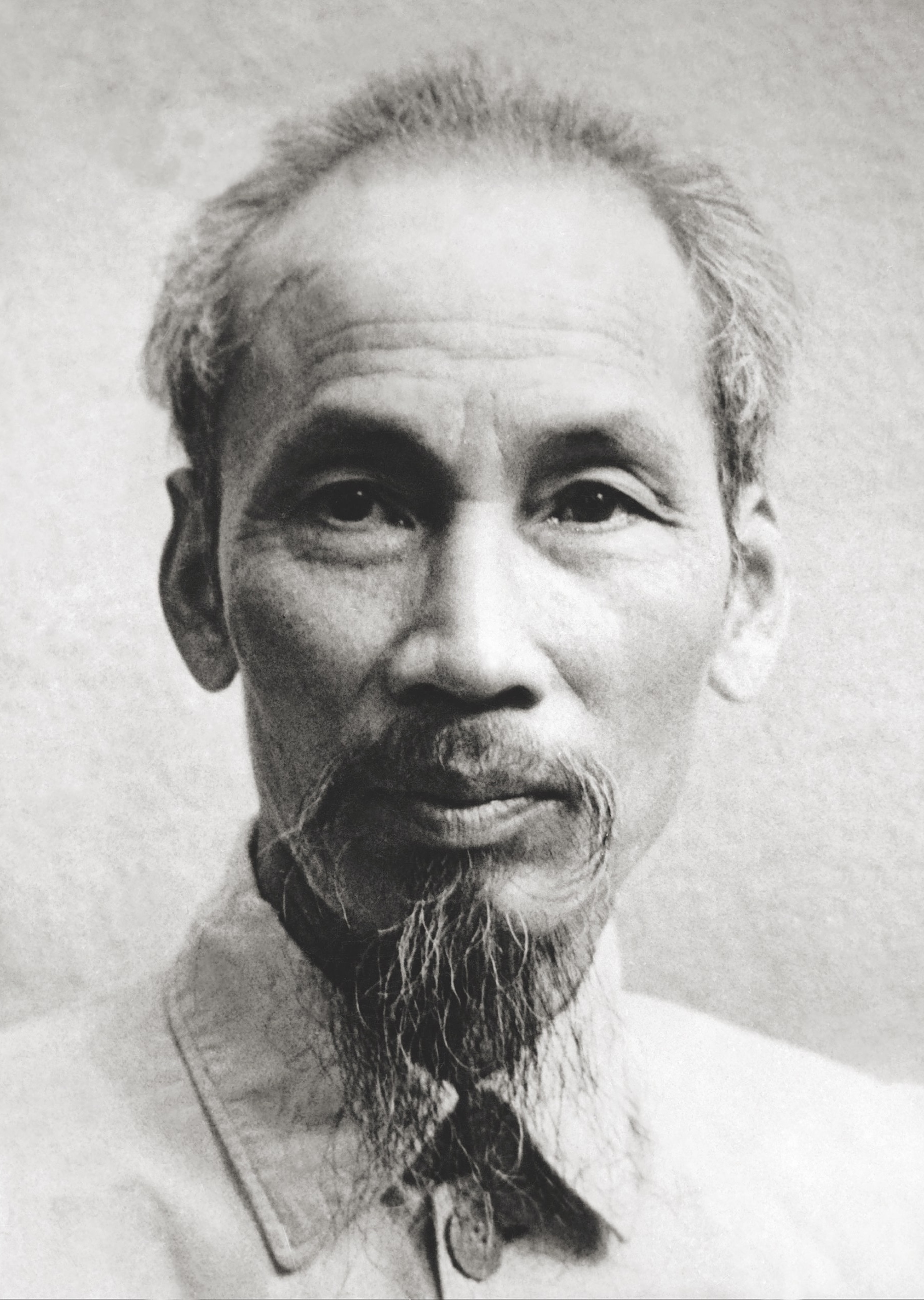
Ho Chi Minh
This year marks the 50th anniversary of the end of the Vietnam War. Ronnie Clancy KC takes a look at a legal case that was central to its outcome.
For those of us old enough to remember the Vietnam War, Ho Chi Minh (born Nguyễn Sinh Cung) is a very familiar figure. He was the face of opposition to American involvement. He beamed out from posters in student flats throughout the western world. In Vietnam he is revered as the father of their independent nation. His image is omnipresent there to this day. He led the interminable struggle to throw off French colonial rule in Vietnam, culminating in a decisive military victory at Dien Bien Phu in 1954. From then until his death in 1969 he was the president of North Vietnam and the figurehead of the Vietnamese struggle to drive the Americans out of South Vietnam and to unify the country, a victory which was finally achieved in 1975.
Ho was born in 1890 and left Vietnam in 1911 as a cook onboard a French merchant ship. For the next six years he travelled to the USA and the UK working on merchant vessels and as an onshore cook. In 1917 he settled in France. He came to prominence in the Indochinese independence movement by petitioning the Versailles Peace Conference on their behalf. After that futile exercise Ho changed tack and joined the Communist Party. In 1923 he moved to Moscow where he studied at the splendidly named Communist University of the Toilers of the East. He became a prominent member of the Comintern, an international organisation founded by Lenin in 1919 to promote Bolshevik-style revolution worldwide.
From 1924 onwards Ho lived a remarkable life of political intrigue and armed struggle. He travelled extensively throughout Europe and East Asia working tirelessly, often secretively, for the twin causes of Indochinese independence and world communism. This odyssey was very nearly cut short in 1931 in a clash with the British government when he was imprisoned for 20 months in Hong Kong. He was ordered to be deported into the hands of the French in Indochina who would have executed him as a terrorist. His life was saved by an English solicitor in Hong Kong called Francis Loseby who doggedly pursued Ho’s writ of habeas corpus all the way to the Privy Counsel.
Ho was not accused of committing any crime in Hong Kong. In 1929 he had been sentenced to death in his absence by a French colonial court in Annam (Central Vietnam) for revolutionary activities. He was living secretly in Hong Kong using one of his many aliases when he was arrested at the request of the French and detained under a law entitled the Deportation Ordinance.
There were differences of opinion between the British government departments involved in the case about what to do with Ho. All agreed that he should be deported from Hong Kong as an undesirable. The bone of contention was where to send him. Foreign Secretary Arthur Henderson wanted to accommodate the French by delivering Ho up to them in Indochina. One of his senior officials noted that the revolutionary activity in which Ho was said to be involved in Vietnam was “a lowdown dirty business including every kind of murder”. Senior officials in the Colonial Office questioned this, expressing deep unease about the fact that Ho would be executed by the French. One of these officials, Walter Ellis, noted that “Communism is not a crime known to our law anymore than Monarchism is.”
The colonial secretary, the prominent Fabian Sidney Webb (Lord Passfield), sided with the foreign secretary and ordered the Governor of Hong Kong, Sir William Peel, to accede to the French request because the French government considered Ho “to be a danger to all European possessions in the Far East”.
Ho’s arrest and detention received extensive press coverage in Hong Kong and beyond from the outset and throughout the 20 months he was detained in Victoria Prison and in a hospital where he was treated for tuberculosis. The South China Morning Post reported the arrest referring to Ho as “the supreme leader of the Annamite revolutionists”. It said “his arrest constitutes a big political coup for the French administration in Indochina”. Thanks to Mr Loseby, Ho was able to bring court proceedings in Hong Kong to challenge the deportation order before it could be implemented. The charisma so evident in Ho’s later life must have worked its magic despite his incarceration. He was visited in prison and befriended by Mrs Loseby and by Lady Bella Southorn who was the wife of the Hong Kong colonial secretary and the sister-in-law of Virginia Woolf.
The proceedings in the Supreme Court of Hong Kong were ultimately unsuccessful for Ho. The court held that, despite significant irregularities in the manner of his arrest and initial detention, the deportation order was lawful. Most damagingly for Ho, the court held that a deportee had no right to choose his destination. This meant that the British were free to hand him over to the French even though France could not have obtained an extradition order because the crime which they had convicted him of was a political offence.
When the case reached London, senior counsel for the government was Sir Stafford Cripps, another prominent Fabian. He advised that there was a real possibility that Ho’s appeal would succeed in the Privy Council. The case was settled despite considerable opposition from the Foreign Office hawks. In terms of the settlement agreement Ho would be deported but not to any territory controlled by France. On his release from prison Ho was smuggled out of Hong Kong on a ship to China disguised as a Mandarin scholar accompanied by Mr Loseby’s clerk acting as his servant. Ho was wearing an outfit made for him by Mrs Loseby.
Ho was loyal to his friends. In 1960 he invited the Loseby family to Hanoi where he personally entertained them as honoured guests of North Vietnam. A statue of Francis Loseby stands outside Ho’s mausoleum in Hanoi.

Share this article:

Subscribe to our newsletter to not miss articles like this one:
 SUBSCRIBE