


Written by:

The Scottish King who made Britain great
 Reading time: 4 minutes
Written by:
The death of Elizabeth I in 1603 was the end of the Tudor dynasty and a long-unanswered question still remained: who was to succeed her? The answer had eluded English politicians, or at least those of them who initially took the long view.
It came to pass, however, that the accession to the English throne of King James VI of Scotland, an experienced king, a ‘foreigner’ with a European wife, and children, marked the arrival of a new dynasty, the Stuarts, and in due course a composite monarchy.
With this book Anna Whitelock does not offer a standard biography of James I, as he became, nor even a comprehensive account of his reign. It is a narrative with a different emphasis, namely, that of moving beyond traditional accounts and looking to imperial development.
James is presented in a global context and as a particular type of politician, not as a ‘warrior’ king but as one who approached the existing problems of his kingdoms in a newer fashion and thought of in terms of new trade and diplomacy: all that laid the foundations of Britain.
The narrative is essentially that of the reign of James in England. Yet, it is to be recalled that at this period it was only the Crowns that had been joined: the parliaments of England and Scotland continued separately for a century or so until the Union.
James also worked at a more ‘perfect’ union of laws and institutions, and that extended to a common foreign policy and diplomatic corps for England and Scotland. A general British identity was a response to events abroad, particularly around continental Protestantism.
Where he failed was with common citizenship. The crucial case of Robert Calvin turned on the question of naturalisation. Its outcome meant that allegiance to the same king constituted common nationality, although that was law from the courts rather by legislation.
The attempt by James at ‘one nation’ disregarded the centuries of parliamentary tradition, and also, asserts Professor Whitelock, England’s “ingrained sense of superiority and national mythology”. The moves to a British identity, she argues, all threatened English sensibilities.
Certainly, in the absence of a formal British State, the high European politics and diplomacy that James engaged in was essentially that of the existing place of England in the great scheme of things there, and change at home threatened that place abroad.
There was no lack of interest or confidence by the King himself in engaging in the European events, and with his plan for extended global reach which he was advancing as a British concept, albeit then as an essentially English one.
The many expeditions to Russia, India, Persia, China and Japan were hardly to be regarded as cultural exchanges; nor were the ventures into the Americas and what came to be Canada. These were determined business ventures implying great financial risks for those engaged.
In the strategic vision of a British State, James was determined to extend royal authority and religious conformity across the island of Ireland. As with many political moves, magnanimity changed swiftly with events: on this occasion, it was with the Gun Powder Plot.
The well-known idea of a plantation had been attempted with little success in the Scottish isles, but the official scheme for Ireland commenced in 1609 and was of a wholly different nature and extent from any precedent, as was the investment and vision.
The reign of James VI and I ended with his death in 1625, and its history has often been overshadowed by the glory of Elizabeth I, and the fatal nadir of Charles I. The reign of James was of a wholly different nature.
This is an excellent study that does not focus as others have on matters at court, and other peripheral scandals. The professor shows how Britain was emerging from constituent parts: James failed in his aim of full union between England and Scotland but the idea was emerging.
The business promoted by James included the many charter companies which were authorised, in effect as outsourced parts of royal government and that at the expense of others. That rounded context of the life of James in this book adds to its interest.
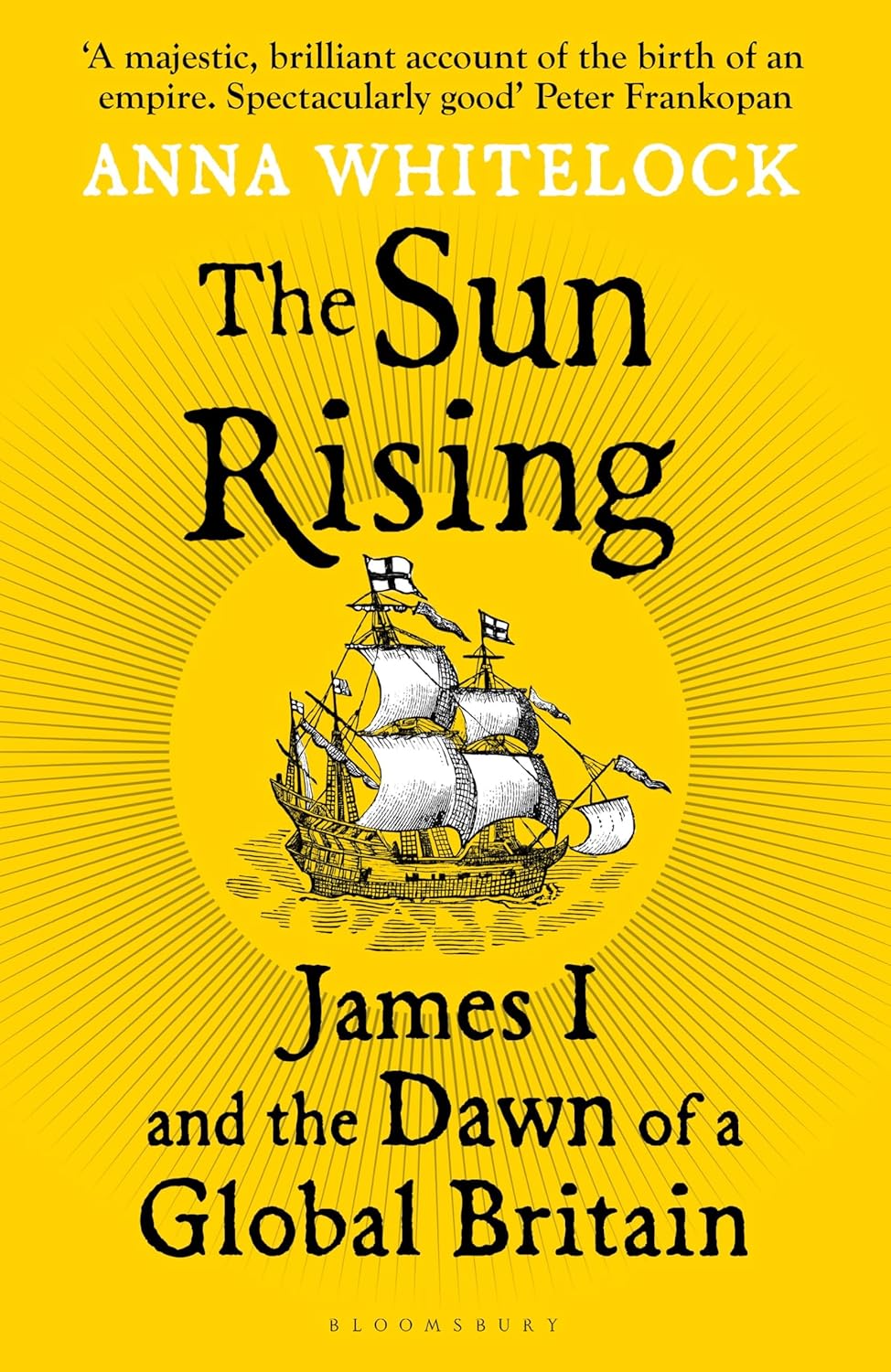
The Sun Rising: James I and the Dawn of Great Britain by Anna Whitelock. Published by Bloomsbury, 430pp, £30.

Share this article:

Subscribe to our newsletter to not miss articles like this one:
 SUBSCRIBE