


Written by:

Review: The shame and silence of the Magdalene Laundries
 Reading time: 6 minutes
Written by:
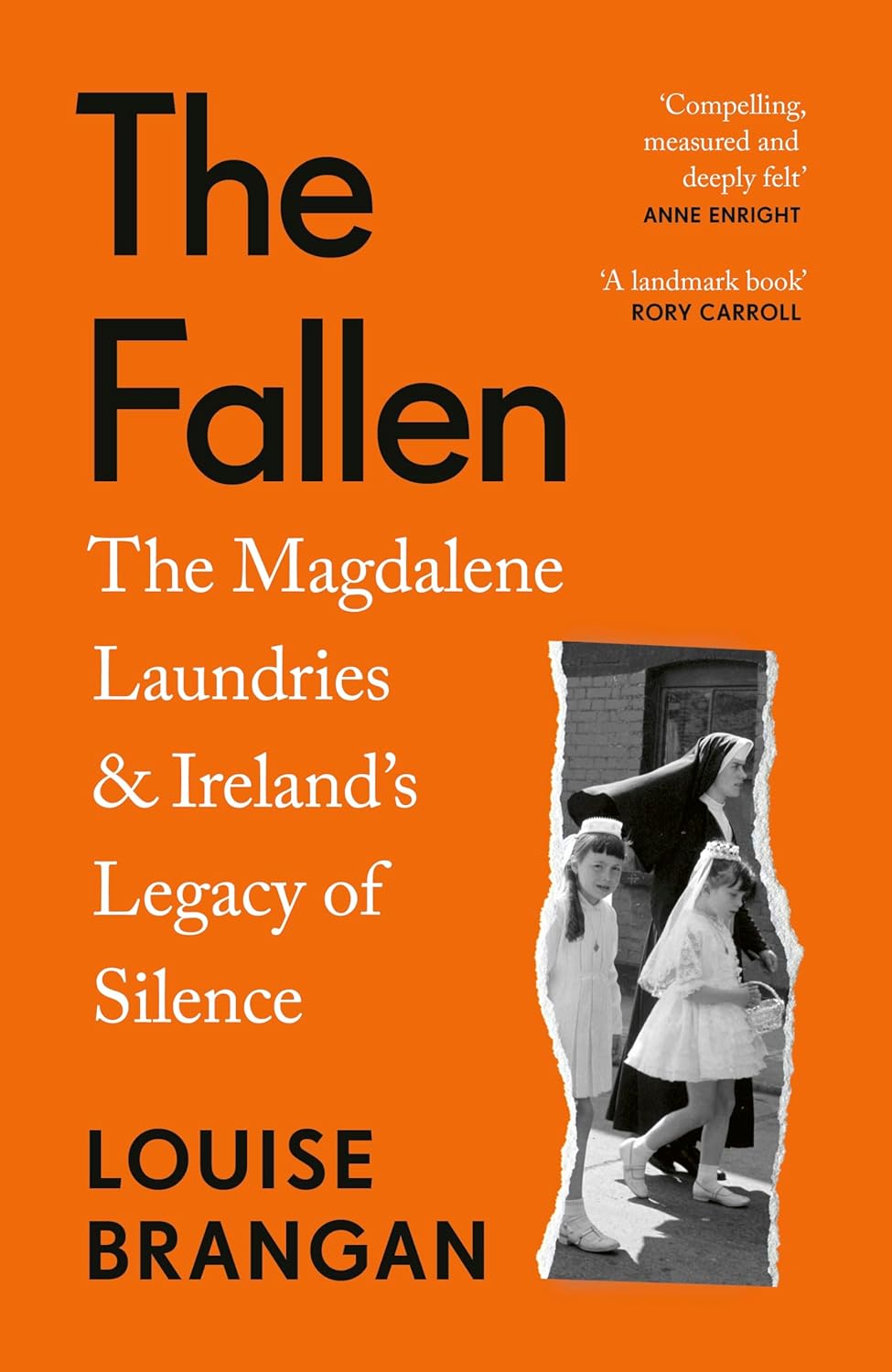
During his long summer holidays in 1934, staying with a school friend’s family in Ireland, historian and author Richard Cobb remarked on what, to him, seemed like a peculiar practice: tram passengers discreetly crossing themselves every time the tram passed a church or roadside shrine, which appeared every quarter of a mile. This is evidence of the newly minted Irish state as a deeply Catholic nation which is also the starting point for Louise Brangan’s scorching analysis of Ireland’s Magdalene Laundries, in existence for most of the twentieth century.
Not to be confused with the Mother and Baby Homes where unmarried mothers delivered their illegitimate pregnancies, the Magdalene Laundries were also a church-run institution. In their early days, they were “regimented and religious”, but were not intended as carceral establishments, in fact women and young girls came and went as their needs fluctuated. They were not an alternative to female prisons and yet that is what they became. In 1951, 70 in every 100,000 Irish females were in a Laundry, while 27 men in every 100,000 were in prison. The latter had committed a crime, been tried with a verdict and sentence. The former involved none of those, just a whole-nation commitment to disappearing women and girls who were felt to have shamed, or be capable of shaming, the new state. This is what Brangan terms “theocratic, extra-legal mass detention” because the Catholic Church not only supported the policy of incarceration of these women but also instigated a nationwide atmosphere of penitence and shame focused on women’s aberration. That could include anything from pre-marital pregnancy to being born with Down’s Syndrome, suffering a difficult menopause or impairment after a catastrophic head injury, or being the victim of parental sexual abuse. These were girls and women whom society could not countenance.
Using state papers and oral testimony from those women who survived and were prepared to speak about their experiences, Brangan builds a picture of a century-long abuse of women and girls from their entry to industrial school before progression to a Laundry, to those who were sent straight there by their parents. Whether delivered by a family member or collected by a nun, they were instructed to pack a suitcase. What on earth for? When they entered the Laundry, the nuns’ first task was to remove their former lives – a set of second-hand clothes and shoes often too big, hair shorn and name expunged and replaced with something chosen for them. One young woman was renamed Peter, her identity and gender erased.
At times Brangan likens the experiences to the Taliban. In mid-century Ireland, there was a ban on Protestant doctors for Catholics. Elsewhere she calls the Magdalene Laundries “Ireland’s Auschwitz”. Also, there are instances throughout the testimonies recalled here that suggest A Handmaid’s Tale, Andrew-Tate-misogyny and the Holocaust. From packing a useless suitcase, to identity erasure while alive to complete annihilation after death. In 1993 when property developers unearthed a mass grave outside a Magdalene Laundry convent, there were only 75 death certificates for 155 bodies of whom 45 had no recorded name.
These are among the “killer stats” Brangan peppers throughout her book, each jaw-droppingly awful. In the mid 1980s a survey of Laundry inhabitants recorded 80 per cent as “mentally handicapped” yet decades before, only four per cent had entered with that description. What had happened to these women in the intervening years? Monotonous, hard labour; deficit of stimulation with ritual praying as they worked; silence all day; corporal and mental punishment; no human contact. Their individuality had been eradicated to produce automatons in a perpetual “frenzy of psychological terror”.
Brangan leaves the perpetrators nowhere to hide. By the early 2000s when the ghastliness of the Laundries had been exposed, a political quick step commenced: the Laundries were privately owned and operated, therefore the state was not responsible for what had occurred nor for reparations; the state had never referred women to the Laundries nor been complicit in any referrals; the women were employees. But they had never received wages, which makes the women incarcerated in the Laundries either volunteers or slaves.
The Church took no responsibility and Brangan’s requests for interviews with some of the convents involved solved little: apparently, they had acted in good faith providing refuge and sincerely regretted that the “women could have experienced hurt and hardship” during their stay.
Brangan provides informative twentieth-century context to explain Ireland’s unique situation after independence. This history does not excuse what happened, but it is a lesson in how not to allow clerics, obsessed with the potential for female immorality, to influence the running of a country.
Arguably, if the early government had been able to stand up to the Church, the Laundries would never have been allowed to continue. In 1931, the government challenged the Church that if they were so concerned with immorality, why did they not concentrate on the antecedents to this issue, namely housing, education and unemployment. But as Brangan explains, if a nation’s rulers believe that its citizens’ souls have an afterlife, then the government is responsible for the salvation of souls, which means moral jurisdiction over their everyday behaviour and disregard for their earthly situation.
Brangan’s book proves that the unanimity of the testimonies of the women who suffered corroborates their stories, making their words and Brangan’s a reliable history source. Attempts to dilute their experience, to mitigate the actions of Church and State, to declare ‘I didn’t know’, do not stack up. History has heard those excuses before. Where once cremation smoke was ignored, here laundry steam spewing from convent chimneys went unheeded. Yet, after these women found someone who would listen, the shame that is the Magdalene Laundries has been memorialised for eternity. Brangan ensures there is no excuse for ignorance now.
The Fallen: The Magdalene Laundries & Ireland’s Legacy of Silence by Louise Brangan. Published by The Bodley Head, 368pp, £22.

Share this article:

Subscribe to our newsletter to not miss articles like this one:
 SUBSCRIBE