


Written by:
Graham Ogilvy
Managing Editor
Review: The scientists who starved to death to protect the world’s first seed bank
 Reading time: 3 minutes
Written by:
Graham Ogilvy
Managing Editor
As a young journalist visiting Brezhnev’s sclerotic Soviet Union, I felt privileged to be shown around the huge state library in Leningrad, the second largest in the world, by one of the aged librarians who had actually worked there during the horrendous 872-day siege of the city, when the Nazis very nearly succeeded in choking the life out of the cradle of the Russian Revolution.
Lena, an earnest, sparrow-like old lady proudly revealed the glories of the library – explaining its nooks and crannies. She recalled how skeletal readers came to seek peace and literary sanctuary even during the heaviest of bombardments and of how some of them died in the library of cold and starvation and exhaustion.
By night, Lena and her colleagues fire-watched on the roof of the great library, dousing incendiary bombs with sand. By day, they scurried around the embattled city scooping up the libraries of deceased bibliophiles before freezing neighbours could throw them into their stoves.
While the librarians carried on their daily tasks with grim determination, the great Russian composer Dmitri Shostakovich, also trapped in the city, was composing his monumental 7th ‘Leningrad’ Symphony. Prior to its premiere by the emaciated surviving members of the Leningrad Symphony Orchestra, the Red Army launched a massive barrage on the German lines and then suddenly stopped – to broadcast the symphony to the encircling fascists via giant loudspeakers.
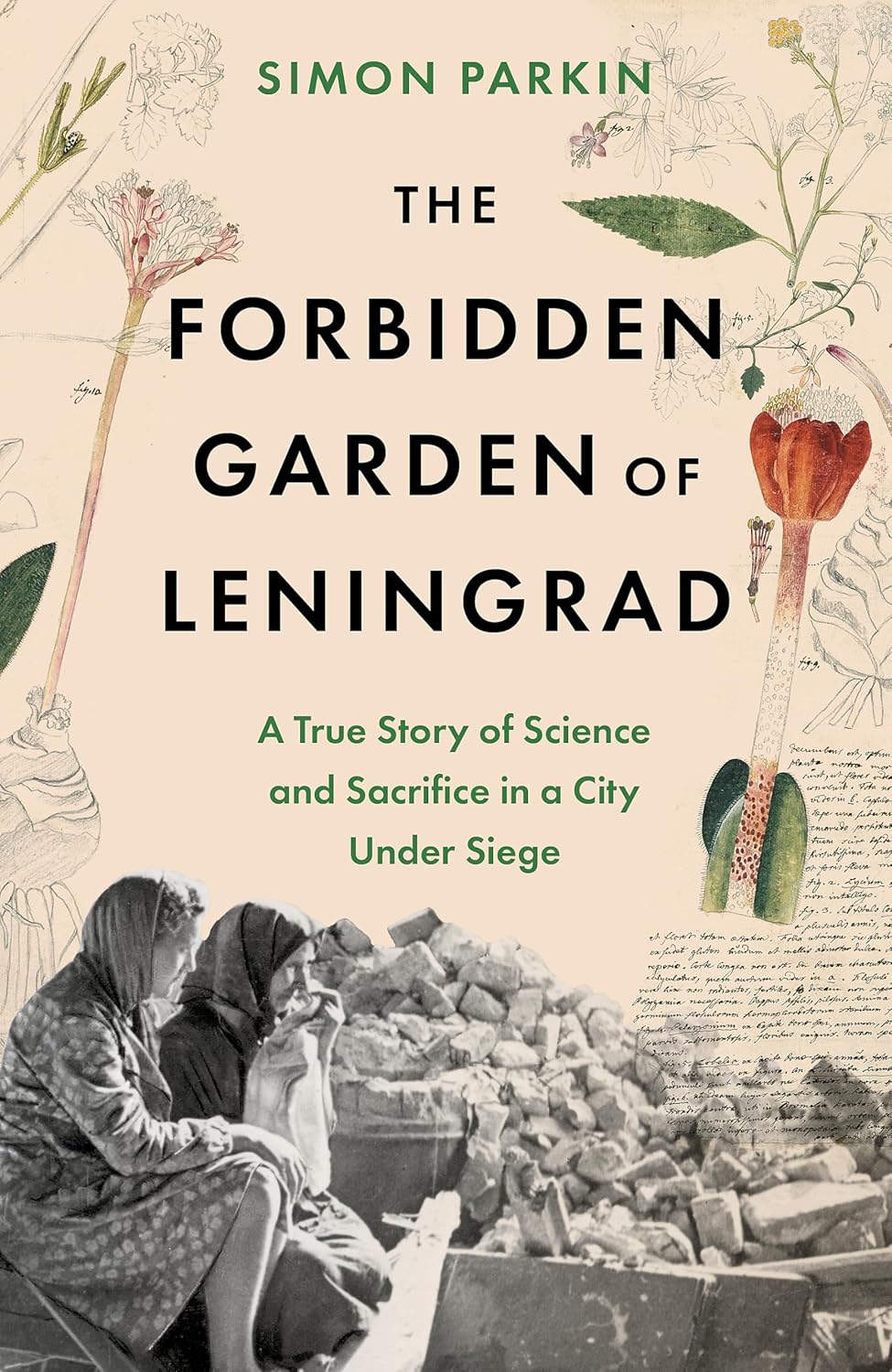
And now, in Simon Parkin’s remarkable The Forbidden Garden of Leningrad, we learn of yet another story of heroism and self-sacrifice – that of the scientists who starved to death to protect the world’s first great seed bank rather than consume the oats, grain, beans and potatoes that they had gathered from around the world. The sacrifice of the starving botanists who tended their crops rather than eating them is all the more poignant because at the same time as they toiled to maintain a seed bank that has done much to feed the world today, it’s visionary founder Nikolai Vavilov, despite the intervention of Winston Churchill with Stalin, was a prisoner in the Gulag where he would eventually perish in captivity.
Vavilov’s international fame and close links with British scientists were only part of his undoing. He also fell foul of the agronomist Trofim Lysenko, a charlatan and pseudo-scientist who won favour with the Soviet regime by promising huge harvests.
The sacrifices made by Vavilov’s colleagues were not in vain. By 1979 one third of Russia’s arable land was planted with seeds derived from the collection saved by the scientists and today the seed bank holds more than 320,000 samples with 4,500 new and unique types of plant bred from the samples saved during the siege.
Nineteen of the seed bank employees actually died at their place of work rather than eat their life’s work and that of their colleagues. Parkin has unearthed photographs of the librarians, archivists and researchers who starved to death. They appear, published in book form for the first time, a humbling roll of honour.
The Forbidden Garden of Leningrad by Simon Parkin. Published by Sceptre, 360pp, £25.

Share this article:

Subscribe to our newsletter to not miss articles like this one:
 SUBSCRIBE