


Written by:

Review: The Nazi Vendetta against the Einsteins
 Reading time: 3 minutes
Written by:
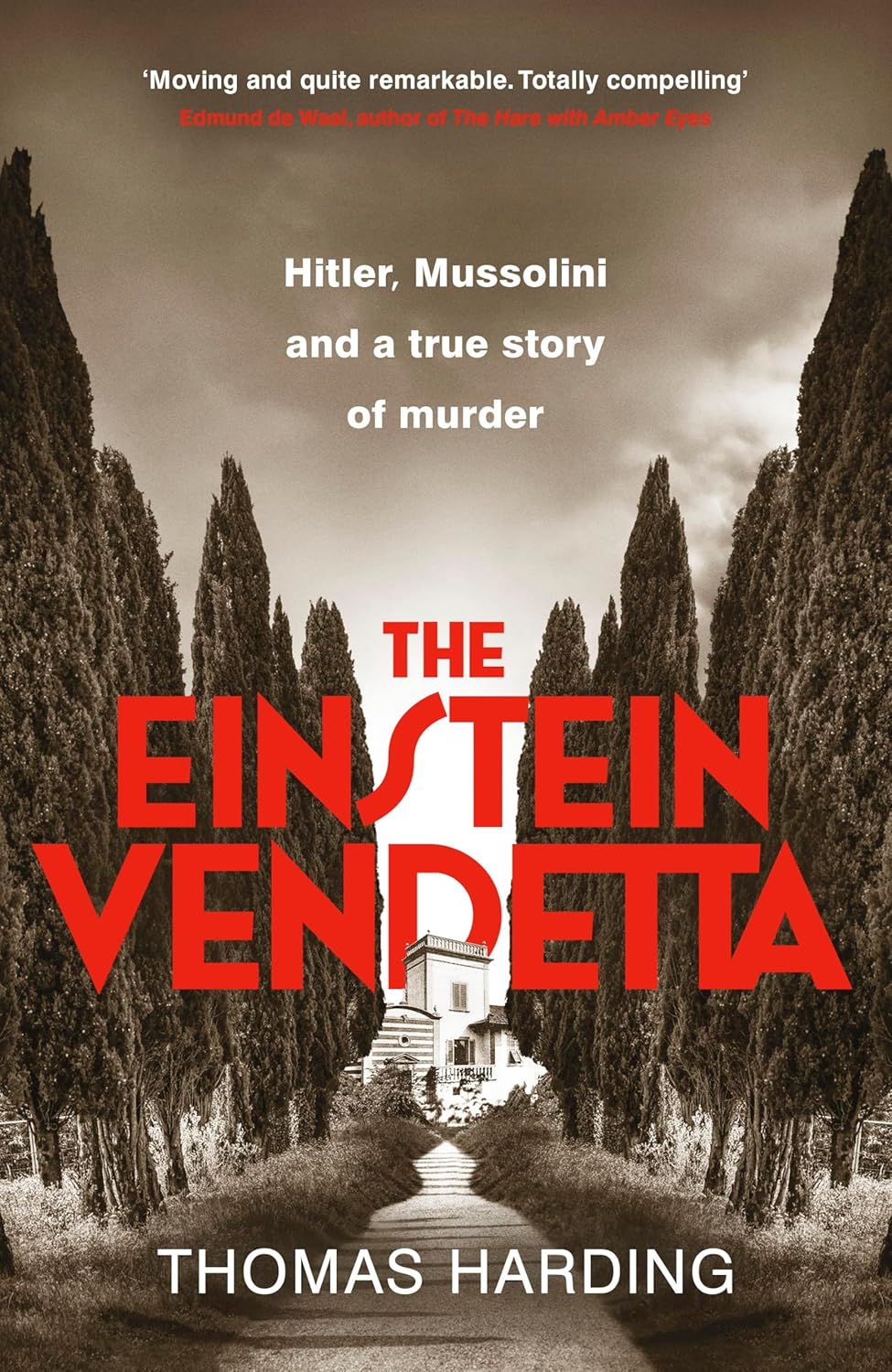
The Einstein murders were listed as number 2,550 of the total of 5,884 incidents in the Atlas of Nazi and Fascist Massacres in Italy. The place of the crimes was the Villa Il Focardo, 15 miles southeast of Florence, in 1944. German soldiers arrived at the home of Robert Einstein and his family. He was a cousin to the scientist, Albert Einstein – a prominent enemy of the Nazi regime, who was living in America. Robert was Jewish, and, inconsequentially, his family were Protestants.
Robert Einstein knew that the Germans were after him and he absented himself from the family home to live in the woods nearby. His thought was that if he could not be found and killed, then his family would be left alone. That naïve view was in the context of the rapid approach of the American and British armies, whose attack on the German forces was relentless. That and other news suggested that the allies were close by, possibly to arrive in a day or so.
The German soldiers on instructions from higher command, somewhere, killed Robert Einstein’s family (his wife and two children) as a sort of cruel revenge. He survived the war but not for long as his mental condition deteriorated and he died by his own hand in 1945.
The massacre at the Villa Il Focardo was overshadowed by others of that period, and the examples referred to involved 52, 335 and 560 deaths respectively. Even these instances of serious war crimes had to be seen in the context of news of the death camps elsewhere.
The delicate politics of immediate post-war Italy meant that the authorities, led by the politicians, showed little interest or enthusiasm in the investigation of war crimes occurring during the fascist period. Indeed, an amnesty granted pardons for various groups.
In short, nothing much happened until, in 1994, an Italian magistrate walked into a storage room at the military prosecutor’s offices in Rome. There he noted a 6ft-high wooden cupboard, mysteriously positioned to face the wall. When the cupboard was opened there were inside documents dating from the mid-1940s. These were war crime investigation files, on more than 2,000 incidents in Italy during the fascist period. The file for the Einstein murders was amongst these papers.
The Einstein Vendetta narrates the war crime itself and, after an unconscionable delay on the part of the authorities, the more recent attempts to identify those responsible for a brutal form of vicarious punishment. The potential accused were by then dead or incapacitated.
These ‘small’ events, in the context of a total war, probably carry with them persistent distress for those involved, even tangentially. It is profoundly sad that so many instances of inhumanity were for pragmatic reasons overlooked. Thomas Harding has narrated in compelling terms a forgotten episode that merits its place in the literature of the effects of war. The brief episode was seared into the consciousness of those who knew of it more contemporaneously.
Harding has done well to produce a compelling narrative of the, at times unclear, contemporary events at the Villa Il Focardo: he is on stronger ground with modern attempts to close the stable door long after the horse was declared unfit for trial.
The Einstein Vendetta: Hitler, Mussolini, and a true story of murder by Thomas Harding. Published by Michael Joseph, 362pp, £22.

Share this article:

Subscribe to our newsletter to not miss articles like this one:
 SUBSCRIBE