


Written by:

Review: Montgomery – flawed and loathsome but a brilliant commander
 Reading time: 4 minutes
Written by:
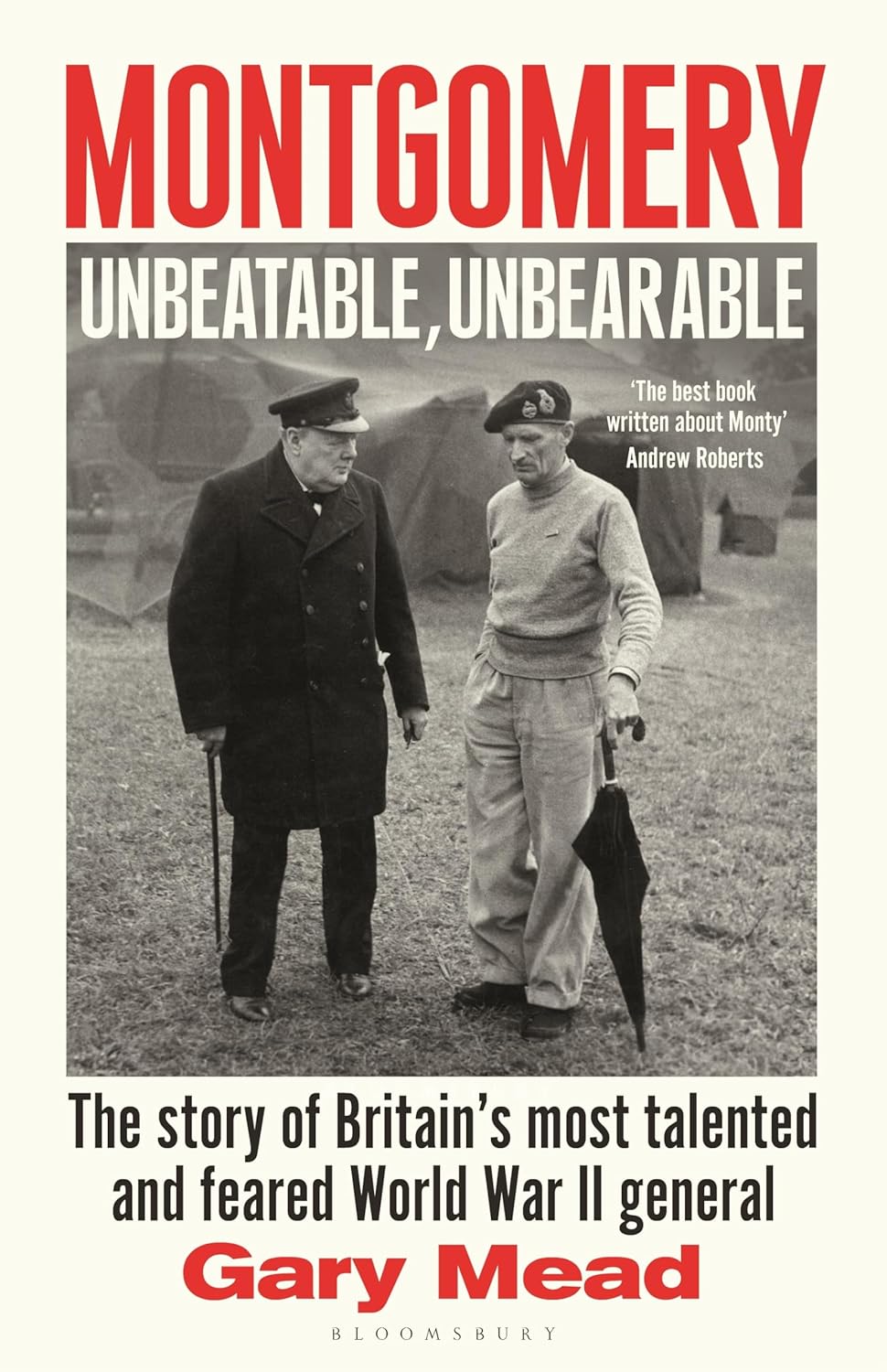
It is a sign of the passage of time that the subtitle to this biography should explicitly identify Bernard Montgomery as a ‘World War II general’. ‘Monty’ and a few, but not many, other generals were well known as celebrities to the wartime public.
Montgomery was an outsider, from an Irish Protestant family, who spent 12 years as a child in Tasmania where his father held a church appointment. The family seemed always to have been in a perilous condition financially. Mongomery’s mother was a very strict disciplinarian.
Much is made by Mead of the tough Montgomery family dynamics, although the strictness with physical punishment on the face of the narrative might well have been a conventional arrangement then: ‘spare the rod and spoil the child’ was a common enough expression.
After a modest school education, Montgomery was commissioned into the British Army, and in particular into an infantry regiment where service as an officer did not require a private income. There was little in the way of a network for Montgomery to draw upon.
He had been in the military long enough to have had the training and experience to be able to more than just meet his duties in the Great War. His battle experience and exposure to danger were real. That enhanced his credibility for a successful military career.
It is a mistake not to consider Montgomery’s military service in Ireland. He went to Cork in 1921, essentially as chief of staff, of a Brigade of the British Army. That was a very dangerous experience given the widespread belief then that the place was ungovernable.
He had little sympathy for the Irish civilians that he encountered. As Mead says: “a brutal unsentimental streak came to the fore”. Yet, he was thought by some Irish participants as one who behaved with “great correctness”. He left in early 1922 to return to England.
Montgomery’s great achievement later as a general officer at an executive level was to give the British Army back a sense of confidence after the defeat at Dunkirk, to inspire soldiers to embark on the long struggle in hard fought battles to defeat Germany and its allies.
More particularly, Mongomery secured famous wins in North Africa, most notably in the second Battle of El-Alamein. His army went into Europe, first by invading Italy in September 1943 and then commanding the D-Day landings in Normandy in June 1944.
The narrative of the military career of Montgomery is a workman-like piece of history, and without a surfeit of superlatives. Where Mead has made a mark is in achieving a balance of the military achievements with a somewhat critical assessment of personality.
Indeed, if there are any perennial rules for survival in the British Army, at least one of these was exemplified by Montgomery: “look after yourself, because nobody else will”. He was said to have studied obsessively and then “pushed and elbowed his way up the ranks”.
The added quality was the insufferable arrogance which accompanied Montgomery’s certainty of his own importance and opinions. Others of his contemporaries as general officers exuded charm, and were the personification of relaxed calm.
The truth is, Mead writes, that “Montgomery was both publicly adored and privately horrid, a recognised excellent trainer, an officer who could command obedience, yet a deeply, flawed, mean-spirited and often personally loathsome human”.
Mead does not merely make pronouncements. The book reads as an excellent whole-life performance appraisal report, evidence-based and entirely reasonable, notwithstanding the circumstances of an existential threat to most European states at the crucial times.
Montgomery ended his career as chief of the Imperial General Staff, “the most senior manager of the British Army”. The paradox of the tale is what might be done with a strange man who at times delivered the managerial goods. Mead’s book might usefully be read by ‘HR people’.
Montgomery: Unbeatable, Unbearable: The story of Britain’s most talented and feared World War II general by Gary Mead. Published by Bloomsbury, 340pp, £25.

Share this article:

Subscribe to our newsletter to not miss articles like this one:
 SUBSCRIBE