


Written by:
Review: Lone killers and how to stop them
 Reading time: 4 minutes
Written by:
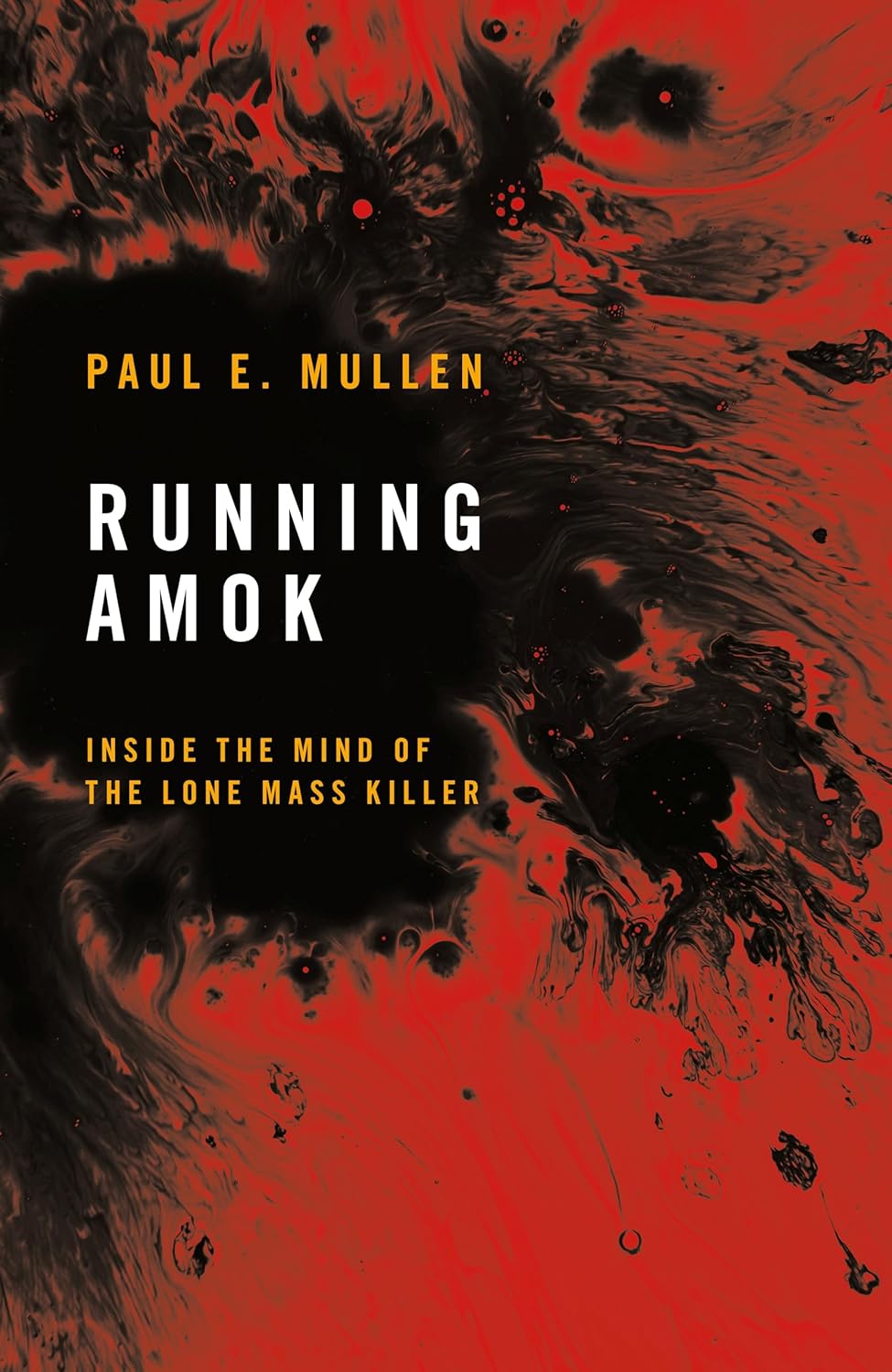
Although we consider the lone mass killer as a recent spawning of the 20th century in western society, as Professor Mullen’s research indicates, it was an established “piece of Eastern exotica” when pengamuk – individuals who committed mass public killing – were first encountered in sixteenth-century Java by European travellers.
Over the centuries, the weapon of choice has changed from knives and swords to guns, but the situation and outcome have not. Public places of congregation, such as high streets, shopping centres and schools have replaced local markets and the intervening 450 years has changed nothing about the victims: innocent citizens, families and children. And of course, the perpetrator continues to be an individual “alienated and disaffected” from the society they inhabit. Mullen identifies two elements to running amok: first, to kill people in a public space, thereby asserting the killer’s power; and second, to create such a violent spectacle that others come running and beat the pengamuk to death thus avoiding the shame of death by suicide. The modern equivalent is ‘suicide by cop’ when police shoot to kill a lone mass killer.
Mullen’s psychiatric practice has been informed by working to help those serving prison sentences who were not taken down by law enforcement in the moment of their crime, and also through treating patients and spotting those who are on the road to destruction, something he admits is rather difficult. He concludes this fascinating yet terrifying book with a call to action for governments to establish Threat Assessment and Response Centres (TARC) to which concerned families and medical professionals can report their fears; where all reports are assessed for potential seriousness and those passing the bar are escalated to mental health professionals and the police. This is a very sensible plan considering the increase, perceived and statistical, of lone mass killing and of copycat outbreaks by disturbed men, because let’s be clear, it is nearly always a male perpetrator.
The book covers a range of well-known cases from a Texas university campus killing in 1966 to Port Arthur, Tasmania in 1996 and onwards to Utøya Island in Norway in 2011, as well as a little-known event in 1913 in Mühlhausen outside Stuttgart. In all cases, Mullen explores the perpetrator’s background and antecedents to criminality. Mostly, they were young men with chaotic family lives, some suffering violent fathers, others with controlling mothers. Unemployment features in some histories, while other killers have experienced loneliness or at least an inability to make lasting friendships. But everyone one of them has displayed a fascination with guns, without access to which, arguably, they would never have been able to commit such atrocities.
Especially poignant is Mullen’s exploration of the Dunblane massacre in March 1996. Granted a gun licence in 1977 and allowed repeatedly to set-up and lead children’s activity clubs, the killer was accused of paedophilia but there was no “concrete evidence” permitting the authorities to intervene. He complained to his MP and the government imploring them to assist him and ultimately to Queen Elizabeth II as “a last resort”. As usual with this type of killer, their “bland politesse” replies were construed by him as validation of his “exaggerated notions” of importance. His massacre was well planned and the investigation after the event reported that financial ruin was the final straw. Existing under the cloud of child molestation accusations, friendless, middle-aged and with no future that he could foresee, killing 26 infant school children and four of their teachers was his only solution. Mullen concludes that this lone mass killer was delusional, a mental state that “pushed him across that line from suicidal despair to mass murder”. While many may sadly contemplate the former, thankfully very few perpetrate the latter.
Mullen is keen to memorialise those who fell prey to the men who carried out these crimes rather than extend yet another gift of ‘fifteen minutes of fame’ to their killers. Rather than naming the event as ‘the Utøya Island massacre’, it should be called the day Gunnar, Carina, Birgitte and 66 others were killed because it would seem we all live in precarious, potential proximity to lethal madness. Unless Professor Mullen and his multi-disciplinary colleagues in TARC can get there first.
Running Amok: Inside the Mind of the Lone Mass Killer by Paul E. Mullen. Published by Extraordinary Books, 240pp, £20.00

Share this article:

Subscribe to our newsletter to not miss articles like this one:
 SUBSCRIBE