


Written by:

Review: How the money launderers beat the regulators
 Reading time: 4 minutes
Written by:
Without money laundering, it appears, few major crimes of acquisition would be worth the trouble. In the old days, in other words, shops, post offices and banks were robbed for their cash, and very possibly not very much of it given the effort and risks then required.
The nature of successful top-end crime is such now, particularly at the managerial level, that the risk of discovery is too great by holding the gains in cash, and in terms of volume, the inexplicable presence of vast quantities of cash is simply not acceptable.
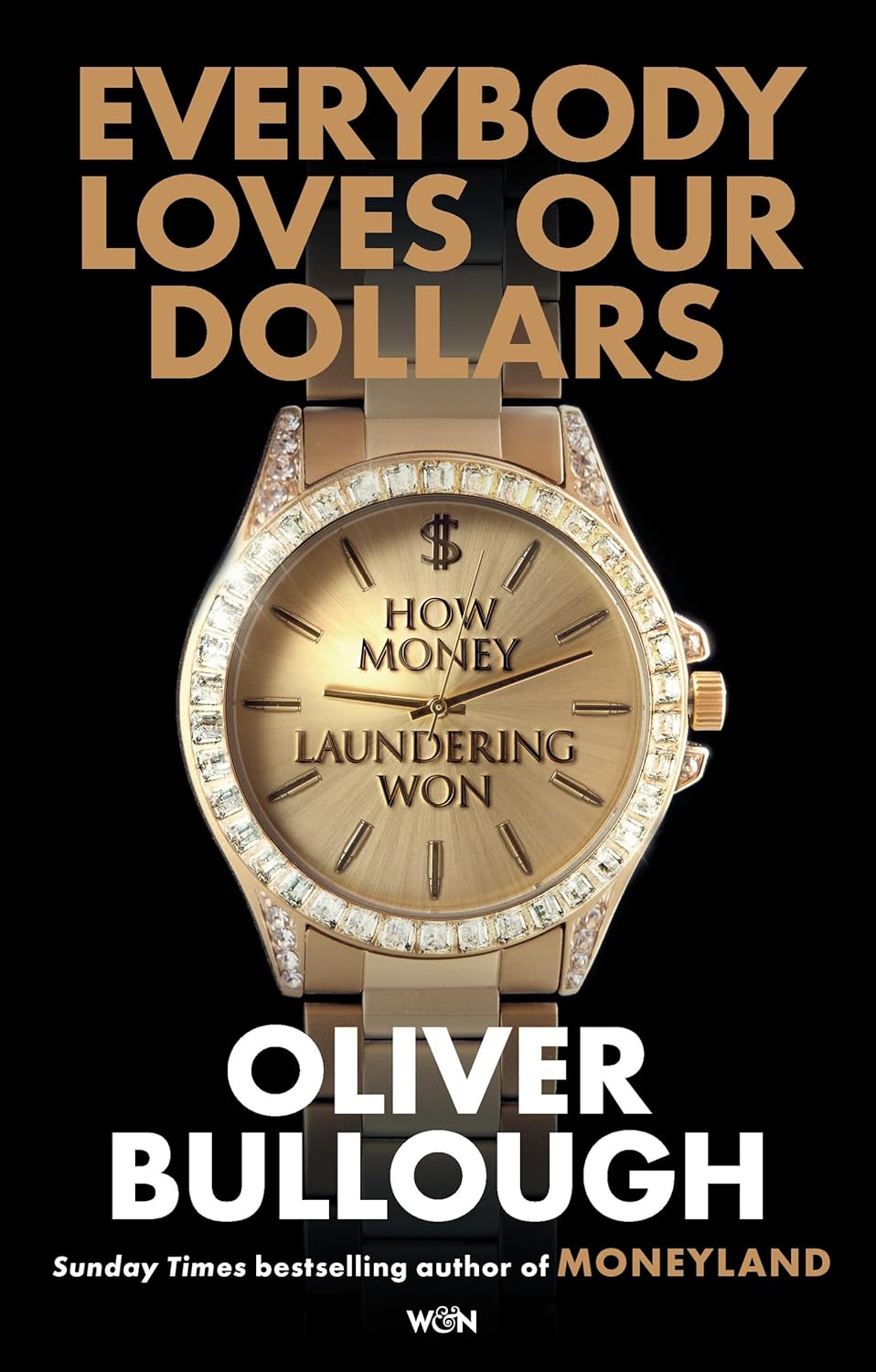
Oliver Bullough is a journalist with a special interest in financial crime. In his new book Everybody Loves Our Dollars: How Money Laundering Won he has considered the underlying ideas of financial crime and money laundering and writes about how ‘we’, meaning governments, have failed in the systems introduced.
Attempts have been made at attacking or undermining money laundering with specialist task forces and relevant legislation passed to order but it has been, in the round, unsuccessful, with only the occasional triumph.
Notwithstanding the rather conversational approach throughout, the book is a worthy and suitable introduction to the vexed subject because of the wide areas of interest, general and vested, covered by Bullough.
The sphere of money laundering studies, we are told, is a small one. Bullough explains the process involving three distinct stages by which ‘dirty money’ is cleansed. First, there is placement, by which criminal money is put into the financial system.
Secondly, there is layering, by which money is mixed around until no one can remember where any part of it came from. Finally, there is integration when the money is spent in the normal economy, in any way imaginable: luxury goods are not excluded from the plan.
That is said by Bullough to be “a neat theoretical model”, but he suggests does not coincide with the harsh reality of the business of money laundering. It is the need to understand what is going on around the money that is necessary in order to expend effort in the correct place.
The evolution of government policy and the emergence of law is shown by Bullough to be due to the efforts of one Washington legislator who overcame indifference and hostility. The irony of the legislation named ‘bank security’ was that it required transparency of the banks.
One of Bullough’s rather discursive introductions leads to Miami in the 1980s where money was being earned disproportionately, and lost by the same people with indifference. The result was that the place then is described by him as the golden age of money-laundering.
The volumes of cash sloshing around Miami led to legislative interest and the movement of the business off-shore and then later to what were then unknown places in the world: the impoverished Marshall Islands in the Pacific became the focus of attention for many potential and actual banks, and government policy-makers in pursuit of a reason to legislate.
It is truly a sign of how things were, and may be, that the founder of one well-known international bank that was divided across the world to avoid full regulation could say that “the only laws that are permanent are the laws of nature. Everything else is flexible”.
The really impressive aspect of the book is the breadth of the coverage of specialist areas of money-laundering: some have an historic aspect, the Medicis set initial standards, and with others geographical and national areas of expertise have developed.
For the money launderers, part of the run of problems they face is simply events. Practices evolve to beat the changing restraints; these developments much else is covered in Oliver Bullough’s continuously interesting book which is by no means a theoretical study.
Everybody Loves Our Dollars: How Money Laundering Won by Oliver Bullough. Published by Weidenfeld and Nicolson, 311pp, £10.99

Share this article:

Subscribe to our newsletter to not miss articles like this one:
 SUBSCRIBE