
Written by:
Review: Forensic Science on Trial
 Reading time: 5 minutes
Written by:
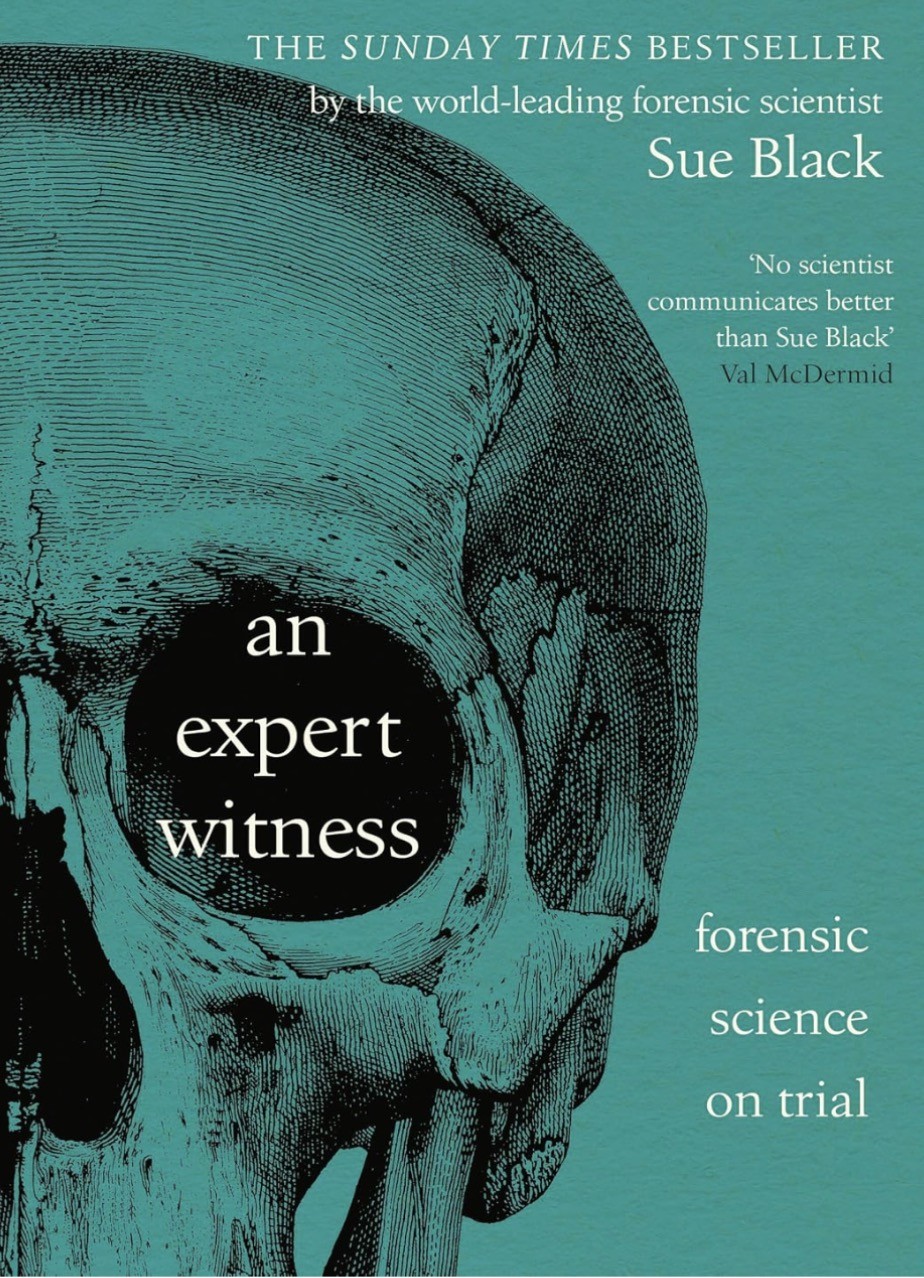
Louise Heren reviews Sue Black’s ‘An Expert Witness: Forensic Science on Trial’, exploring the evolution of forensic science and the importance of impartial, reliable expert evidence. Drawing on Black’s career, the book examines courtroom pressures, pioneering identification techniques and the risks of bias and AI in criminal justice.
Forensic science fascinates audiences from movies to documentaries and readers of ‘true’ crime thrillers. The BBC’s ‘Silent Witness’ has done wonders for the viewing public’s apparent understanding of pathologists and their supposed involvement in crime-scene investigations, guiding police towards the culprit. However, while she welcomes the exposure of the forensic professions to a wider public, Professor Sue Black’s latest book fascinates in a completely different manner – it sets the record straight on what exactly a forensic expert should do, and specifically what a forensic anthropologist does.
Undoubtedly, Professor Black is the UK’s most prominent and arguably its most experienced forensic anthropologist, and in her latest exploration of her career and her profession’s history, she examines the methods that have evolved in identification of victims and more importantly the identification of criminals.
Today, we accept DNA as a key tool in the forensic expert’s arsenal, but Black begins in the early days of experts in the court room exploring a shipping and cargo insurance claim in Wells-next-the Sea in which Robert Mylne, a fellow of the Royal Society, employed his knowledge of tidal flow and silt deposits to prove the case. He was very unpopular with the local claimants. And so it seems have been many forensic experts across the decades, because as Black explains, forensic experts are bound to tell the truth; not to imply, insinuate or give opinion; to remain impartial and unbiased.
Using science that has been tried, tested, proved to be repeatable, quantifiable and reliable, the forensic expert provides analysis that may prove beyond reasonable, scientific doubt that either the defendant did it or did not; scientific evidence can be the only basis for their contribution to any case. Professor Black is at some pains to explain, gently, when the expert’s testimony has been valued and when she, and others, have left the court room feeling shredded by relentless cross-examination. Clearly, becoming a forensic expert is not for the faint of heart or anyone with an ethical compass that does not point unwaveringly due north.
The history of developments in forensic science is hugely informative, but Black’s own innovative contributions to the latest methods of detection and identification are the most fascinating. Vein patterning and penis analysis are among the many she describes, and necessarily often with humour. Requesting MoD approval for a medical officer to take photographs of volunteer soldiers’ private parts was refused, but once the idea of building a database of examples – necessary for statistical probability analysis – Professor Black then landed on a website where ‘gentlemen posted photographs of their genitalia’. Requesting permission from the university’s ethics committee to gain access raised some eyebrows, but having completed the research, Black was able to provide expert testimony in a court case involving a photo of a penis sent from a mobile phone to a very upset complainer. Working for the defence team, she proved it could not be the defendant’s appendage.
Sadly, a lot of Black’s more recent work has involved child sexual abuse and identification of abusers, often through analysis of digital images. It seems the mobile phone is the gift that keeps on giving. Yet while it facilitates the taking of indecent images, it has also increased the likelihood of the forensic teams identifying the culprits. She offers a clear warning to those who might indulge in digital images of harm which leave a traceable ‘electronic spoor’: you have them, you share them, you make them … you’ll get six years in prison.
The unstoppable encroachment of AI has entered the forensic science world, and Black ponders its usefulness. How difficult might it be in future for a defendant to prove the technology wrong? It may become a case of guilty until you can prove yourself innocent, the defendant exposed to the potential for biases introduced by those who taught the AI how to collect and analyse the data.
Having spent a career working in anthropology and forensic anthropology in recent decades dealing with some of our most notorious cases in Scotland, England and beyond, Black is well-placed to comment on bias in society, among lawyers and jurors, and most especially on myths pertaining to rape victims – they don’t have to cry to have been raped. Yet she also strongly acknowledges the work of England’s CPS and the Royal Society of Edinburgh on their contributions to juridical and judicial education in these matters.
While this is unlikely to be her final book on forensic science now that she has a desk job at St John’s College in Oxford, it appears that Professor Black has hung up her lab coat. Too many images of abuse to analyse, too many attempted scalpings from counsel of either side when she was just doing her job – stating the science, remaining impartial, being immovable on any provocation to offer an opinion. But now she can offer several opinions on how scientists might improve their research before introducing it in the courtroom; how lawyers might treat their expert witnesses with greater respect and what the future might hold for forensic experts and law enforcement in a world where ‘analysis paralysis’ is already a recognised side-effect of overwhelming amounts of data.
An Expert Witness: Forensic Science on Trial by Sue Black, published by London: Doubleday, 400pp, £22

Share this article:

Subscribe to our newsletter to not miss articles like this one:
 SUBSCRIBE