

Written by:

Review: Exploiting the elderly
 Reading time: 3 minutes
Written by:
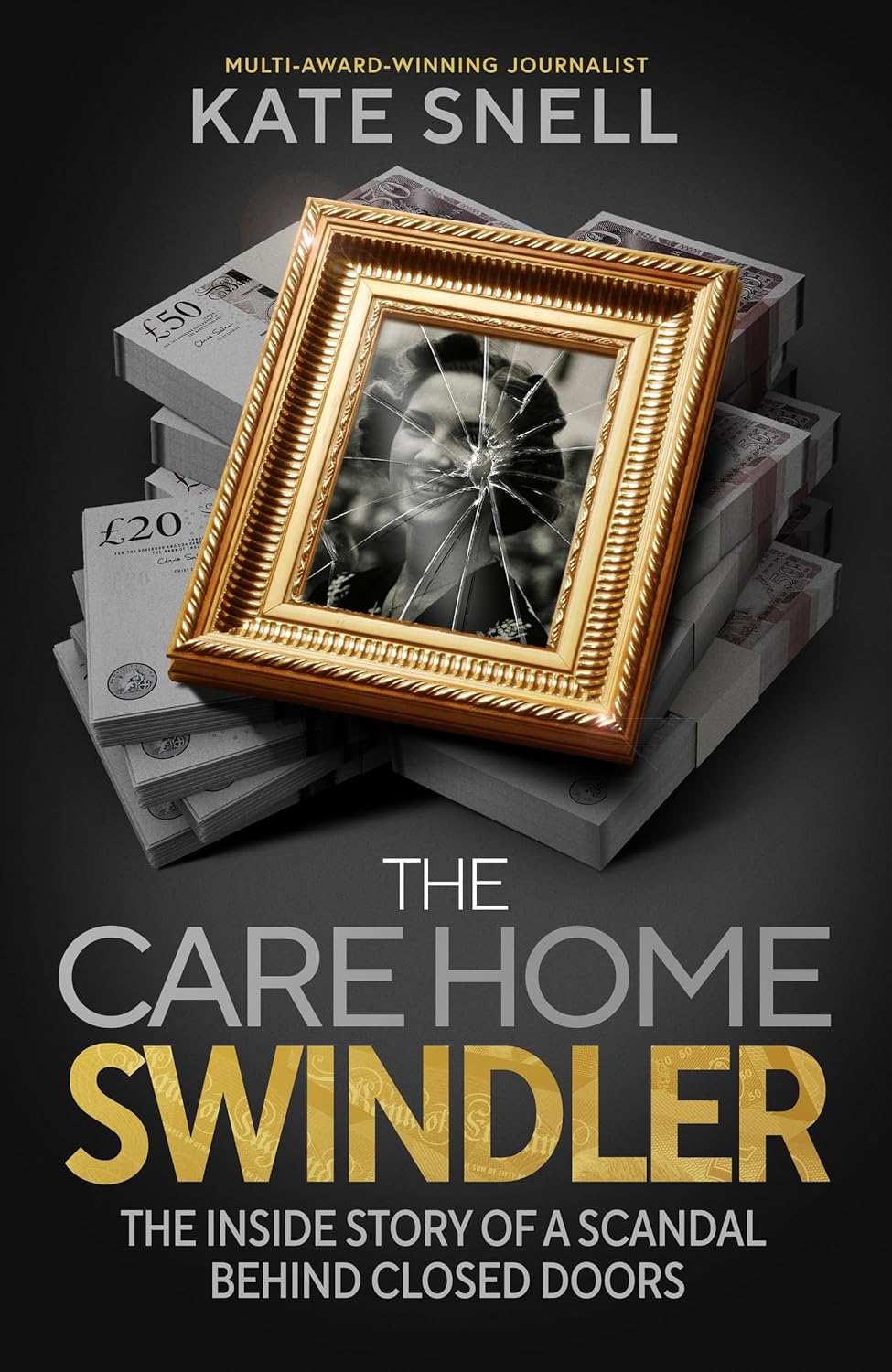
The Care Home Swindler, the reader is told, purports to be, and is, the “gripping inside story” of a care home owner who took vast sums of money from his residents, with “an expose of the terrifying reality of what happens to the elderly behind closed doors”.
The care home owner, the reader is advised, “was assisted by corrupt professionals: solicitors [sic], bookkeepers and senior care home workers who became part of his fraudulent operations”. The one named solicitor of interest died before he could be tried for his part.
The foreword of the book explains that the whole event is “a true story”. Further, and perhaps more worryingly: “Dialogue is faithfully captured from witnesses I [the author] have interviewed and their memory of what was said given the passage of time.”
For missing or unavailable witnesses, some dependence is placed on witness statements to the police and to the court. No explanation is offered by the author, an investigative journalist, as to how the police statements were obtained. The reliance additionally on the evidence of witnesses in court is understandable and unremarkable.
The author goes on further: “For scenes [sic] involving [the nursing home owner] and a victim [only certain Christian names are specified] where there were no witnesses present, I have reconstructed the dialogue, and though the words are not necessarily said in that way or in that order, I have drawn on repeated phrases and instructions [the nursing home owner] used with other residents, numerous staff who worked for him at the home and his own letters and statements.”
The book has no list of contexts nor an index, nor even a single photograph of the care home owner. There are no chapters: there are themes and within the relevant pages a succession of dated stories touching on how the dishonest behaviour was started, developed and hidden.
The evidence for an ill-advised civil action by the care home owner brought the whole matter to the attention of the police whose interest led to the criminal trial. The latter is covered in three pages with a few more for the consequences.
The care home owner acted in a controlling and coercive manner towards old and infirm residents. By the owner’s, at time skilful and at other times crass, manipulation of powers of attorney and access to bank accounts he was able to take millions of their money.
The whole approach, at times notably aggressive, meant that the furtive scheme was bound to bring returns and it was not necessarily certain to fail. The care home owner through his greed, pushed the contrived arrangements too far, leading to official intervention.
The whole story provides an almost textbook description of how, on a grand scale, those with authority over exceedingly wealthy and vulnerable residents do not always promote the best interests of the elderly.
The book concludes with a short consideration of the general implications of the criminality in management of care homes, other comparable examples are mentioned but none of them, apparently, on the scale of the major study presented.
In short, this book reads as if it is a pitch for a future film. For connoisseurs of dishonesty, the scheme studied and explained is a masterclass and worth following despite its complexity. Yet, there is a peculiar ambience about the book because of the strange style of presentation.
The Care Home Swindler: The Inside Story of a Scandal Behind Closed Doors by Kate Snell, 324pp, £25.

Share this article:

Subscribe to our newsletter to not miss articles like this one:
 SUBSCRIBE