


Law contends with new ‘arms race’ as RAF launches space squadron
 Reading time: 4 minutes
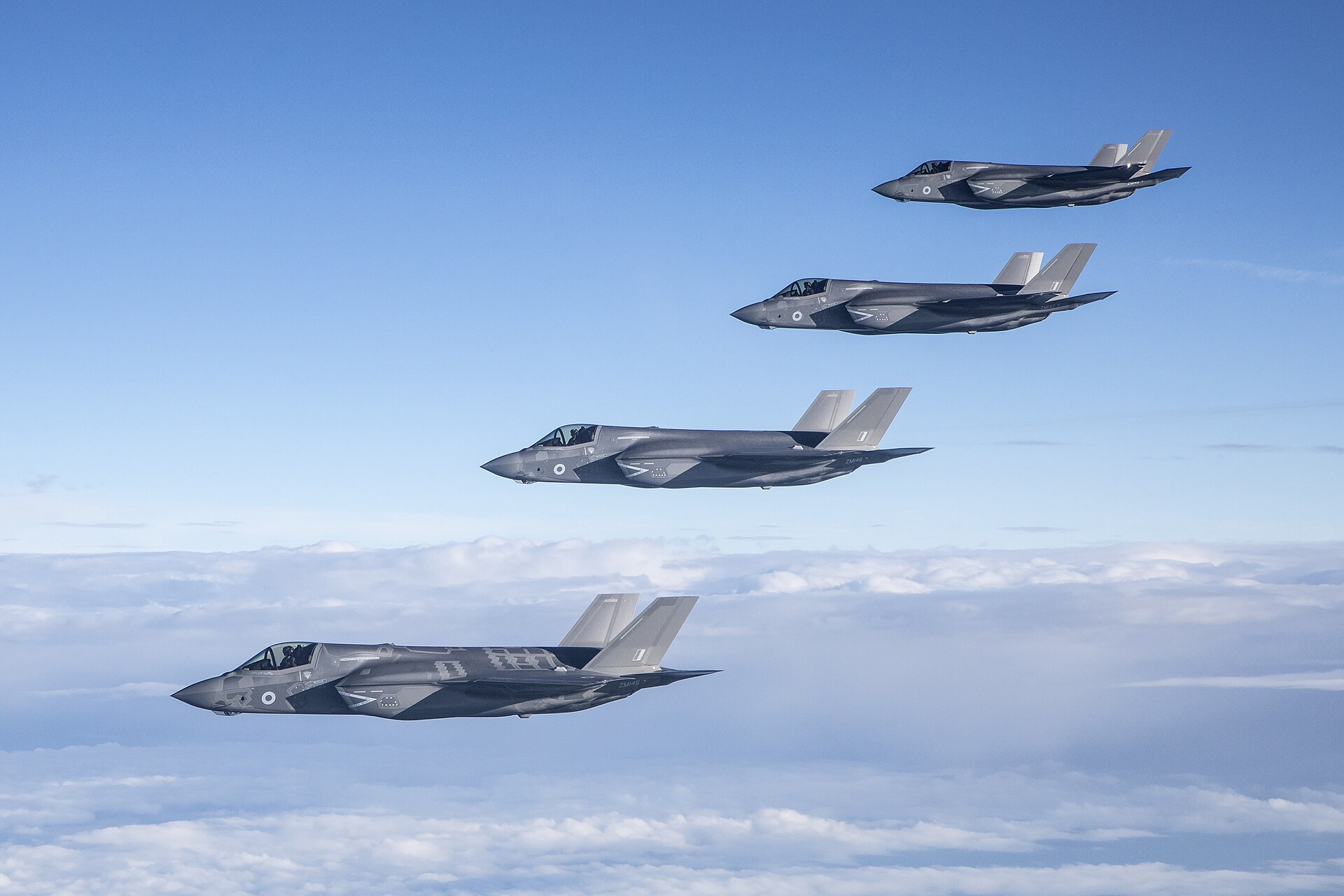
F-35Bs
Credit: Cpl Tim Laurence/MOD, OGL v1.0
The RAF has launched No. III Space Effects Squadron – its first dedicated unit to counter hostile threats to UK satellites.
Satellites vital to everyday life in the UK are set to be protected from hostile threats, as the RAF launches the UK’s first ever dedicated space squadron focused on disrupting, degrading, and denying enemy activity targeting British interests in space.
Announced today by the Chief of the Air Staff, Air Chief Marshal Sir Harv Smith at the first-ever UK Space Power Conference, No. III Space Effects Squadron will bring together specialist personnel from across the Armed Forces to counter hostile activity in orbit and defend the satellites the nation depends on every day.
While sister units No. I Space Operations Squadron and No. II Space Warning Squadron give the RAF the ability to watch and warn of threats in space, the new No. III Squadron will act against those threats, using advanced technology, including Electronic Warfare, to disrupt, degrade and deny hostile actions. The squadron will support both offensive and defensive space operations and will expand over time as new capabilities enter service.
It comes as the Defence Secretary Wes Streeting will give a keynote address at the Space Conference.
He said: “Britain has to keep pace in the new space race. Control of the waves was the essential ingredient in 19th century deterrence. That is why Britain built the finest naval power in history. In the 20th century it was control of the skies, and so we built a world class air force to protect us. This century will depend on control of space.
“Our dependency on space is precisely why it is increasingly under threat from our adversaries. That threat is growing in scale, speed, and sophistication. And challenges in space increasingly mirror the geopolitics on Earth.
“My job is to make sure that our deterrence in space is as strong as it is on Earth, and to modernise our armed forces so that they are ready to deter and, if necessary, defeat any adversary, in any domain.”
Dr Alexander Simmonds, an expert in space law at the University of Dundee, said: “The move is entirely consistent with the new UK Space Strategy which states that ‘defence and national security (are) at the heart of (the UK’s) approach to space’ and is at the core of ‘Outcome One’ within the strategy which aims to strengthen the UK’s military resolve within space itself.
“This emphasis is likely indicative of a sense of a genuine and growing threat to UK interests in space. Whether the measures of the new Space Effects Squadron will extend to such actions remains to be seen and given that the UK has not yet launched a satellite from its own soil, it could be that dual-use technology or electronic warfare to disrupt and deny enemy activity is envisioned at this stage.
“As regards the rules of engagement applicable to such defensive action, whether this takes place in space or, as is likely, a combination of ground-based and space-based technologies, any such defensive measures will be bound by the provisions of the Outer Space Treaty. Any defensive actions of the UK in space, therefore, should be carried out proportionately to the threats encountered.
“When considered alongside the recent actions of the United States, in addition to the laser targeting of satellites by Russia and China over the last 20 years, such a move confirms that we are indeed entering, if not already in, the foothills of a new space arms race.”

Share this article:

Subscribe to our newsletter to not miss articles like this one:
 SUBSCRIBE