

Full house for Lord Doherty’s RFPG lecture
 Reading time: 4 minutes
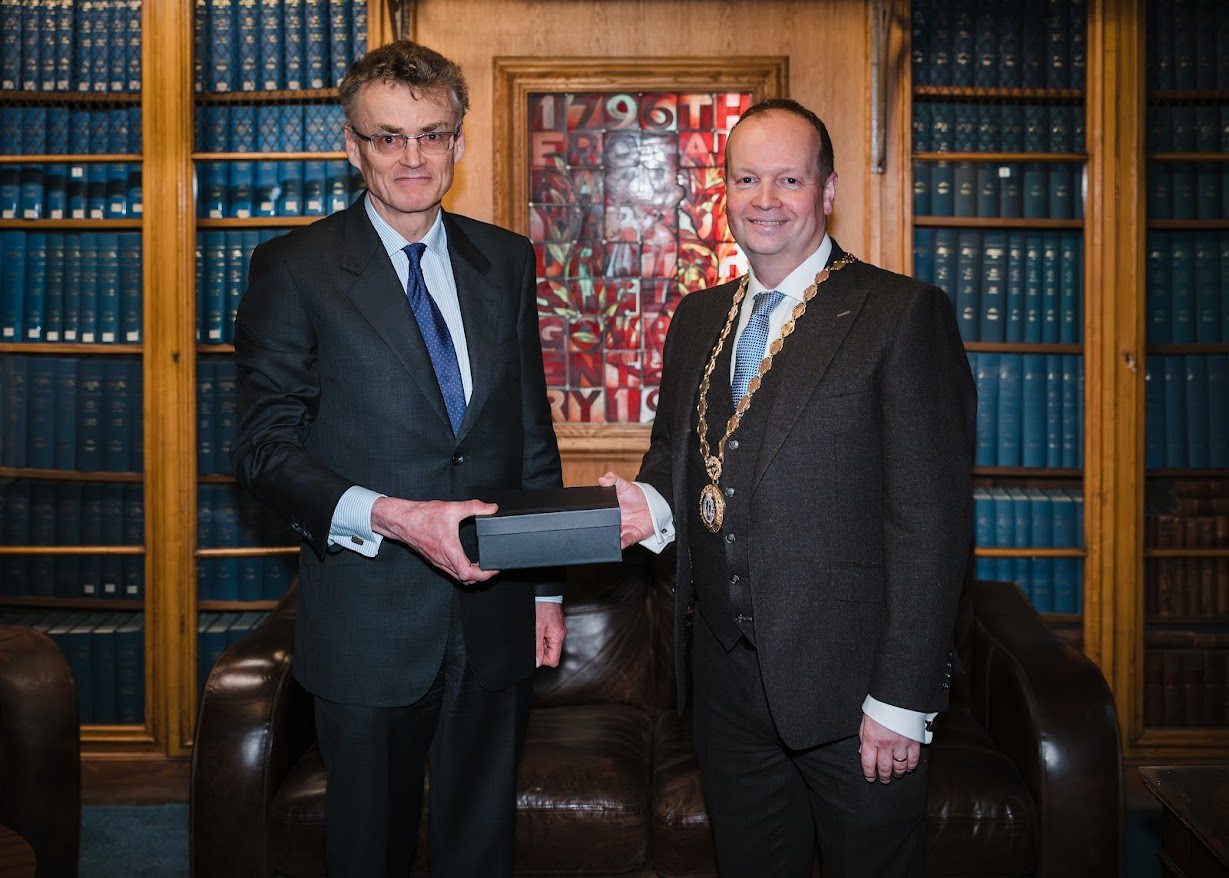
Lord Doherty and John Bett
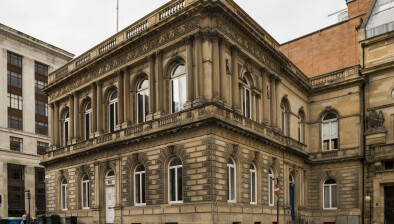
The Royal Faculty of Procurators in Glasgow had one of its busiest ever events last week for the visit of Lord Doherty, a justice of the Supreme Court.
More than 100 guests packed into the Faculty’s city centre venue to hear a speech from Lord Doherty about the inner workings of the UK’s highest court.
The judge took time out from the Supreme Court’s first ever visit to Glasgow to speak to an esteemed audience, made up of members from the legal profession and other invited guests.
Guests included Ruth Charteris, solicitor general for Scotland, the Lord President, Lord Pentland, and his predecessor, Lord Carloway. Glasgow’s lord provost, councillor Jacqueline McLaren, also attended.
Lord Doherty, one of two Scottish justices on the Supreme Court, delivered a lecture entitled ‘A View from the Thames’ - for the Royal Faculty’s biennial Lord Rodger Memorial Lecture. The late Lord Rodger was one of the original 12 members of the UK Supreme Court on its inception in 2009.
Paying tribute to Lord Rodger, Lord Doherty said in his speech: “I had the privilege of being Lord Rodger’s junior on several occasions in both civil and criminal cases. In 1990, when he was solicitor general, he invited me to become a standing junior. I became part of the Faculty the same year, and I benefited from Lord Rodger’s advice.”
Lord Doherty spoke for around an hour, followed by a Q&A, on his experience of sitting on the bench since being elected to the court earlier this year.
He revealed that commercial cases are the largest and most frequently heard, followed by public law and human rights, business property, wills, and trusts, and tax.
Lord Doherty explained that the vast majority of cases heard by the Supreme Court have required to obtain permission to appeal.
He added: “Permission to appeal is granted where three criteria are satisfied. The application must raise an arguable point of law, which is a point of general public importance, which ought to be considered by the court at the time.
“In applying the third criterion, the court will bear in mind that the case has already been the subject of judicial decision and is usually being reviewed on appeal. As the case is not suitable for testing the point of law, the panel would refuse permission.”
Lord Doherty said that when appeals are heard, there is normally at least one Justice with expertise in the area of law under consideration. Hearings are normally fixed nine months after permission is granted and in 90 per cent of cases, the judgements are unanimous.
Lord Doherty’s speech was followed by a reception in the Royal Faculty’s historic library.
Dean of the RFPG, John Bett, presented Lord Doherty with a specially engraved quaich to mark his speech at the faculty, saying: “It was an enormous privilege to have Lord Doherty speak at one of the Royal Faculty’s events.
“We had around 110 esteemed guests for the Lord Rodger Memorial Lecture, making it one of our busiest ever events. We are extremely grateful that Lord Doherty managed to find time away from his busy schedule with the UK Supreme Court to give a unique insight about the inner workings of his time on the bench.
“We have had tremendous feedback from the event and hopefully some of our members will be able to use that valuable insight to good effect when tackling future cases.”

Share this article:

Subscribe to our newsletter to not miss articles like this one:
 SUBSCRIBE