


Written by:
Fiction Review: The Cromarty Library Circle
 Reading time: 4 minutes
Written by:
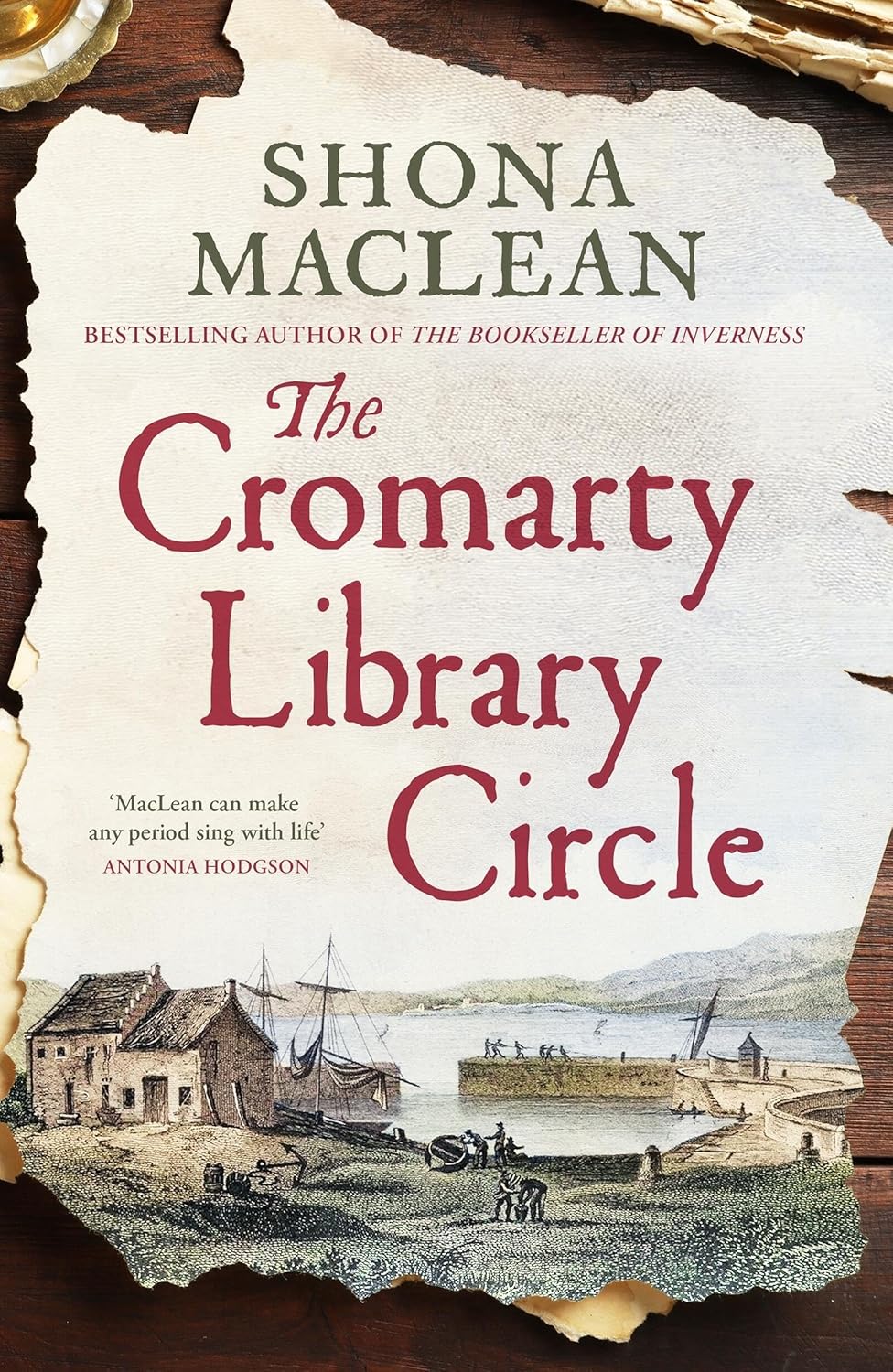
It is 1831 and the good people of Cromarty are setting up a circulating library. A list of suggested titles is purchased, read, handed to the next book club member on the list and then they are discussed… well, not very often as this intricate tale of books, romances, relationships, politics, community and cholera unfolds.
Because out in Cromarty Bay, the wealthier residents of this coastal town watch the ships filling with Highland emigrants and those already full of quarantined passengers awaiting disembarkation. MacLean keeps the tension tight as she plots the advance of the disease, from down south to across the border, then in Inverness before appearing right in their line of sight.
Miss Elspeth Rose leads the organisation of vitals and medicines, but when disaster strikes, it is her somewhat daffy sister who proves her mettle. In between, there are Hester, a freed slave from Demerara; her employer Mrs Cameron; her son Ludovic; the residents at the manse and their titled friends at Cromarty House; the bank manager and his wife; the ropemaker’s dysfunctional family and a sage neighbouring pastor. They indulge in love affairs, romantic dalliances and spiteful opinions.
This book has all the characters, relationships and gossip of Jane Austen crossed with the historical authenticity of a Walter Scott novel – it is self-admittedly based on history, but which bits are real and which are the talent of the author’s imagination fit seamlessly into place. By the end of chapter two, there are so many story threads already on offer, you know MacLean will deftly tie them all off, but how? This is a reader’s book and a must for book clubs. (A starter question for book club readers: from your wide reading of Austen and Co., was it only the middle and upper classes who swooned? And was it brought on by tight lacing or boredom?)
MacLean’s latest title is historical fiction, but it oozes with commentary on modern life. Cromarty is remote from Scotland’s early nineteenth news; the library members await the Inverness Courier and newspapers from the capital. Yet MacLean conjures a strong sense of rolling news with updates on the progress of cholera to debates reported from Westminster on the pending Reform Bill, on which Cromarty’s Edinburgh University-educated school teacher comments that young Ludovic, about to be enfranchised because of his mother’s wealth, “has nothing in his head”. Having fled his homeland, their Polish émigré friend responds, “I have seen this before. The enemies of liberty deliberately provoke to violence those who call for freedom” thus exercising the indifferent while presenting themselves as “the only safeguard of order. In this way they crush dissent and establish control”. History rinsed and repeated?
Social comment emerges through the voices of the two young pupils in Miss Juniper’s care, both very aware of being “just a hair’s breadth from slipping down the classes” and rabidly protective of their reputations hoping to marry a few rungs up the class ladder. They are kept protected from the adulterous exploits of one female character, whose loveless marriage has ended in catastrophe and for whom if divorce had been an option in the 1830s, this book would have been a lot shorter. But then so much opportunity for further social observation would have been missed; when Sir William, forgetting his manners but fully aware of his social status having ‘married down’, attempts to step into their coach before his lady wife, or when Rachel explodes that she doesn’t need a man to explain the morality in James Morier’s Hajji Baba. The moments are subtle, but as a social historian, MacLean nimbly connects historical inequalities to modern issues.
In the final chapters, that Austen-like preoccupation and fear of social demotion emerges in the imagined conversations among those invested in the Caribbean plantations about to lose their ‘property’, financial compensation and their lack of empathy in the face of potential ruin. MacLean’s book proves that the conflict between doing social good and ‘growing the economy’ is nothing new. When confronted with imminent contagion, Cromarty’s mercantile class complains that the Health Board’s move to isolate the town will disrupt trade and lose revenue. Ring any bells?
The Cromarty Library Circle by Shona MacLean. Published by Quercus. 528pp, £22.00.

Share this article:

Subscribe to our newsletter to not miss articles like this one:
 SUBSCRIBE