
World-first legal service from Inksters targets AI translation risks
 Reading time: 4 minutes
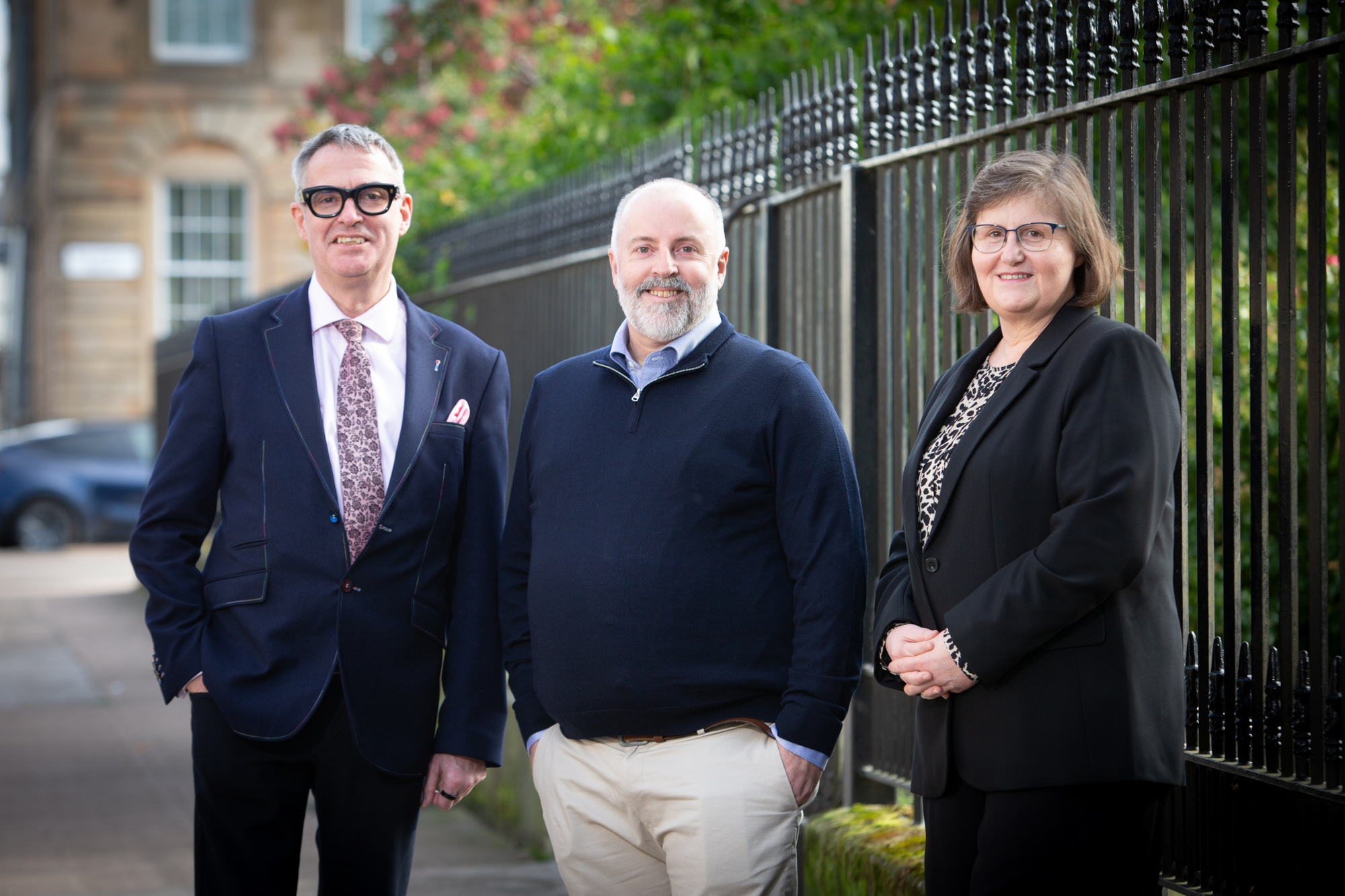
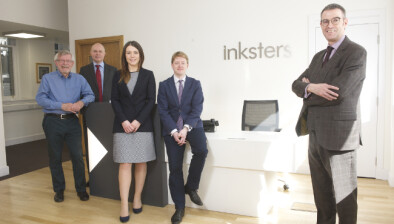
Brian Inkster, John O'Shea and Deborah do Carmo
Credit: Guy Hinks
A legal service believed to be the first of its kind in the world has launched in Scotland to tackle the risk of costly mistranslations, especially as AI changes how lawyers handle documents across different languages.
Inksters has established Translation Law, a specialist service examining how human, neural machine and generative AI translation errors affect legal rights and responsibilities. It will help legal professionals challenge unreliable documents, establish potential liabilities and assess whether mistakes have created grounds for legal action or compensation.
The initiative was developed by legal translation specialists John O’Shea and Deborah do Carmo following years of research into the legal consequences of translation. It draws on their expertise in translating Greek, Dutch, Portuguese and Afrikaans into English, supported by an international network of legal linguists covering languages such as French, German, Spanish and Polish.
The launch comes as growing use of AI allows lawyers to translate large volumes of foreign-language material in seconds, without necessarily knowing whether the resulting documents accurately reflect their original legal meaning.
Concerns over AI-generated material have already emerged in legal proceedings, including cases involving fabricated case references. Translation presents a different risk, as errors may go unnoticed by lawyers unable to read the original language.
Brian Inkster, founder of Inksters, said: “Lawyers are increasingly working with documents translated by AI, but the fact that something reads well doesn’t mean it is legally accurate.
“A single word can change what someone is required to do, what they are entitled to receive or whether they have a case at all. If that mistake is relied upon, the consequences can be serious.
“We’re creating a service that allows lawyers to look beyond whether a translation sounds right and examine what it actually means for their client’s legal position.
“AI has made translation much more accessible, but it hasn’t removed the need for human expertise or the responsibility to check what those documents actually say.”
Mr O’Shea and Ms do Carmo believe that, while individual translation errors have long been considered by courts, the wider consequences of moving information between languages have not been recognised as a distinct area of legal practice.
Their approach draws on existing case law and legal principles rather than creating a new body of law, examining how translation can affect rights, obligations and potential legal remedies.
Ms do Carmo said: “Translation has traditionally been treated as something that happens in the background of a legal case. Yet it is often the point at which the meaning of a document changes as it moves between languages and legal systems.
“Lawyers may be relying on a translated version without realising that an important distinction has been lost or that a particular term means something different under another country’s law.
“We want to bring those questions into the legal process much earlier, when there is still an opportunity to prevent a problem. Where something has already gone wrong, we want to help lawyers understand what remedies may be available.”
Unlike conventional legal translation services, Translation Law will focus on the legal consequences of mistranslation. It can become involved before documents are translated, during negotiations or litigation, or after a dispute has arisen, including conducting targeted audits of higher-risk sections of lengthy documents.
Research underpinning the service has identified hundreds of court cases involving translation disputes internationally, including examples where mistranslations have led to fines relating to property investments and the invalidation of patents.
Mr O’Shea said: “AI can translate thousands of pages at the press of a button, but somebody still has to establish whether the translation is correct.
“Automated translations can appear fluent and convincing while containing mistakes that change someone’s legal obligations or affect the outcome of proceedings.
“The consequences aren’t simply linguistic. They can affect someone’s business, their finances or the rights they are trying to protect. That’s why we’re examining what lawyers can do when translation errors occur.”
Translation Law will primarily support other law firms handling international commercial contracts, litigation and cross-border matters, as well as cases involving people who do not speak the language in which legal documents have been prepared.
Inksters’ membership of the International Practice Group, a worldwide network of professional advisers, will also support the development of relationships with lawyers working across different jurisdictions.
Mr O’Shea and Ms do Carmo are writing A Practical Guide to Translation Law, scheduled for publication by Law Brief Publishing in early 2027. It will examine relevant case law and provide practical guidance on the legal consequences of translation.

Share this article:

Subscribe to our newsletter to not miss articles like this one:
 SUBSCRIBE