

Tributes to heritage champion David J Black as hostel fight intensifies
 Reading time: 4 minutes
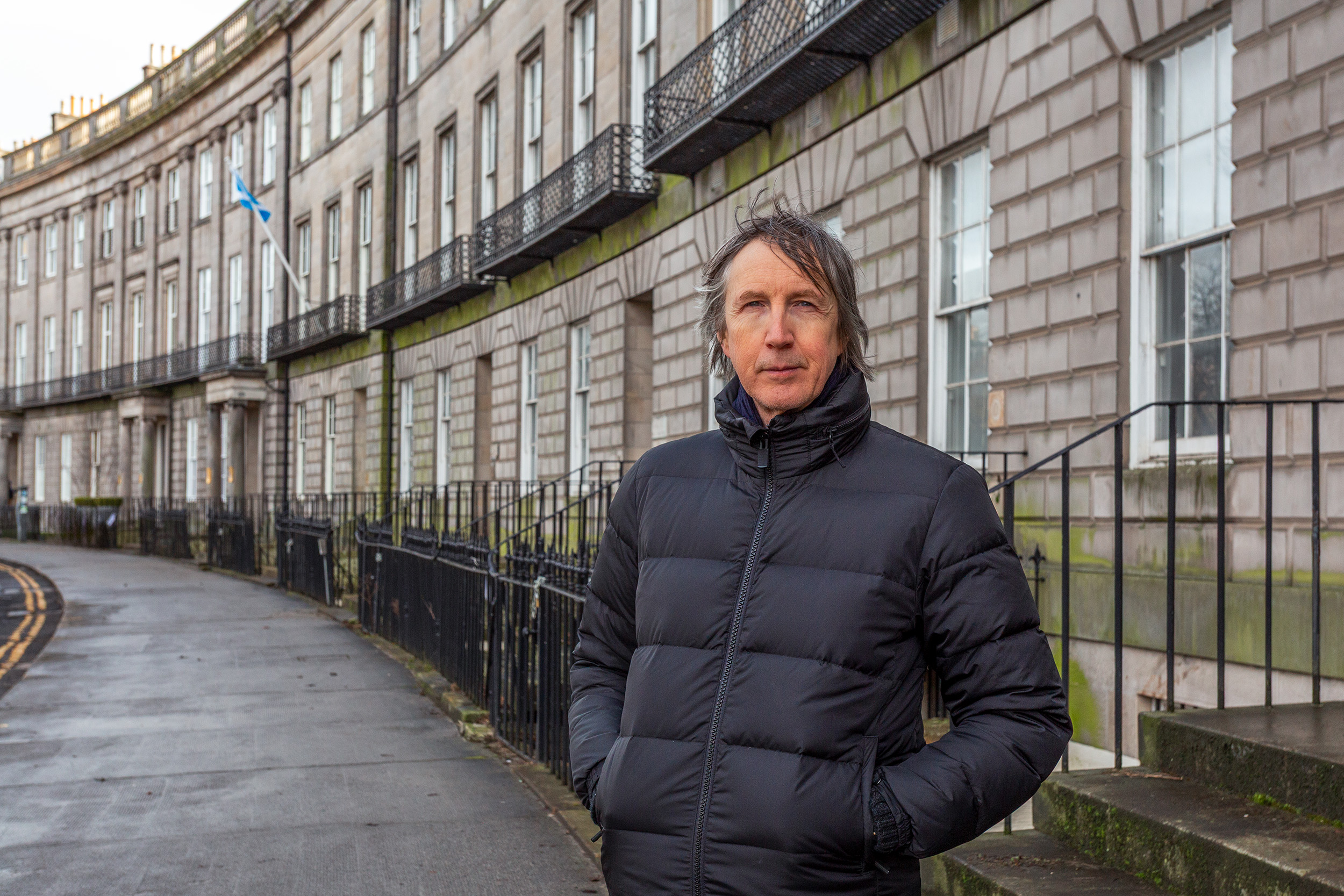
Philip Flockhart on Atholl Crescent
Campaigners fighting to save one of Edinburgh’s finest streets are paying tribute to a relentless champion of the city’s heritage, as admirers prepare to mark their respects at his memorial service tomorrow.
The Atholl Crescent residents’ campaign was effectively born late last year when respected journalist, antiquarian and conservation campaigner David J Black published a scathing critique of plans to create a 544-bed super hostel.
Proposals would see the “capsule hotel” created within four A-listed townhouses on the West End street – despite its status as part of Edinburgh’s UNESCO World Heritage Site.
In an article published in Scottish Legal News just months before his death from prostate cancer, Mr Black criticised financial giant BlackRock, which is backing the proposal. The piece galvanised local opposition and helped transform what had been a residents’ concern into a citywide heritage campaign.
Since then, the proposal has attracted around 280 formal objections and drawn opposition from heritage and architectural bodies, local residents and politicians from across the political spectrum.
Philip Flockhart, the conservation architect leading the Atholl Crescent campaign, said Mr Black’s intervention had been decisive. He added: “David had an extraordinary talent for inventive writing, often satirical and steeped in history.
“His article didn’t just oppose a planning application, it articulated why Edinburgh’s historic buildings matter, and why the way they are used matters. That piece gave the campaign momentum and moral authority at a crucial moment.”
David’s Atholl Crescent article was a characteristic example of his campaigning style, rooted in an understanding of history. He described the capsule hostel proposal as “feckless butchery”, warning that the listed interiors of the 1825 townhouses would be “hollowed out” to create highdensity dormitory accommodation, at odds with their architectural qualities.
In one of the article’s most striking passages, he imagined escorting BlackRock founder Larry Fink on a tour of Edinburgh’s New Town, using the city’s Scottish-American historical connections to explain how its architecture and Enlightenment ideals helped shape North America, where the financial titan made his fortune.
The message was pointed but hopeful: that stewardship, not extraction, should be the responsibility of global capital. The timing of that argument has taken on new resonance in recent weeks as Mr Fink has dominated international headlines.
Last month his annual address to investors and a series of high-profile media interviews saw him speak candidly about the escalating conflict involving Iran, warning of possible stark, global consequences.
Mr Fink has called for corporations to play an active role in improving the environment and work to better their communities. Those comments reinforced his public positioning as a voice for responsible social impact of investment decisions, themes that campaigners say sit uneasily alongside BlackRock’s plans for Atholl Crescent.
Mr Flockhart said the contrast was impossible to ignore and added: “David almost had his article carried in the New York Times and loved the idea of Mr Fink reading it at his breakfast table.
“Here we have one of the world’s most powerful investors talking about stewardship, longterm thinking and global responsibility, while his own firm is backing a proposal for a short-stay hostel use with little regard for residential community or for the historic interiors of some of Edinburgh’s finest Georgian townhouses.”
Beyond his writing, Mr Black is remembered as a generous, sharp-witted, formidable advocate for the city. Mr Flockhart said: “Edinburgh is a poorer place without him, but the legacy of his work lives on in campaigns like this one.”
Mr Black’s memorial service will take place at the Queen’s Hall on Thursday from 2-6pm and is expected to draw figures from across the professions, conservation movement and civic life.
Meanwhile, the future of Atholl Crescent remains unresolved. The developer bypassed determination by Edinburgh Council and appealed directly to the Scottish government, a move that has drawn criticism from residents and elected representatives alike.
Mr Flockhart added: “David was too ill to comment on this attempt to thwart democracy, but many have since spoken out in his absence including the four ward councillors.”
A decision from the Scottish government reporter is awaited.

Share this article:

Subscribe to our newsletter to not miss articles like this one:
 SUBSCRIBE