





Written by:

Supreme Court upholds family’s claim to mesothelioma damages after rejecting final Scottish Power appeal
 Reading time: 5 minutes
Written by:
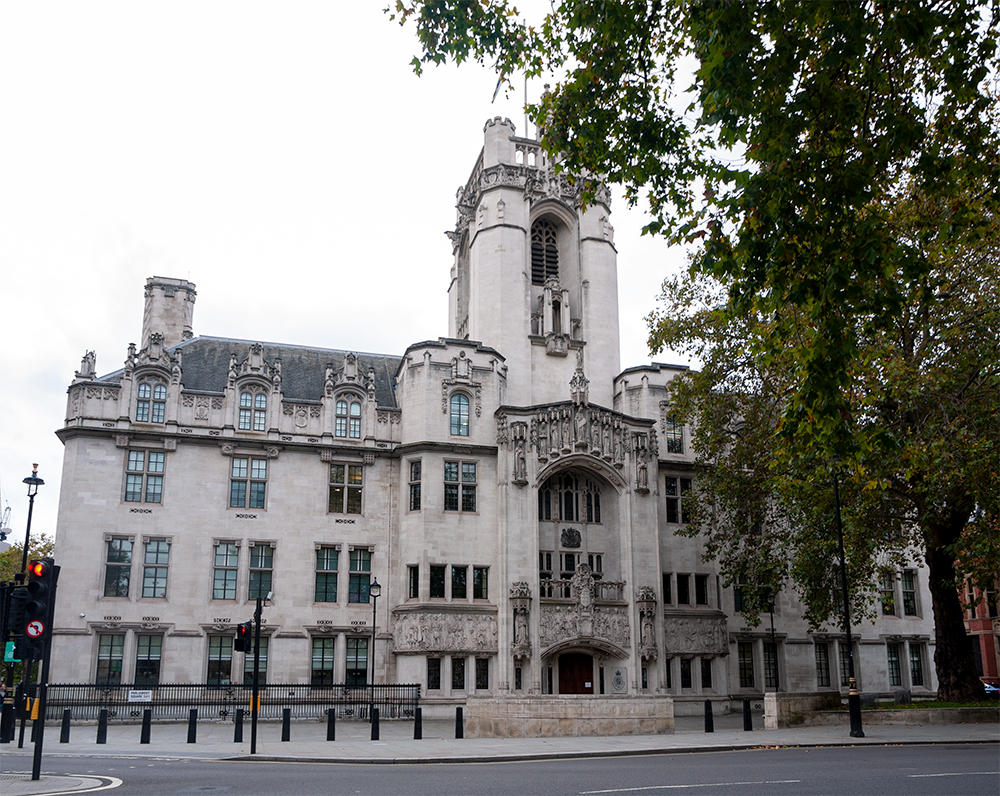
The Supreme Court has dismissed a final appeal by Scottish Power against a decision that it was liable to pay damages to the family of an employee who died of mesothelioma following the settlement of his own claim against the company in 2014, after ruling that the deceased did not need to be suffering from the condition when his claim was discharged for his relatives to have a claim.

About this case:
- Citation:[2025] UKSC 45
- Judgment:
- Court:UK Supreme Court
- Judge:Lord Reed
Elaine Veale (or Crozier) and other family members of the late Robert Crozier originally raised an action in the Outer House of the Court of Session under section 4(3)(b) of the Damages (Scotland) Act 2011. The defender and appellant’s consistent position across all levels of appeal was that damages were precluded on account of the injured person having already settled their claim arising out of the same wrongdoing per section 4(2), however the pursuers had relied on an exception to the rule in section 5(1) of the Act that applied where the deceased had died of mesothelioma.
The appeal was heard by Lord Reed, Lord Briggs, Lord Hamblen, Lord Leggatt, and Lord Burrows. Neil Mackenzie, Ewan Campbell and Kevin Clancey appeared for the appellant and Robert Milligan and Gordon Balfour for the respondents. The sole opinion was given by Lord Reed, with whom the other judges agreed.
Three-part test
In 2014 Mr Crozier, who was employed by Scottish Power between 1969 and 1992, sued his former employer for damages having contracted pleural plaques and asbestosis after being exposed to asbestos during his employment. At the time, he had not developed mesothelioma, but part of the damages claimed related to the risk of his developing the condition later. The parties settled, and part of the effect of that settlement was to discharge the defenders of liability to Mr Crozier in the event that he developed mesothelioma.
Scottish Power’s position was that damages were precluded by section 4(2), which introduced a general exception to liability where it was discharged prior to the deceased person’s (A’s) death. The pursuers and respondents argued that the three-part test for applying the exception to section 4(2) contained in section 5(1) of the Act applied. The defender accepted that parts B and C of the test were met, but the condition set out in section 5(1)(a) was not met.
Counsel for the defender argued that the condition in section 5(1)(a), which required the defender’s liability to pay damages to the deceased to be discharged by the deceased before their death, was not met because Mr Crozier was not suffering from mesothelioma at the time when his claim was settled, and this was essential in order for the condition to be satisfied. This argument was rejected by the Lord Ordinary and then subsequently by the First Division of the Inner House.
The defender’s argument was that the phrase “liability to pay damages” in section 5(1)(a) must be understood as referring to a liability to pay damages for mesothelioma. No such liability existed at the time when Mr Crozier settled his action, as he was not then suffering from mesothelioma. Accordingly, no such liability was discharged as to meet the condition.
Final nail in the coffin
In his opinion, Lord Reed said of the defender’s principal argument: “In the first place, the claim which Mr Crozier brought against the defenders, and which was settled by agreement, included a claim for damages in respect of the risk that he would in future develop mesothelioma. The effect of the settlement of that claim was to discharge the defenders’ liability to pay him damages in the event that he subsequently developed mesothelioma. Accordingly, even if section 5(1)(a) refers to a liability to pay damages for mesothelioma, that liability was discharged by the settlement of the claim.”
Noting that the same phrase appeared in sections 3 and 4, he added: “There is no conceivable basis for construing the phrase ‘liability to pay damages’ in section 3 as referring only to a liability to pay damages for mesothelioma. Section 3 is not concerned specifically with persons suffering from mesothelioma: it is concerned generally with persons who die in consequence of suffering personal injuries as the result of the act or omission of another person.”
Considering other weaknesses of the defender’s argument, Lord Reed said: “The final nail in the coffin of the defenders’ argument is that it is self-defeating. If, for the sake of argument, the liability to pay damages to Mr Crozier for mesothelioma was not discharged, with the consequence that section 5(1)(a) did not apply, it would follow that his relatives were entitled to bring a claim against the defenders under section 4(1). Section 4(2) would not operate to bar their claim, since ex hypothesi the liability to pay damages to Mr Crozier for mesothelioma had not been discharged.”
He concluded: “On any view, section 5 enables relatives to bring a claim after liability to the person injured was discharged. They can therefore bring a claim which would not have been open to the injured person himself. That reflects the purpose of the provision: to create an exception to the general rule laid down in section 4(2), under which no liability to relatives arises where liability to the person injured has been discharged.”
For these reasons, which were noted to be similar to the reasoning of the courts below, the appeal was dismissed.

Share this article:

Subscribe to our newsletter to not miss articles like this one:
 SUBSCRIBE

