




Written by:

Supreme Court rules £28m ScottishPower Ofgem redress payments not deductible for corporation tax
 Reading time: 6 minutes
Written by:
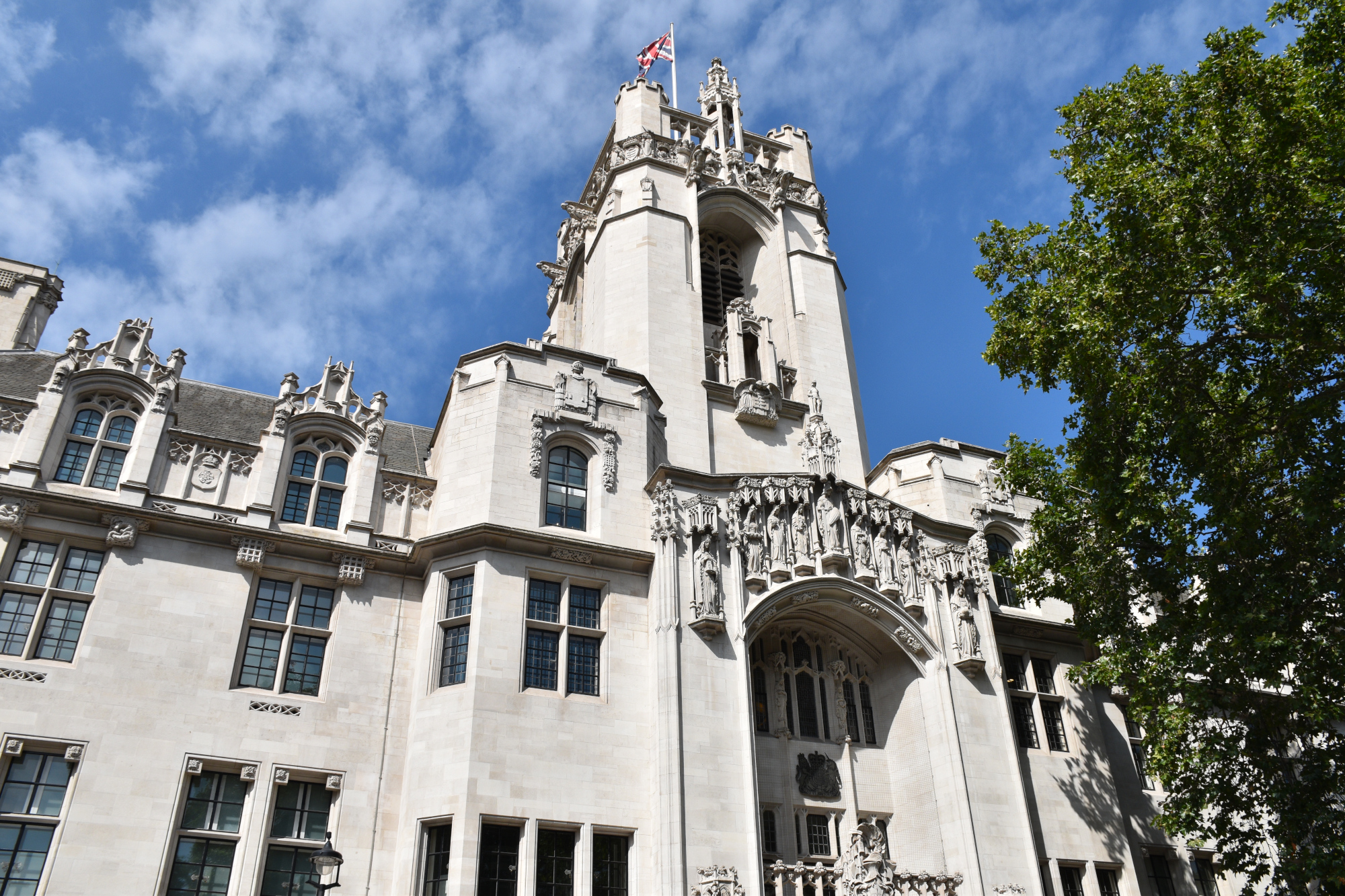
Credit: UK Supreme Court
ScottishPower cannot deduct around £28 million paid to customers and charities under settlements with energy regulator GEMA when calculating its taxable profits, the Supreme Court has unanimously ruled.

About this case:
- Citation:[2026] UKSC 35
- Judgment:
- Court:UK Supreme Court
- Judge:Lady Rose and Lord Doherty
The court allowed an appeal by HM Revenue and Customs, holding that although the payments were formally made as redress rather than fines, they were sufficiently akin to penalties that they were not expenditure incurred for the purposes of ScottishPower’s trade.
The appeal was heard by Lord Reed, Lord Stephens, Lady Rose, Lady Simler and Lord Doherty. Lady Rose and Lord Doherty gave the judgment, with which the other justices agreed. David Ewart KC and Thomas Chacko, instructed by HMRC Legal, appeared for HMRC. David Goldberg KC and Laura Inglis, instructed by Linklaters LLP, appeared for ScottishPower.
The case concerned payments made following four investigations by the Gas and Electricity Markets Authority, whose day-to-day work is carried out by Ofgem. The investigations found serious breaches by ScottishPower Energy Retail Ltd of conditions governing the supply of gas and electricity and of energy-saving requirements.
GEMA initially intended to impose substantial penalties. Instead, settlements were reached under which ScottishPower made payments to customers and charities while nominal penalties of £1 were imposed. It was agreed that an actual £28m fine would not have been deductible for corporation tax purposes, but ScottishPower argued that the redress payments were different and therefore deductible.
Settlements instead of penalties
The payments arose from investigations including mis-selling, differences between payment methods, energy-saving obligations and complaints handling.
In the mis-selling investigation, ScottishPower agreed to pay £7.5m to vulnerable customers and set aside £1m to compensate customers affected by mis-selling, with any remainder going to a fuel poverty charity. GEMA imposed a £1 penalty. Its decision stated that the breaches warranted a “significant penalty”, but took account of the £8.5m payments and the settlement when reducing it to £1.
A further settlement over pricing differences resulted in a £750,000 payment to a Citizens Advice public awareness campaign and another £1 penalty. Another investigation concerning energy-saving targets resulted in a £2.4m payment to a charitable trust and a £1 penalty.
The largest settlement concerned billing and complaints handling. ScottishPower admitted breaches and agreed to £18m in consumer redress payments, including compensation for qualifying customers and payments to charities, while GEMA again imposed a £1 penalty.
Different conclusions in lower courts
The First-tier Tribunal found that the settlements had been made in place of much larger penalties which ScottishPower would otherwise probably have faced.
It held that most of the payments were not deductible because they were punitive in nature. However, it treated £554,013 paid directly to customers affected by mis-selling as compensatory and therefore deductible.
The Upper Tribunal subsequently held that none of the payments was deductible. It considered the redress sums as part of overall settlement packages made under threat of penalties substantially greater than £1.
The Court of Appeal reversed that decision and held that all the payments could be deducted. It considered that the rule against deducting penalties arose from a specific policy against diluting the effect of statutory punishment and should not be judicially extended to payments which were not formally penalties.
Penalties not incurred ‘for the purposes of the trade’
The Supreme Court rejected that analysis.
Lady Rose and Lord Doherty said penalties were not deductible because they were not incurred “for the purposes of the trade” within section 54(1)(a) of the Corporation Tax Act 2009.
Penalties were of a different nature from ordinary trading expenses: they were punishments imposed because the taxpayer had committed a wrong, with the object of punishing the offender and deterring further breaches.
The court said: “The taxpayer’s object in paying the penalty is not to carry on the trade, but to answer for his breach.” It rejected the Court of Appeal’s conclusion that the rule rested on a separate judge-made policy requiring an adjustment to ordinary accounting profits. The earlier authorities instead established that the character of a penalty meant it did not satisfy the statutory test in the first place.
The court acknowledged that policy supported the same conclusion, since allowing a tax deduction would permit a taxpayer to share the burden of the punishment with the public and thereby dilute its effect. But that policy consideration supported the interpretation of section 54 rather than creating a separate rule.
‘Akin to penalties’
Turning to the ScottishPower settlements, the Supreme Court rejected the company’s description of the redress payments as voluntary.
Although ScottishPower was not legally compelled to enter the settlement agreements, the First-tier Tribunal had found that without them it would probably have faced penalties of the same order of magnitude. The settlements had therefore been made “in place of what might have been imposed” and had avoided penalties substantially greater than £1.
The court also considered that treating the payments differently from formal fines could produce an anomalous result. A company with little prospect of successfully contesting a breach might settle promptly, while a company with a more arguable case could force the regulator to impose a formal penalty and challenge it. It would be unfair if the former could obtain a tax deduction while the latter could not.
The issue was therefore one of substance rather than form.
Not comparable to contractual compensation
ScottishPower argued that the redress payments were more akin to compensation for breach of contract than regulatory penalties.
The Supreme Court disagreed. It regarded the licence conditions as more similar to statutory obligations than contractual terms and noted that the settlements were not private law remedies intended simply to restore customers to the position they would otherwise have occupied. GEMA’s published decisions directly linked the redress payments to the penalties that would otherwise have been imposed and took into account factors including deterrence, compliance, seriousness and any financial gain obtained through the breaches.
Lady Rose and Lord Doherty concluded that there was “no doubt” the payments were sufficiently akin to penalties to fall outside expenditure incurred for the purposes of the trade. It did not matter that the money went to customers or charities rather than the Consolidated Fund, nor that generally accepted accounting practice would treat the payments as expenses in ScottishPower’s accounts.
The court also rejected an argument based on the possibility that some regulatory breaches were practically unavoidable. That consideration had already been capable of affecting the level of penalty imposed and did not determine its tax treatment.
Finally, the Supreme Court agreed with the Upper Tribunal that the £554,013 paid directly to customers should not be separated from the rest of the settlement. It formed part of the overall package negotiated under threat of a larger penalty and was likewise punitive in character.
HMRC’s appeal was therefore allowed and the decision of the Upper Tribunal restored.

Share this article:

Subscribe to our newsletter to not miss articles like this one:
 SUBSCRIBE

