

Written by:

Supreme Court rejects Rogano tenant’s transferred loss claim for subsidiary’s lost profits
 Reading time: 8 minutes
Written by:
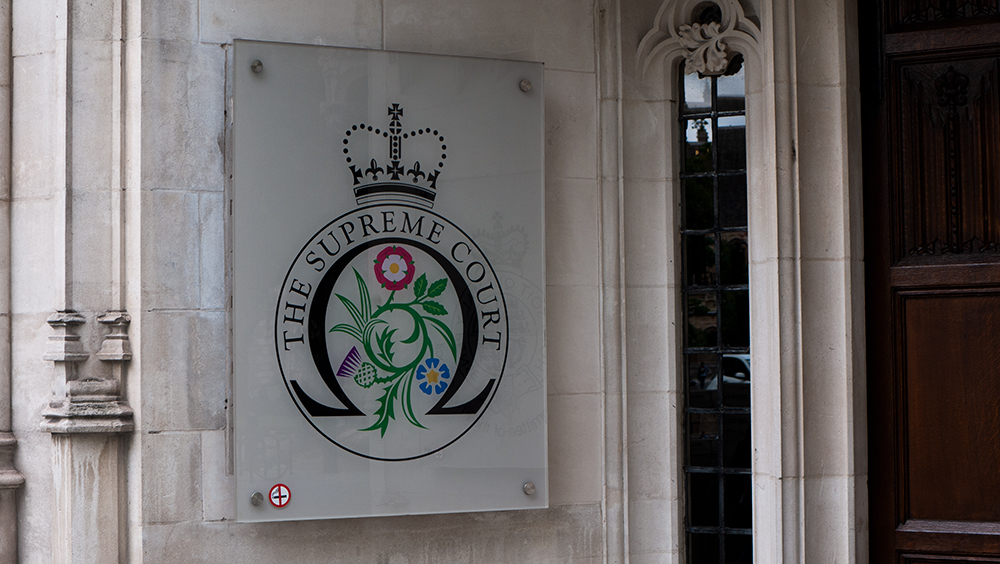
A tenant of the Glasgow premises from which the Rogano restaurant traded has lost a Supreme Court appeal over whether it could recover profits allegedly lost by its wholly owned subsidiary as a result of the landlord’s alleged breaches of the lease.

About this case:
- Citation:[2026] UKSC 33
- Judgment:
- Court:UK Supreme Court
- Judge:Lord Doherty
The court rejected an argument that Scots law permits a contracting party, as a matter of general legal policy, to recover loss suffered by a third party irrespective of whether such a benefit was contemplated when the contract was made.
Forthwell Limited is the tenant and Pontegadea UK Limited the landlord of premises at 11 Exchange Place in Glasgow. The Rogano, described by the Supreme Court as one of the city’s oldest and most celebrated restaurants, traded there continuously from 1935 until its closure at the height of the Covid-19 restrictions in 2020. Forthwell acquired the tenant’s interest in the lease in 2013 and granted its wholly owned subsidiary, Lynnet Leisure (Rogano) Ltd, a licence to occupy the premises. Lynnet thereafter traded from them as the Rogano Restaurant and Bar.
The premises suffered flooding and water ingress on three occasions in December 2020 and January 2021. A fire following the first flood rendered the electrical installations unsafe and the premises were left without heating. Repairs remained outstanding and the restaurant had been unable to reopen. Forthwell raised a commercial action seeking, among other remedies, specific implement of Pontegadea’s repairing obligations or damages enabling the repairs to be carried out. Those aspects of the case remain to be determined at proof before answer. The issue before the Supreme Court concerned separate claims advanced by Forthwell on behalf of Lynnet for past and anticipated future loss of profits.
The appeal was heard by Lord Reed, Lord Stephens, Lady Simler, Lord Doherty and Lord Hodge, with David Thomson KC and David Ford appearing for the appellant and Dean of Faculty Roddy Dunlop KC and Giles Reid for the respondent.
Appeal heard despite parties settling
On the morning the Supreme Court hearing was due to begin, the parties informed the court that they had settled their dispute and Forthwell sought to withdraw its appeal.
The court nevertheless refused to permit withdrawal after establishing that the settlement did not depend upon it doing so. Counsel informed the justices that another commercial action raising a very similar issue had been sisted pending the result of the appeal and that both sides were ready to proceed. Delivering the unanimous judgment, Lord Doherty explained that the court proceeded because “the appeal raises a point of law of general public importance where authoritative guidance is desirable,” particularly as at least one other case awaited its decision.
At issue was the principle of “transferred loss,” an exception to the ordinary rule that a contracting party can recover damages only for loss which it has itself suffered. Forthwell’s claim did not rely on the narrow exception derived from Albacruz v Albazero [1977] AC 774), under which a contracting party may in certain circumstances recover loss suffered by a third party where the contract concerned property and it was contemplated that an interest in that property would be transferred, or that the third party might suffer the loss. Nor did Forthwell rely on the separate “broader ground” developed in cases concerning a contracting party’s interest in having contractual obligations properly performed.
Instead, it relied upon a solution proposed by Lord Clyde in Alfred McAlpine Construction Ltd v Panatown Ltd and subsequently adopted as a matter of Scots law by Lord Drummond Young in McLaren Murdoch & Hamilton Ltd v The Abercromby Motor Group Ltd. On that approach, a contracting party could recover measurable loss suffered by another person and account to that person for the damages, with the right arising as a matter of general legal policy rather than from the intentions of the parties to the contract.
Different approaches in Scottish courts
At first instance, commercial judge Lord Braid rejected Pontegadea’s challenge to the relevancy of the transferred loss claims. He considered that Scots law differed from English law on the issue and accepted Lord Drummond Young’s approach as a principled Scots law solution to the problem of losses otherwise falling into a “legal black hole.” The claims for Lynnet’s losses were therefore allowed to proceed to proof before answer. Pontegadea successfully reclaimed to the Inner House. By a majority comprising the Lord President, Lord Carloway, and Lord Pentland, with Lord Malcolm dissenting, the First Division held that Forthwell could not recover the losses suffered by Lynnet.
Before the Supreme Court, Forthwell submitted that Lord Clyde’s approach should be recognised in Scots law. It argued that the solution was consistent with fundamental Scots contract law principles and prevented loss caused by breach of contract from going uncompensated merely because it had been suffered by another company within the same corporate group. Forthwell suggested that such a claim could be confined to cases in which the contracting party had a “material interest” in the third party’s loss.
Proposed exception ‘too wide and too indefinite’
Lord Doherty rejected the proposition that Lord Clyde’s suggested solution formed part of the law of England and Wales, noting that none of the other members of the appellate committee in Panatown had endorsed it, and saying that “it is very clear that Lord Clyde’s solution does not represent the law of England and Wales.” Turning to the Scottish authorities, Lord Doherty held that Lord Drummond Young had proceeded on an erroneous understanding that Lord Clyde’s approach represented that of the majority in Panatown. Furthermore, he explained: “Plainly, Lord Drummond Young was not correct to describe Lord Clyde’s solution as the view of the majority in Panatown. None of the other judges agreed with it.”
The approach was also inconsistent with subsequent Supreme Court authority emphasising that transferred loss is a limited exception to the fundamental rule that a claimant ordinarily recovers only its own loss. Lord Doherty continued: “The errors I have highlighted in Lord Clyde’s solution in Panatown and in Lord Drummond Young’s reliance upon it in McLaren Murdoch & Hamilton are reason enough to reject Lord Drummond Young’s suggested Scots law solution.” There were, however, further reasons for rejecting it. “The proposed solution would constitute too wide and too indefinite an exception to the general rule that a party can only recover damages in respect of their own loss,” he said.
It would be too wide because it could expose a contracting party to liability for third-party losses which had not been within the contemplation of the parties when they contracted. That could produce unforeseen consequences, including because the party in breach was unlikely to have arranged matters such as insurance on the basis that such liability might arise. The exception was also too indefinite. Lord Clyde had not identified firm limits to its operation, while Lord Drummond Young had regarded it as capable of “almost universal application”. Forthwell’s proposed restriction to cases involving a third party in whose loss the contracting party had a “material interest” did not, in Lord Doherty’s view, provide a sufficiently clear and workable boundary.
Nor did the court regard rejection of Forthwell’s case as producing an unjust result. Lord Doherty said: “Forthwell and Lynnet chose to organise their affairs in the way in which they did. They had no reason to believe that the ordinary legal consequences associated with their separate corporate personalities would not apply.” He also noted that the lease prohibited sub-letting and the parting with or sharing of possession of the premises, adding that, prima facie, the grant of the licence to Lynnet appeared to have been in breach of the lease.
Albazero exception remains part of Scots law
While dismissing Forthwell’s appeal, the Supreme Court made clear that its decision did not exclude transferred loss claims altogether under Scots law. Lord Doherty said: “There can be no real doubt that The Albazero exception is as much a part of the law of Scotland as it is of the law of England and Wales.” The court did not, however, determine whether the separate broader ground based upon a contracting party’s performance interest also forms part of Scots law.
Lord Doherty said there was “much to be said for the broader ground,” but added that it was neither necessary nor appropriate to decide the matter in the present appeal. Forthwell had proceeded throughout on the basis that its claims did not satisfy that test and the courts had not received developed submissions on the question. The First Division was therefore correct to dismiss Forthwell’s transferred loss claims, and the Supreme Court dismissed the appeal.

Share this article:

Subscribe to our newsletter to not miss articles like this one:
 SUBSCRIBE