
Written by:

Supreme Court finds insurers able to offset payments for Covid business interruption to account for furlough scheme
 Reading time: 6 minutes
Written by:
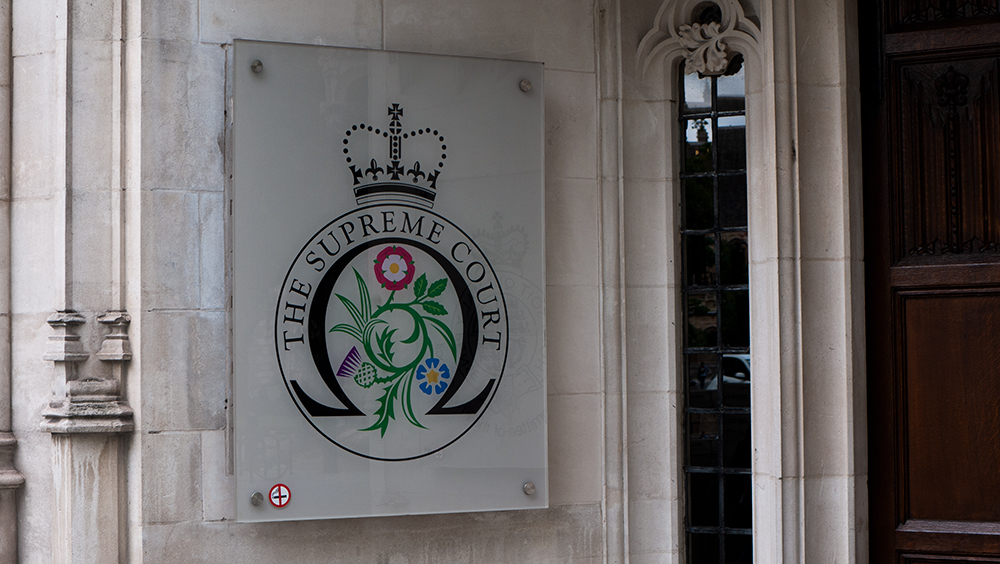
The Supreme Court has rejected a final appeal against a decision that furlough payments to workers during the Covid pandemic could be used as a deduction in payouts for business interruption policies, after holding that insurers were entitled to regard them as reducing the policyholders’ business expenses for the relevant insured period.

About this case:
- Citation:[2026] UKSC 14
- Judgment:
- Court:UK Supreme Court
- Judge:Lord Hamblen, Lord Leggatt and Lord Burrows
Gatwick Investment Ltd and other appellants across two cases against Liberty Mutual Insurance Europe SE and others argued that furlough payments had not “reduced” their expenses in the manner outlined in their policies, nor were they caused by the insured peril. The respondents accepted that they were in principle liable to indemnify the appellants for losses sustained due to government action in terms of the relevant policies but argued that savings clauses in the policies required credit to be given in calculating amounts payable for furlough payments received by the policyholders under the Coronavirus Job Retention Scheme.
The appeal was heard by Lord Reed, Lord Brigggs, Lord Hamblen, Lord Leggatt, and Lord Burrows. A joint opinion was issued by Lord Hamblen, Lord Leggatt, and Lord Burrows, with whom the other judges agreed.
Benefits of gratuitous character
The first set of appellants were operators of hotels in England, while the second set operated racecourses, golf clubs, hotels, and a pub in England and Wales. In each case the policyholders were insured against risks including government action which prevented or hindered the use of their premises following “danger or disturbance” within a mile of their premises, agreed to include any occurrence of Covid-19.
While the test case of Financial Conduct Authority v Arch Insurance UK Ltd (2021) established the respondents’ liability in principle, the present appeals raised new issues based on two forms of savings clause. These had the effect of allowing for reductions in amounts payable under a policy based on cessation or reduction of any of the charges or expenses of each business during the indemnity period. The High Court and Court of Appeal held that because the furlough payments reduced the expenses of the businesses payable out of gross revenue, the CJRS payments could be deducted in the manner contended for by the respondents. The court was informed that this position, taken across the insurance market generally, had resulted in an estimated £1 billion in deductions across the UK.
The position of the appellants was that, as wages and other employment costs had to be paid before being reimbursed by payments under the CJRS, these “charges” did not “cease” and were not “reduced”. Furthermore, the payments were not received “in consequence” of the insured peril since proof of the insured peril was irrelevant to the entitlement to receive furlough payments and/or the payments were collateral benefits of a gratuitous character and not to be regarded in law as caused by the insured peril.
The respondents supported the conclusion of the below courts, which was taken with reference to the case of Stonegate Pub Co Ltd v MS Amlin Corporate Member Ltd (2022) where the High Court rejected a similar argument to that advanced by the appellants in addressing a similarly worded savings clause. Payments under the CJRS were not analogous to a government grant due to the requirement they be used for wages, allowing them to reduce business costs pro tanto within the meaning of the clause.
Patently more commercial
In their joint opinion, the Supreme Court judges confirmed that an objective interpretation of the policies was required, noting: “The appellants’ case has some linguistic support from the use of the word ‘payable’. On the other hand, the clauses do not refer to liability for the charge or expense or to the incurral of such a charge or expense, either of which would more clearly suggest that the clause was only concerned with legal liabilities. As it is, the language used in the savings clauses could be understood as referring either to: (i) whether as a matter of fact the charge or expense is reduced; or (ii) whether liability for the charge or expense is reduced as a matter of law.”
They continued: “The evident purpose of the savings clause is to prevent over-indemnification—i.e. to prevent the policyholder from recovering more than the actual loss suffered as a result of the insured peril. Because of the way in which the amount payable by the insurers is calculated in such policies, in this case based on ‘Gross Revenue’, such over-indemnification will occur if the interruption actually reduces costs during the indemnity period and these ‘savings’ are not deducted from the amount calculated as payable.”
The judges concluded on the sense of the appellants’ interpretation: “The reality that the Government was paying employees’ wages is borne out by the Government’s own description of the CJRS scheme. When announcing the scheme on 20 March 2020 Rishi Sunak described how the scheme meant that ‘the government is going to step in and help to pay people’s wages’. The respondents’ patently more commercial construction of the savings clause has been unequivocally preferred by five experienced former and current judges of the Commercial Court. It has also been adopted in the Irish High Court in Hyper Trust Ltd v FBD Insurance plc (2023).”
Considering the argument that the furlough payments were a collateral benefit, the judges then concluded: “We do not accept that the CJRS itself, let alone payments made under it, can properly be characterised as gratuitous or voluntary or benevolent in nature. On no view can CJRS payments be likened to gifts or philanthropic donations for which it may be said that the sole cause in law is the donor’s voluntary decision to confer the benefit. The payments flowed as a matter of legal obligation from the circumstances arising from the Covid-19 pandemic which entitled the employer to claim furlough payments.”
Both appeals were accordingly refused.
Representation:
Appellants – (1) Gatwick Investment Ltd (2) Millcroft Management Ltd (3) Sal Hotels Ltd (4)
Serena Investments Ltd (5) Southampton Row Hotel LLP (6) London Victoria Hotel No 2 Ltd
Jeffrey Gruder KC
Josephine Higgs KC
(Instructed by Edwin Coe LLP)
Respondents – (1) Liberty Mutual Insurance Europe SE (2) Allianz Insurance Plc (3) Aviva
Insurance Ltd
David Scorey KC
David Walsh KC
Paul Davies
(Instructed by DWF Law LLP, formerly by DAC Beachcroft LLP at the hearing)
Appellants – Bath Racecourse Company Ltd and others
Adam Kramer KC
William Day
Amelia-Rose Edwards
(Instructed by Stewarts Law LLP)

Share this article:

Subscribe to our newsletter to not miss articles like this one:
 SUBSCRIBE