

Reflection: Lord Mackay of Clashfern
 Reading time: 3 minutes
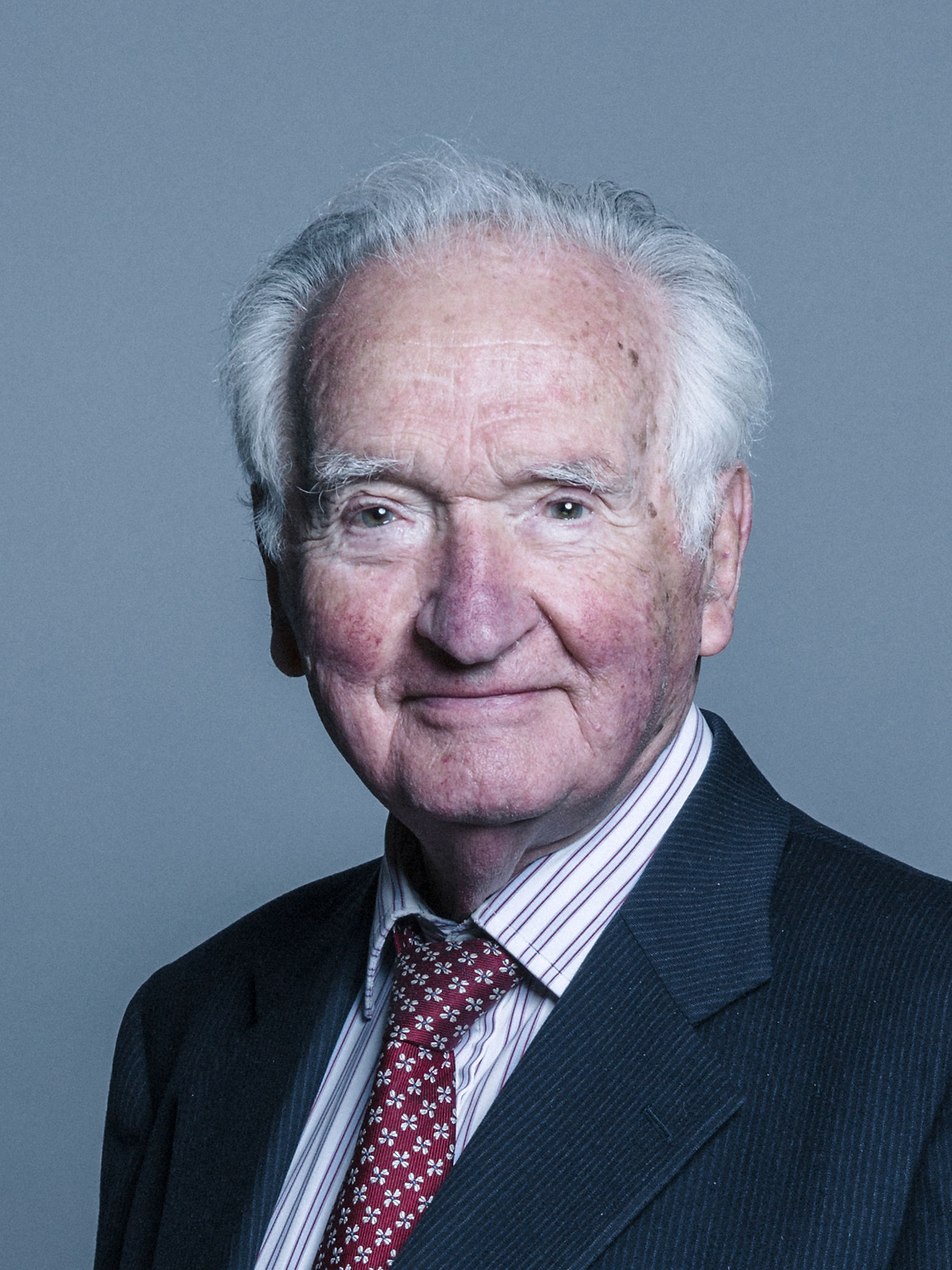
Lord Mackay of Clashfern
Credit: Chris McAndrew, CC BY 3.0
John Sturrock KC reflects on the life and legacy of the late Lord Mackay of Clashfern, one of the great figures of Scots law, whose funeral and memorial service took place in July in St Giles’ Cathedral in Edinburgh.
For many younger readers, the name of Lord Mackay may not be familiar. He was, after all, aged 99 when he died. It is many years since he held high office, although he was active in the House of Lords until his retirement from there at the age of 95. Indeed, it was towards the end of last century that he was Lord Chancellor of Great Britain, appointed by Prime Minister Margaret Thatcher, and 50 years ago that he was elected Dean of the Faculty of Advocates, after which he was appointed Lord Advocate, then briefly a Law Lord in the House of Lords. Some readers will recall his time as Keeper of the Signet. As a Lord Chancellor who was a Scots lawyer, he steered through some profound (and, at the time, very controversial) changes in the law and legal system in England and Wales.
A list of titles does not in any sense do justice to Lord Mackay, however. Tributes paid to him in St Giles’ by his devil at the bar, former Deputy President of the Supreme Court, Lord Hope of Craighead, and by his close friend and former Moderator of the General Assembly of the Church of Scotland, the Very Reverend Dr Angus Morrison, shed light on a most extraordinary life and personality
Initially, Lord Mackay had studied and taught mathematics, being described by some as a mathematical genius. He elected however to go into law and was admitted to the bar in 1955.
Lord Hope recalled his extraordinary ability to absorb information and to recall anything he had heard or read, often working without the need for notes, even in the most complex of matters. And yet, as Dr Morrison put it, “Simplicity was a hallmark of James’s mind and character. His ability to illuminate and simplify the most complex questions” was one of his strengths.
Dr Morrison spoke of Lord Mackay’s deep Christian faith, so strong that he would not work or indeed travel on a Sunday. For Lord Hope, when instructed as his junior counsel, this would mean starting preparation for cases in the House of Lords at five minutes past midnight on a Monday morning. Then, said Lord Hope, Lord Mackay was able to charm his audience by the way he fashioned his argument. “There was something about the way he spoke and the look on his face that made it hard to disagree with him.”
Lord Mackay exemplified, observed Dr Morrison, the strength and impact of ‘humble love’, demonstrated in his kindly, gentle manner and personal warmth. As was clear from the tributes, this was rooted not in sentimentality but in a commitment to principles, a steadfastness of purpose, grounded in his faith and the centrality, for him, of the Bible in the public square.
On a personal note, my own devil-master having in turn devilled to Lord Hope, in the traditions of the bar Lord Mackay was the great-grandfather in my Faculty of Advocates ‘family’. He can properly be described as one of the greats of Scots law. Many of those present in St Giles’ observed that we may not see his like again.
This article first appeared in The Scotsman.

Share this article:

Subscribe to our newsletter to not miss articles like this one:
 SUBSCRIBE