
Mary Neal: Unconscionable – ‘assisted dying’ without the right to opt out
 Reading time: 7 minutes

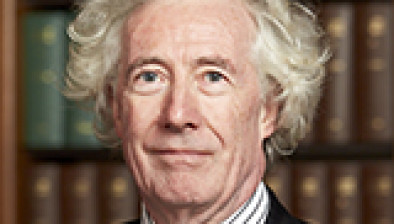
Dr Mary Neal
Liam McArthur’s bill cannot include any effective protection for those who wish to opt out of involvement in ‘assisted dying’. Professional bodies must now formally oppose it, writes Dr Mary Neal.
It was reported this week that several organisations representing the health professions (the Association for Palliative Medicine (Scotland), the Medical and Dental Defence Union of Scotland, the Royal College of General Practitioners Scotland, the Royal College of Physicians and Surgeons of Glasgow, Royal College of Psychiatrists in Scotland, the Royal College of Surgeons of Edinburgh, and the Royal Pharmaceutical Society) have written to MSPs and Scottish ministers expressing serious concern about Liam McArthur’s Assisted Dying for Terminally Ill Adults (Scotland) Bill, which will face a final vote in Holyrood before the Parliament goes into recess on 26 March.
Critics of the bill have been warning for some time that it suffers from significant problems in terms of legislative competence, and the Scottish government has acknowledged that provisions relating to medicines and medical devices, employment rights, and regulation of the health professions (including the right to opt out) go beyond Holyrood’s powers. In relation to medicines and devices, the Scottish and UK governments have taken the view that this is a ‘core issue’ (central to the functioning of the proposed law) and have addressed it in advance of the final vote by way of a Section 30 order. This means that Westminster has agreed to temporarily grant Holyrood the necessary power to legislate for the approval of substances and devices, so that those provisions can remain in the bill.
The Section 30 order does not cover employment rights or regulation of the health professions, however, because these are regarded not as core issues but as issues ‘arising in consequence of’ the proposed legislation. As such they are not covered by the Section 30 order; instead, if and when the bill becomes law, they may be dealt with via a Section 104 order. This would involve provision being made by a UK government minister, once the bill has already passed. In the meantime, the cabinet secretary for health has directed the chair of the Health, Social Care and Sport Committee to remove the provisions concerning employment law and regulation of the professions from the bill prior to the final vote. Accordingly, as reported recently by The Times and the BBC, when MSPs vote in March they will be voting on a bill that does not safeguard employment rights for health professionals or ensure any right to opt out of the ‘assisted dying’ process. This is what has prompted the professional bodies to intervene.
A conscience clause – section 18 – was included in the original draft bill and significantly amended following debate at stage two. In its amended form, the clause provides not only that individuals have no duty to ‘participate directly’ in assisted dying (section 18(1)), but also that individuals and organisations must not be subject to any detriment as a result of a choice not to be involved in assisted dying (sections 18 (1A) and 18 (1B)). A new clause also provides that health professionals are under no duty to raise the subject of assisted dying with their patients (section 18A).
These clauses leave much to be desired, since they would leave professionals vulnerable to the expectation that they would take part in ‘assisted dying’ in various indirect ways that they would find morally objectionable (and traumatic). Even this inadequate provision will now be removed, however.
Talk of a Section 104 order should not be reassuring: no guarantee has been given that provision for conscience will definitely be forthcoming after the bill becomes law, and if it is, we have no way of knowing what form it might take, or which interest groups will be allowed to influence its drafting. Yet the drafting of any provision matters a great deal – a slight difference in framing can mean a huge difference in the degree of protection afforded. We know that, should assisted suicide be legalised, a significant number of professionals would want to avoid involvement in it altogether. In the biggest survey of doctors’ views on assisted dying to date, the BMA found that 45 per cent of its members would not be willing to prescribe life-ending drugs, with only 36 per cent indicating that they would be willing. The percentage who would be unwilling to prescribe was higher among those in relevant specialisms like general practice (50 per cent), geriatric medicine (56 per cent), clinical oncology (60 per cent), and palliative medicine (76 per cent). In 2022, a survey by the Association of Palliative Medicine found that 75 per cent of Scottish APM members who responded to the survey would not be willing to participate in any part of the assisted dying process, and 98 per cent stated that assisted dying should not be part of mainstream healthcare. A more recent survey of Scottish doctors revealed that 29 per cent would not wish even to discuss assisted dying with a patient.
If McArthur’s bill passes, the version that becomes law will offer these professionals no protection whatsoever. It is important to remember that supporters of the bill have always been comfortable with passing an assisted dying law that leaves professionals unprotected: it was obvious from the outset that section 18 was legislatively incompetent and could not take effect.
Since critics of the bill have been raising the alarm over this issue since the bill was published, it is extremely worrying that it remains unresolved as the bill approaches its final vote. In addition to the organisations that have now written to all MSPs, the Royal College of Nursing has recently written to the cabinet secretary for health requesting clarification on whether professional conscience will feature in the bill at all, and if not, whether and how it is going to be addressed elsewhere. The Scottish Partnership for Palliative Care has written in similar terms to the chief medical officer, noting that “the current level of uncertainty in relation to key issues leaves health professionals in an unacceptable position”.
When the professions most impacted by any new ‘assisted dying’ law are all expressing this level of concern, it must be taken extremely seriously. The unpalatable fact is that despite being almost a decade in preparation, and despite line-by-line scrutiny in committee at stage two, the bill has arrived at stage three in greater disarray than ever. It seems astonishing that the bill was ever certified as legislatively competent, given that so many of its key clauses are now acknowledged to be ultra vires.
Most professional bodies have, until now, been willing to give McArthur’s bill the benefit of the doubt and adopt a neutral position on its principles. It seems unlikely that these organisations would have chosen a neutral position but for the fact that the bill included what have now been shown to be illusory ‘protections’ for employment rights and conscience. As the bill nears its final vote with this façade in pieces and all of the promised protections gone, professional organisations owe it to their members to go beyond severe criticism. Whatever their view on ‘assisted dying’ in general, they ought now to come out in formal opposition to the McArthur bill.
Dr Mary Neal is a reader in law at Strathclyde University

Share this article:

Subscribe to our newsletter to not miss articles like this one:
 SUBSCRIBE