
Written by:

Kapil Summan
Editor
Lord Reed: Supreme Court should be able to take more English criminal cases
 Reading time: 2 minutes
Written by:
Kapil Summan
Editor

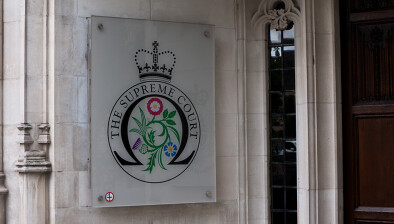
Lord Reed has suggested that the Supreme Court should be able to take more criminal appeals from England and Wales as there is currently a risk that the Court of Appeal is “marking its own homework”.
Criminal appeals from England and Wales or Northern Ireland can only go to the Supreme Court if appeal courts certify an “important question of law”, the judge told the Constitution Committee of the House of Lords.
“The Northern Irish courts certified quite a few cases, so we had a steady diet of crime from Northern Ireland,” Lord Reed said.
In the case of England and Wales, however, the judge said that during his tenure “very few cases were certified” and that this was a “matter of concern” for him. Having raised the issue with the lady chief justice, however, “more cases have come, with quite a notable increase”.
He told the committee: “Off the cuff, the Libor and Euribor case is an obvious example. We had an important case in which I gave judgment recently about pro-Hamas protesters and prevention of terrorism legislation. I feel that we now get more cases coming from England and Wales.”
Lord Reed said he endorsed the Law Commission of England and Wales’ recommendation that the Supreme Court be “able to take cases that it wants to take”.
He also referred to last year’s landmark Scots criminal case of Daly v HMA, which concerns the admissibility of evidence in sexual cases and which casts doubt on the fairness of such trials for defendants in Scotland.
Deputy President of the Supreme Court, Lord Sales, told the committee that over-reliance on AI could result in lawyers becoming de-skilled in the coming decades.
He said they are “very seductive and very powerful tools” and warned that there is a “strong temptation for people now starting to use these systems to come to rely on them.”
He added: “If one thinks about what that might involve for the legal system, if we have a generation of people who come through who have not been applying their own minds and critical faculties to the outputs of these systems but simply take them as read, we will face a problem in recruiting the senior judges of the future who have been trained in developing those critical faculties, which is the whole point of having senior judges in the first place.”

Share this article:

Subscribe to our newsletter to not miss articles like this one:
 SUBSCRIBE