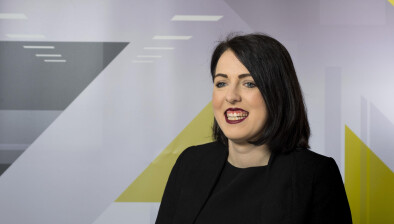

John Sturrock KC: Mediators confront AI’s advance
 Reading time: 4 minutes

John Sturrock KC
AI’s rapid advance could transform – or even eclipse – core aspects of legal and dispute resolution work, warns John Sturrock KC.
The founder of a site where AI models communicate with one another compared them to a “new species that is on planet Earth that is now smarter than us”.
These seemingly apocalyptic words, in a recent email from an American mediator colleague, certainly caused a stir among its recipients. A debate ensued about whether AI will usurp the function of mediators – as it threatens to do with many professional jobs in the near future.
It is interesting that many of these American mediators report the widespread use of AI by parties and lawyers participating in mediations. Indeed, a number of those mediators are themselves using AI to summarise the mediation papers, structure possible negotiation approaches, help prepare “mediator proposals”, assess emotions and assist with strategies to overcome impasse. Some are even developing their own software programmes (or asking AI to do that for them).
Commenting on the use of AI in recruitment, a legal careers adviser recently observed that “law is fundamentally people-focused and technology should enhance rather than replace human judgment”.
With that in mind, I had intended to write about how mediators and lawyers can adapt to the advent of AI, on the assumption that the strengths we have, such as building relationships and trust over many years, cannot be displaced. And then I read an article by Matt Shumer, entitled Something Big Is Happening, and watched the first of mathematician Professor Hannah Fry’s documentaries on the subject of AI. The enormity of what could be facing us hit me. Shumer describes it as “like the moment you realise the water has been rising around you and is now at your chest.”
According to Shumer, the AI models available today are unrecognisable from what existed even a few months ago. The most recent models make decisions that would have been unthinkable a year ago. They have something that “felt, for the first time, like judgment”. ChatGPT and Claude have released new models that make “everything before them feel like a different era”. AI is now building itself, with the ability to improve exponentially, not linearly. The people behind this technology are “simultaneously more excited and more frightened than anyone else on the planet”. One has said that AI models “substantially smarter than almost all humans at almost all tasks” are on track for 2026 or 2027. Shumer concludes that massive disruption could occur by the end of this year. We need to prepare, he says.
To those who argue we have been here before, it is said that this is different from every previous wave of automation. AI isn’t replacing one specific skill. It’s a general substitute for cognitive work. It gets better at everything simultaneously. We know that some law firms are making significant use of AI to do work that associates would once have carried out. One managing partner apparently expects AI be able to do most of what he does before long…
Shumer’s article has been dismissed as self-serving and way over the top. But questions remain. Will AI replicate deep human empathy? Replace the trust built over years of a relationship? We would hope not. But that some people have begun to rely on AI for emotional support, advice and companionship is illustrated in Hannah Fry’s startling documentary.
So, where might this lead, even for mediators, among whose key attributes is working with very complex human situations? I suspect that we don’t yet know – and that the biggest threat is complacency. We may be facing the biggest change any of us have experienced.
John Sturrock KC is a mediator and founder of Core Solutions

Share this article:

Subscribe to our newsletter to not miss articles like this one:
 SUBSCRIBE