

Written by:

English Court of Appeal upholds ruling that four-month interruption to use of woodland paths did not affect 20-year rule in public way creation
 Reading time: 6 minutes
Written by:
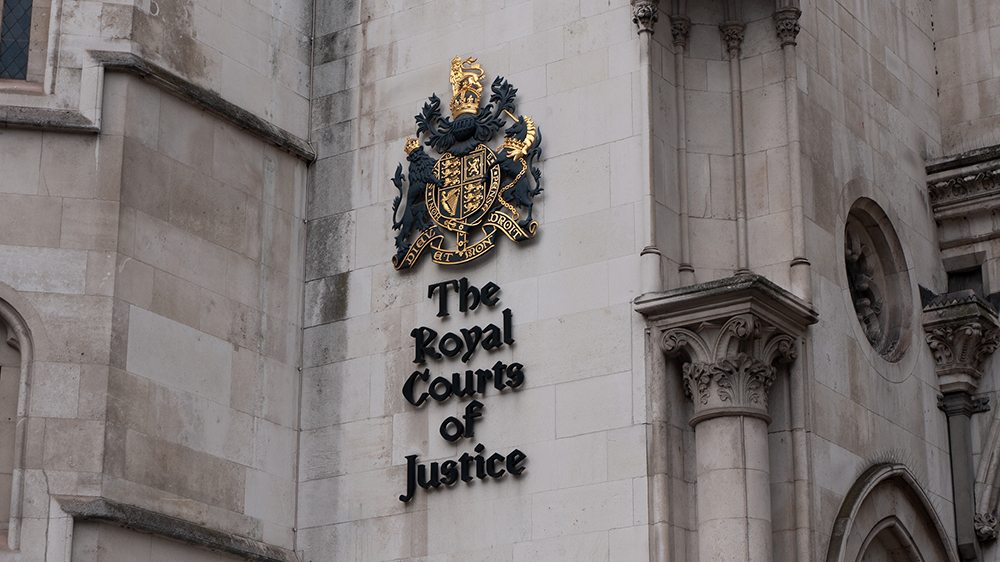
The Court of Appeal of England Wales has refused an appeal by a company that owned forest land in Cumbria against a successful judicial review of a decision not to confirm an order creating 18 new public footpaths through the woods after finding that the High Court judge was correct to find errors in the approach taken to the inspector by an interruption to usage of the paths during an outbreak of foot and mouth disease in 2001.

About this case:
- Citation:[2026] EWCA Civ 534
- Judgment:
- Court:England and Wales Court of Appeal
- Judge:Lord Justice Lewison
Roxlena Ltd argued that there were not sufficient grounds to interfere with the inspector’s decision, and even if she had not committed the alleged legal error, it was highly likely that she would have reached the same conclusion. The Ramblers’ Association, which raised the original petition, argued that the judge was fully entitled to interfere with the conclusion due to her focus on the four-month interruption as opposed to the 20-year period as a whole.
The appeal was heard by Lord Justice Lewison, Lord Justice Lewis, and Lady Justice Yip. Dr Ashley Bowes and Edwin Simpson appeared for the appellant and Tim Buley KC for the respondent. The second and third respondents did not attend and were not represented.
Not actually enjoyed
On 19 January 2021, Cumbria County Council (the third respondent) made a map modification order which added 18 new footpaths and a bridleway over Hayton Wood, which belonged to the appellant. After Roxlena objected to the order, the Environment Secretary (the second respondent) appointed an inspector to hold a public inquiry into whether the order should be confirmed. The inspector decided that the order should not be confirmed because, due to a four-month break in usage as a consequence of the outbreak of foot and mouth disease, the ways had not been enjoyed for the full 20-year period required by section 31(1) of the Highways Act 1980. The first respondent challenged that decision by judicial review, which was upheld in the High Court.
In the order decision, which was given in April 2024, the inspector noted that, while the order routes themselves had not been closed during the foot and mouth outbreak, the County Council had made an order in February 2001 prohibiting access to three public footpaths crossing Hayton Wood and therefore use of the order routes must have been affected by these closures where the routes connected. This meant that a circular walk would not have been available during the restrictions, and the order routes had not actually been enjoyed by the public for the full 20-year period, albeit no finding of an interruption was made.
The High Court judge considered that, in considering the 4-month break as a prolonged period of non-usage rather than de minimis, the inspector had failed to have sufficient focus on the 20-year period as a whole. It was significant that Roxlena conceded that members of the public used all the order routes over the 20-year period regularly save for the four months of foot and mouth restrictions, and in that context four months was a relatively short period.
For the appellant it was submitted that the inspector had properly considered the reason for intermission, and it was rationally open to her to conclude that a four-month intermission in use was sufficient to preclude actual enjoyment for the full period of 20 years. The respondent’s position was that an intermission in use was relevant, but not necessarily fatal, to determining whether time continued to run in establishing the 20-year period, and it would be relevant to consider the explanation for that intermission to determine its consistency with the public’s assertion of a right in that period.
Resumed and continued
In a judgment with which the other judges agreed, Lewison LJ said of the inspector’s approach to the usage gap: “Whether the cause of the non-use is mere intermission or an interruption is dependent on the cause; and in deciding whether it is consistent with the continued assertion of the claimed right the cause of the non-use is of critical importance. In my judgment, the judge was entirely correct in saying that an explanation for an intermission in use is relevant to the overall question of fact; and that it is important to survey the extent and nature of the use over the whole of the relevant 20-year period.”
He added: “It is clear that the question whether a gap in use is inconsistent with the continuing assertion of the claimed right is a retrospective exercise, to be conducted at the time when the right is brought into question and looking back over the whole period of 20 years. That is why the resumption of use after an intermission is of such importance in considering whether a claimed right has been continuously asserted. In saying what she did, the Inspector simply failed to consider the fact that after the ending of the four-month gap the public use of the ways resumed and continued for a further eight or nine years before the existence of the way was brought into question. That was, to my mind, a clear error of law.”
Considering whether the judge was entitled to interfere with the inspector’s conclusion, Lewison LJ said: “I consider that the judge was fully entitled to accept the submission made by the Claimant that no reasonable landowner would conclude, from the absence of public use in the period of restrictions, that the public assertion of the right (as demonstrated by public use in the rest of the period) had been withdrawn. Any other conclusion would have been perverse. For the same reason I consider that the judge was entitled to accept the concession of the Secretary of State (who was the statutory decision maker) that it was not reasonably open to the Inspector to find that the reasonable landowner could not know that a continuous right to enjoyment was being asserted that ought to be resisted.”
He concluded: “The right both claimed and established was actual use as of right for the 20 year period (once the nature of the test is properly understood). If, at some time in the future, restrictions on use of the ways were to be imposed under public health or other legislation, then any use would have to comply with such restrictions. But that is no basis for concluding that in the absence of the legal errors that the Inspector made, it was highly likely that she would have concluded that no rights existed at all.”
The appeal was therefore dismissed, with the question of whether the order should be confirmed remitted to the Secretary of State.

Share this article:

Subscribe to our newsletter to not miss articles like this one:
 SUBSCRIBE