


England: Green Man ruled fit for church gravestone after widow’s legal challenge
 Reading time: 3 minutes
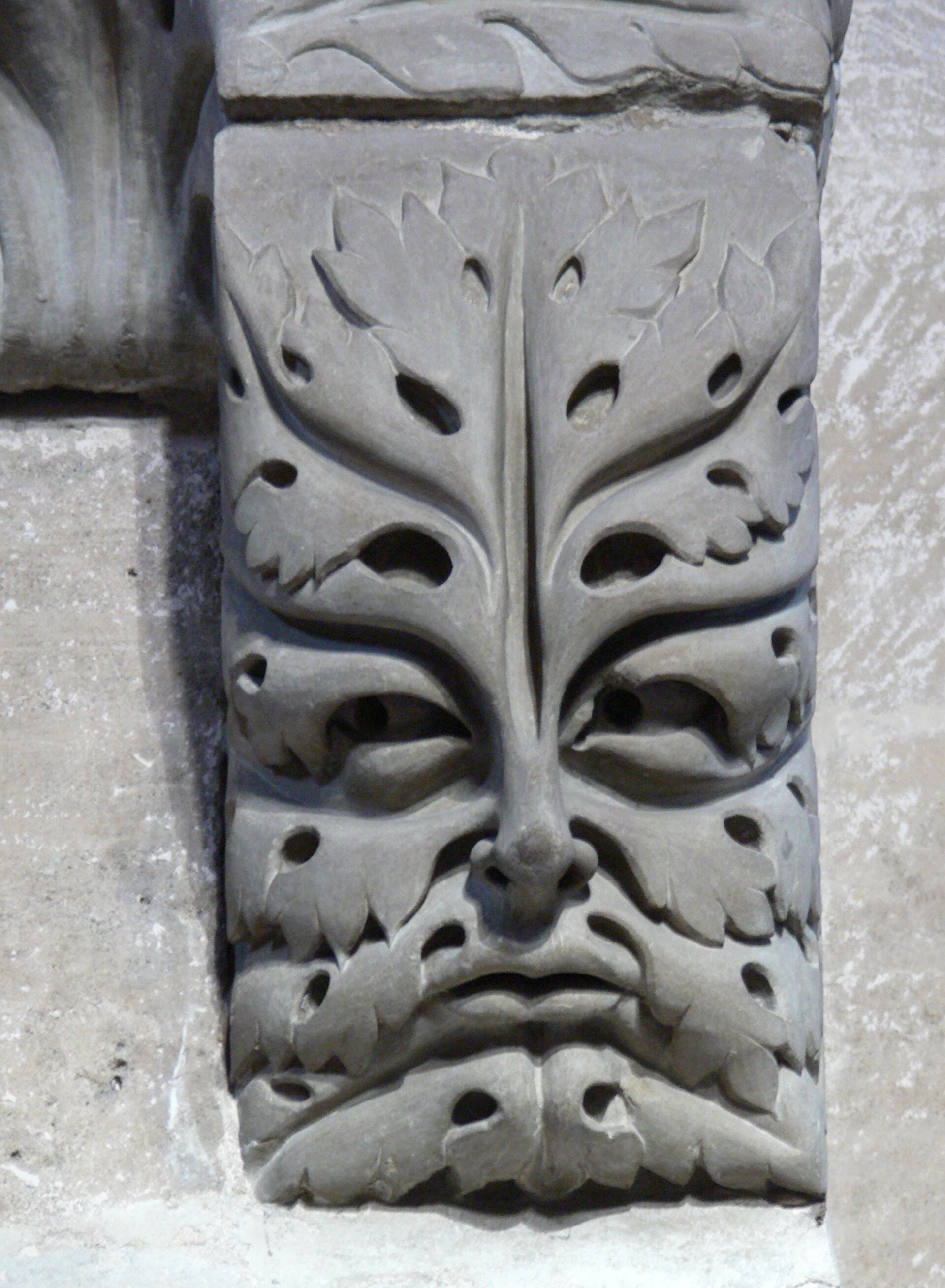
A foliate head in the shape of an acanthus leaf: a corbel supporting the Bamberg Horseman, Bamberg Cathedral, Germany, early 13th century
A widow who was told that the ancient Green Man motif was “not considered a Christian symbol” has won a legal battle to have it carved on her late husband’s gravestone after the Consistory Court of the Diocese of Gloucester found it had long-standing links to Christian tradition.
Dr Polly Stirzaker took her case to the Church’s consistory court after being refused permission to include the image on the memorial to her husband, Roy, at St Edward’s church in Kempley, Gloucestershire.
The Green Man – traditionally depicted as a face entwined with or emerging from foliage – has appeared in church decoration and architecture for centuries and was also featured on invitations to the King and Queen’s coronation at Westminster Abbey in 2023.
Dr Stirzaker said she chose the design to reflect her husband’s love of folk music and Morris dancing, where the Green Man is associated with rebirth and spring. The court heard that Stirzaker, who died in 2018, had performed outside numerous historic buildings including Gloucester Cathedral.
Her request was rejected in June 2023 by the priest-in-charge at St Edward’s, who said: “Under advisement from the Archdeacon and Registrar I cannot give permission, as the Green Man symbol is not considered a Christian symbol.”
The challenge prompted a wider examination of the Green Man’s place within Christian symbolism.
The Rev Mark Ruffell, Chancellor of the Diocese of Gloucester, said he had initially supported refusing permission but reconsidered after expert evidence showed the symbol’s history in churches was more complex than first assumed.
He sought advice from specialists including the Rev Dr Helen Hall of Nottingham Trent University and Prof Javier Garcia Oliva of the University of Manchester, whose research concluded that in medieval architecture the Green Man appeared in an “explicitly Christian context and was generally construed in a positive light”.
They wrote: “The people who gazed at Green Men in churches would not only have thought of winter and spring, but also made the connection between this seasonal death and rebirth, and the cosmic journey from death brought by the Fall to the life flowing from the crucifixion and resurrection.”
After reviewing the historical evidence and seeing the coronation invitation, Mr Ruffell reversed his earlier view and approved the design.

Share this article:

Subscribe to our newsletter to not miss articles like this one:
 SUBSCRIBE