

Human rights commissioner raises concerns over poverty in Scotland
 Reading time: 3 minutes
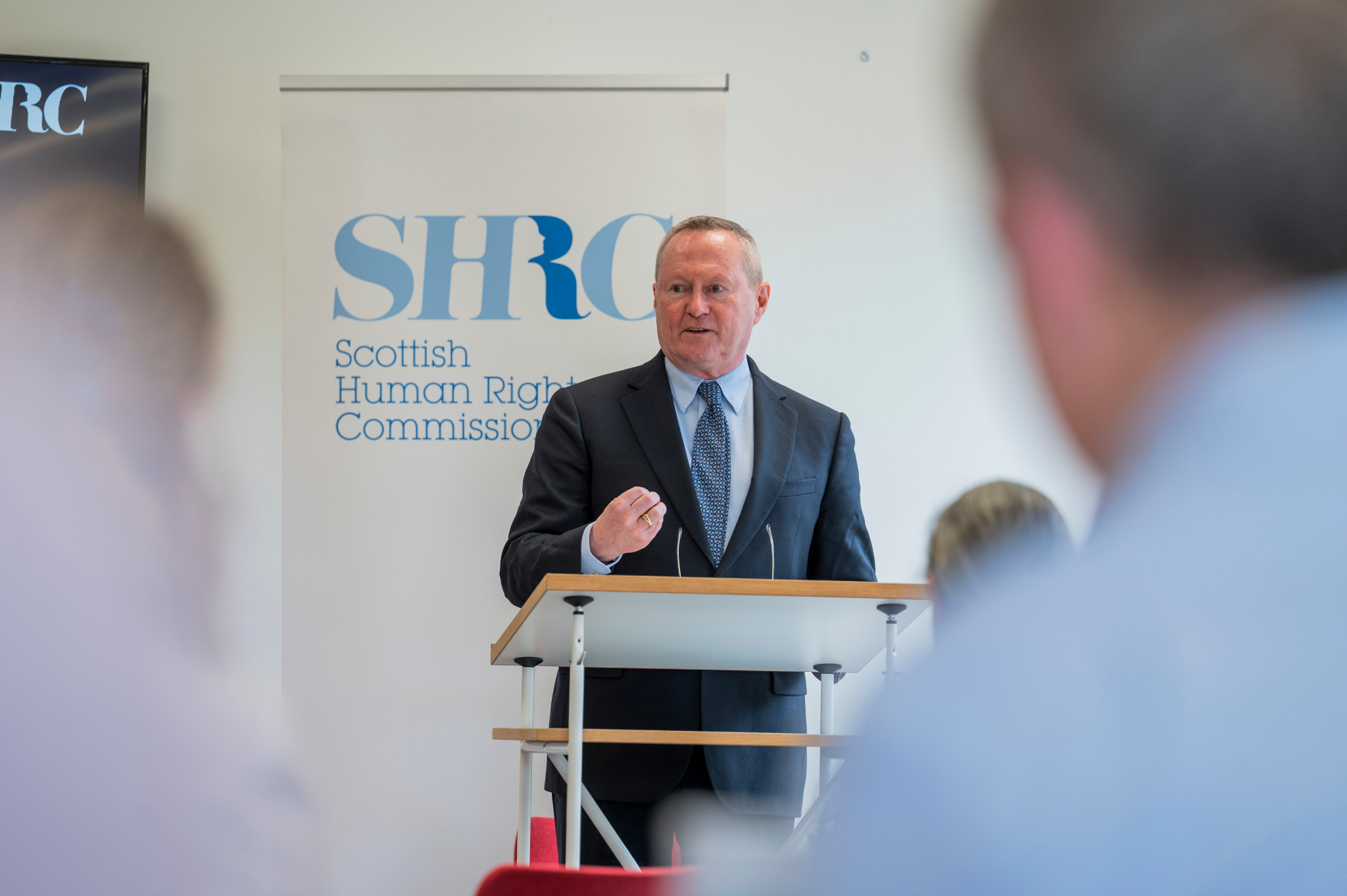
Dr Michael O’Flaherty
Council of Europe human rights commissioner Dr Michael O’Flaherty has warned of the scale of poverty in Scotland, saying one million people, including one in five children, live in relative poverty.
Dr O’Flaherty expressed concern about the scale of poverty in Scotland during his recent visit to Edinburgh.
In a lecture, Dr O’Flaherty spoke of his conversations with a young woman from Orkney, whose family have complex health problems. She told him: “Some days we have to make a choice to breathe or to eat.”
The cost of oxygen equipment and energy to operate it, flights to hospital and overnight stays left the family facing impossible choices. Her story, he said, shows how poverty reaches into “just about every dimension of human life”.
Dr O’Flaherty visited Edinburgh on Thursday 10 September, where he met members of the SHRC before delivering a lecture on the state of human rights in Scotland and across Europe.
He said: “The purpose of human rights law – human rights standards – is to ensure that we can thrive as humans… so there’s an automatic relationship between human rights and the tackling of poverty.
“We’re free to move around the street, we’re free to get a job, we’re free to express our opinions. But they wouldn’t mean a thing if we didn’t have a decent shelter over our heads, if we didn’t have adequate food to nourish us, if we didn’t have meaningful access to healthcare.”
Dr O’Flaherty recognised Scotland’s reputation on social justice, and he said Scotland has taken important steps “from which those of us from elsewhere can learn”, including:
- incorporating the UN Convention on the Rights of the Child into Scots law, which he described as “globally almost unique”
- introducing the socio-economic duty which the rest of the UK has yet to do
- setting binding targets to reduce child poverty.
But he said “something new” is needed and he set out a human rights approach to tackling poverty, built on three principles:
- obligation, not charity: governments are “not doing any favours; you’re honouring obligations”
- equality: making sure the most marginalised people are not overlooked
- participation: treating people as “rights holders and partners”, not “beneficiaries”.
Dr O’Flaherty highlighted the “critically important role” of the SHRC, and commended to Scottish government and civil society its recent paper outlining how Scotland could take a human rights based approach to reforming its efforts to tackle poverty. But he also warned that compared to the situation for national human rights institutions in other countries across Europe, the SHRC needs adequate funding and powers to build on its work.

Share this article:

Subscribe to our newsletter to not miss articles like this one:
 SUBSCRIBE