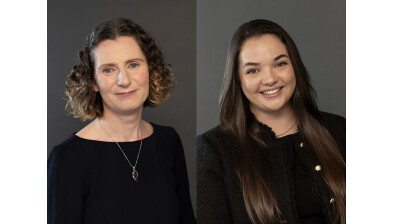


Carole Ewart: Promoting the right to know
 Reading time: 4 minutes

This week the Campaign for Freedom of Information in Scotland celebrates ‘Interntional Right to Know Day’.
Protecting and strengthening the right to official information in Scotland should be a priority, both as a defensive as well as proactive measure to address fake news and provide accountability in public institutions. Accessing official information promptly through pro-active publication or making an FoI request enables people to make an informed opinion and claim their legal rights.
Ensuring Scotland’s FoI law works well and is agile to challenges requires legislation, but the Scottish government disagrees and in February voted against the general principles of Katy Clark MSP’s Freedom of Information Reform (Scotland) Bill.
It still promotes non legislative measures instead. She has now written to the SPPA Committee to ascertain whether it plans to undertake any work on FoI reform and if it is considering a Committee Bill, before she decides on re-introduction of her Bill.
The government has updated the committee on progressing its FoI policy objectives and the three workstreams announced in June 2024. Whilst it has met some targets such as delivering a revised section 60 Code of Practice providing guidance for Scottish public authorities on FoI duties, other undertakings need to be delivered over the next three months.
However it has chosen to delay action on revising the 2011 Section 61 Code of Practice on Records Management because of the Level 3 Interventions launched by the Scottish Information Commissioner in 2017 and February 2024. This is disappointing news given both were ongoing when the three Workstreams were announced.
More people are using their enforceable FoI rights, up 13 per cent in the last year to 111,241 and appeals to the commissioner increased by 83 per cent to 1,084. That is a huge leap in workload for a small regulator. We understand the public’s frustration as public authorities get it wrong in a majority of appeals adjudicated.
According to the commissioner’s annual report, 77 per cent of his appeal decisions found wholly or partly in the requester’s favour. Despite our FoI law being 24 years old, appeals to his office show some public bodies still don’t understand the basic law. A requestor was initially informed by Dumfries and Galloway Council that the information could not be released because it was internal legal advice but the Commissioner established it did not hold the information.
When asked what searches had been undertaken to locate relevant information, the Council advised that no searches had been carried out, because it had “no reason to believe the information should be held”. This is not an isolated example as evidence of non-compliance with good practice through case handling and enquiries reveal that 59 per cent of the 720 identified issues related to the local government sector.
Public distrust is one motivation for seeking information so people can decide themselves if public bodies are making the right decisions. In the Scottish Social Attitudes Survey 2025 people were asked how much they trusted the Scottish
Government, UK government, and their Local Council to make ‘fair decisions’. For all three levels of government, fewer than a quarter of respondents said they trusted them to make fair decisions ‘a great deal’ or ‘quite a lot’.
The Programme for Government 2026-2031 announced ministers intention to “work with Parliament to build on the previous Committee reviews into the Parliamentary Commissioner landscape with a view to consolidating their number while protecting their functions.”
Odd, surely it is for MSPs to decide what matters to pursue. There is no mention about increasing funding to the Scottish Parliament to fund the roles despite pressures on current enforcement powers and demands that some bodies be given regulatory duties. The Commissioner’s appointment and functions are funded by the Scottish Parliament and are strictly independent of government.
The Scottish Human Rights Commission is banned from undertaking casework, including providing advice, guidance and grants, under section 6 of the Scottish Commission for Human Rights Act 2006 but the forthcoming Human Rights Bill should fix the problem as we expect its role to be “expanded”. The SHRC has qualified as a Status A National Human Rights Institution and must be seen as, and be, independent of Government.
Ensuring commissions and commissioners are independent of government, serve the public interest, are funded to be effective and rely on robust laws to preserve public trust in the enforcement of rights and duties. The same applies to FoI practitioners in Scotland’s public bodies who daily uphold our right to know.
Carole Ewart is director of the Campaign for Freedom of Information in Scotland

Share this article:

Subscribe to our newsletter to not miss articles like this one:
 SUBSCRIBE