Is this email not displaying correctly? View it in your browser.
23rd September 2025
Scotland's news service for lawyers
Today’s Headlines
Latest News

English High Court grants interim injunction in contractual dispute between boxing promoter and departing senior employee

By Mitchell Skilling

English High Court grants interim injunction in contractual dispute between boxing promoter and departing senior employee

A judge in the High Court of England and Wales has granted an interim injunction sought by a boxing promoter preventing one of its senior employees from doing work for a rival promotion after finding that there was a risk of irrecoverable damage to the claimants if it was not granted.

Claimant Boxxer Ltd sought the order against defendant John Wischhusen, whom it claimed was still engaged under contract as its Head of Boxing, after he refused to give undertakings not to engage in certain boxing-related conduct without the claimant’s prior written consent. The defendant disputed the contractual position between the parties and sought to have the application determined based on a compromise offer he had made to the claimant.

The case was heard by Mrs Justice Hill, with Tom Cleaver appearing for the claimant and Ognjen Miletic for the respondent.

Document never finalised

The defendant’s contract originally ran from June to August 2020 and thereafter he continued to work for the claimant without a formal contract, which was evidenced to be typical in the world of boxing. Eventually he became an integral member of the claimant’s team and was a “key man” in a significant contract with Sky Sports agreed to run from 1 July 2021 until 30 June 2025.

In early August 2025, the defendant indicated that he wanted to leave the claimant. The claimant’s position was that it had recently become aware of evidence that the defendant had been working with others to launch a rival boxing venture in competition with the claimant and had deleted emails evidencing this. On 11 September 2025, a day before the hearing, the defendant filed a witness statement proposing a compromise position in which he would accept some restrictions on his conduct, but this offer was unacceptable to the claimant.

While an attempt was made to formalise the parties’ contract with a draft Consultancy Agreement drawn up in January 2024, this document was never finalised, signed or executed. Nonetheless, on the evidence of the claimant’s CEO and Head of Legal, the defendant proceeded on the basis that those terms had been agreed, with the modification that he was appointed personally rather than through a service company as the document initially envisaged.

The claimant’s case was that the defendant’s appointment was therefore on the terms as set out in the January document, including a non-compete obligation at clause 6.1.2 and obligations to promote the interests of the claimant and not to make representations to boxing promoters or fighters without its consent under clause 3.1. The defendant disputed that the document incorporated applicable terms into his contract and contented that he would not have agreed to the terms as set out in the draft, particularly the 24-month ban on boxing-related employment following termination under clause 6.2.

Enormously damaging

In her decision, Hill J referred to the principles for granting interim injunction under American Cyanamid Co v Ethicon (1975) and added: “It is well-established that the court will not exercise its discretion to enforce a contractual prohibition on working for another during a notice period if that would be tantamount to granting specific performance of the contract of service. However the question is whether the order would in fact compel the individual to return to work against his will, ‘not simply whether the employee will suffer some degree of hardship by being held to the negative obligations in his contract – and certainly not whether he will be prevented from earning his living during the period of the restraint’.”

She continued: “The evidence shows that if, during this important period, the Defendant was able to work actively against its interests or for the benefit of a competitor or potential competitor, that could be enormously damaging, not just because of the advantage it would give a competitor but also because of the damage it would cause to the stability and commercial reputation of the Claimant. Further, that danger is particularly serious if the Defendant is free to induce or persuade other employees of the Claimant to do the same.”

Noting that the claimant would continue to pay the defendant while the dispute was ongoing, Hill J said: “Mr Cleaver is right to contend that the risk of harm to the Defendant if it turns out that the injunction ought not to have been granted is at present relatively remote. I say this bearing in mind his high standing in the industry, as evidenced by the various testimonials he has provided, and the proposed expedited trial. As I have explained, the Claimant is better-resourced than the Defendant, and better able to pay any sum the court might in due course order it to pay. Accordingly, the risk of irremediable injustice to the Defendant involved in granting the injunction is plainly more remote and less than the risk of such harm to the Claimant if no injunction is granted.”

Considering whether the defendant’s proposed compromise would resolve the matter, she concluded: “As Mr Cleaver highlighted, the compromise offer effectively pre-supposes that the Defendant will set up in competition with the Claimant which is the very thing the injunction seeks to restrain. Ultimately the parties may decide to compromise the Claimant’s claim on terms along these lines. However I am satisfied that this compromise offer does not address the issues underpinning this injunction application and does not sufficiently “hold the ring” until trial.”

The court therefore granted the order sought by the claimant in the terms proposed.

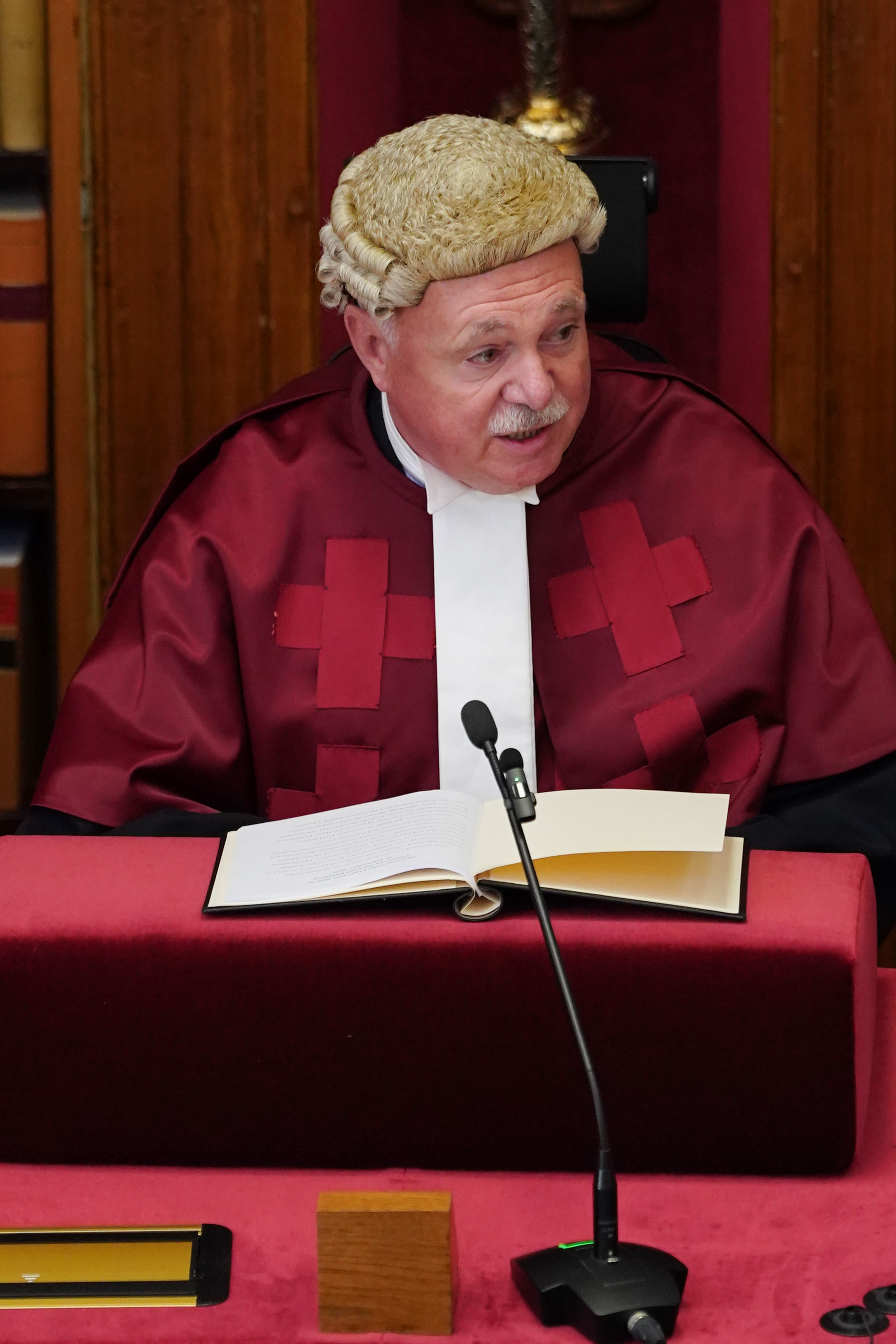
Lord Pentland highlights importance of rule of law

Lord Pentland highlights importance of rule of law

Lord Pentland

Scotland’s most senior judge has highlighted the importance of the rule of law and judicial independence during a speech at the annual opening of the legal year ceremony.

Addressing attendees at Parliament House in Edinburgh, the Lord President, Lord Pentland, stressed that the judiciary must remain free from external pressures to ensure public confidence in the impartiality and fairness of judicial decisions.

He said: “Every day in our courts and tribunals, judges across Scotland make decisions that uphold the law, protect rights, and resolve disputes fairly and impartially.

“These decisions – whether made in high-profile cases or in routine court or tribunal hearings – reinforce public confidence that justice is being done.

“The professionalism, integrity, and independence of our courts and tribunals judiciary are essential components of a successful democracy and a flourishing economy.

“Their work may sometimes go unseen, but its impact is profound: ensuring that individuals, families, businesses and communities receive fair treatment under the law.  Most members of our society will probably never have direct contact with the courts. But they can be confident that if they do they will encounter a system where every case is decided or presided over by a judge who is completely independent of any outside influence.

“The judiciary must remain free from external pressure, and the public must continue to have confidence that legal decisions are made impartially, transparently and in accordance with the law. Every judge in Scotland in all our courts and tribunals is dedicated to this principle.”

Lord Pentland added that the principle of open justice remains central to upholding the rule of law as he reaffirmed his commitment to openness and transparency. 

“Justice being dispensed in public is one of the most fundamental principles we have in this country,” he said.

“It is central to the justice system. It reinforces the independence, integrity and stability of our courts and serves to uphold the rule of law.”

The opening of the legal year ceremony traditionally marked the reopening of the courts following the summer recess.

The courts now sit throughout the year, however the ceremony continues to provide an opportunity to reflect on the progress of the previous legal year and set out the future aims and ambitions of the courts and the justice system.

The full ceremony, which was livestreamed, is available to view on the Scottish Courts and Tribunals Service website.

This year marked the first ceremony to be presided over by Lord Pentland, who was appointed as Lord President earlier this year.

During his speech, Lord Pentland highlighted a number of achievements over the last 12 months, including the launch of livestreaming in the Criminal Appeal Court, the national roll out of the summary case management scheme in the sheriff courts, and the introduction of a new case management system for the Office of the Public Guardian.

He also spoke of the need for continued reform within the justice system, adding: “Modernisation and reform are crucial to resolving the conundrum of how to manage within a tight public sector budget and at the same time continue to improve the quality of our service to the public.

“Targeted justice sector effort and, crucially, investment are essential.

“A justice system fit for the future must be one that empowers its people – judges, sheriffs, legal professionals, and support staff – with the tools they need to serve the public effectively.”

During the ceremony, Lord Pentland welcomed the 11 new King’s Counsel who have been appointed by His Majesty The King on the recommendation of First Minister John Swinney.

They are: Gordon Balfour, advocate; Leigh Lawrie, advocate; Ceit-Anna MacLeod, advocate; Drew McKenzie, advocate; David McLean, advocate; Rachel Shewan, advocate; Emma Toner, advocate; David Turner, advocate; Yvonne Waugh, advocate; David Dickson, solicitor advocate; and Gordon Martin, solicitor advocate.

Lord Pentland also welcomed three new Honorary King’s Counsel appointees: Dr Alastair Brown, Professor Lorne Crerar and Judge Norman McFadyen.


Stirling University research warns of ‘democratic backsliding’ in UK

Stirling University research warns of 'democratic backsliding' in UK

The post-Brexit Conservative government rolled back the frontiers of liberal democracy, research led by the University of Stirling has argued.

The research paper, Democratic backsliding and public administration: the experience of the UK, was published in the journal Policy Studies.

It sounds the alarm about “democratic backsliding” in the United Kingdom between 2016 and 2024 – and the current threat to democracy posed by the rise of Reform.

The author, Dr Sean Kippin, a senior lecturer in politics at the university, has carried out a policy analysis of the post-Brexit Conservative government’s use of what he calls an “illiberal playbook”.

He contends that the Conservative government used a combination of legally permissible, legally dubious, and outright unlawful policy tools to systematically weaken democratic institutions and tilt the democratic playing field in its favour.

He said: “The paper shows that under successive prime ministers, beginning with Boris Johnson, the Conservatives used their powers to damage democracy. 

“They did this through several pieces of legislation and other associated policy interventions which have placed significant limits on the right to protest, compromised the independence of key democratic institutions such as the Electoral Commission, and waged divisive culture wars through their so-called war on woke.”

Policy examples include the weakening of freedom of information laws, the introduction of restrictive voter ID requirements, politically motivated public procurement, and the illegal proroguing of Parliament in 2019.

These interventions, the study suggests, were not isolated missteps but part of a broader trajectory that mirrored radical right populist movements seen globally.

Dr Kippin said: “Much damage was done to democracy in the post-Brexit period of Conservative rule and this paper is the first to systematically explore the period using the tools of policy analysis. 

“It demonstrates a connection between this democratic backsliding and the cumulative policy choices made by the last government. Critically, these developments have made UK democracy more vulnerable to future potential damage.”

The article also claims that the UK’s uncodified and highly flexible constitutional framework made it “particularly vulnerable to illiberal governance”. Unlike systems with entrenched constitutional checks, the UK relies heavily on political norms and self-restraint – both of which were repeatedly tested and, at times, breached during the Conservative governments of the post-Brexit era.

Dr Kippin said: “This article aims to sound the alarm – and to reinforce the notion that the UK is not invulnerable to the kinds of developments we are seeing elsewhere, such as in the United States and Central Europe. 

“UK democracy invests significant amounts of power in its executive, with few limitations. The Conservatives’ approach was to weaken accountability mechanisms, and to limit key individual and group liberties.”

Despite these worrying trends, the article notes that resistance from civil society, legal institutions, and sections of the media played a key role in limiting the damage. Several controversial government actions were overturned in court and attempts to push illiberal measures often faltered in the face of public backlash or legal complexity.

However, the article concludes that the groundwork laid by the Conservatives between 2016 and 2024 has lowered the floor for acceptable political conduct and made future democratic erosion more feasible.

With the rise of Reform UK under Nigel Farage and limited appetite within the new Labour government to overhaul political institutions, the threats to UK democracy may be far from over, Dr Kippin warns.

Much-needed improvements to FOI regime proposed

Much-needed improvements to FOI regime proposed

Proposed changes to strengthen the public’s right to information and increase transparency among public authorities are set to be scrutinised in Holyrood.

The Scottish Parliament’s Standards, Procedures and Public Appointments (SPPA) Committee has launched a call for views on the Scottish government’s Freedom of Information Reform (Scotland) Bill.

The bill would update the Freedom of Information (Scotland) Act 2002 by making the public’s right to information explicit – unless it is subject to an absolute exemption – and establishing a new duty for public authorities to publish information proactively.

It would also bring more bodies under freedom of information rules and mandate the appointment of freedom of information officers, to improve compliance.

In a move to improve the effectiveness of existing processes, the bill would give the Scottish Information Commissioner stronger enforcement powers. It would remove the first minister’s power to override the commissioner’s decisions and allow the commissioner to refer cases of failure to comply with the timescales directly to the Court of Session.

The committee now wants to hear from users of the Act (which includes the media, trade unions and campaigners), public bodies, and bodies providing public services that may become subject to freedom of information rules under the bill (such as third sector organisations and housing associations).

The range of organisations with an interest in this bill is wide and is also likely to include academics and think tanks involved in representative democracy, legal bodies, information governance professionals and others who are involved in interpreting and applying freedom of information legislation.

The call for views will close to responses on 22 September 2025. The committee plans to hold evidence sessions with stakeholders in November.

Martin Whitfield MSP, convener of the Standards, Procedures and Public Appointments committee, said: “With the original Act now 20 years old, it’s timely to look at how the law might be updated.

“New legislation must be clearly defined and workable. The committee is keen to hear views on the bill’s proposals, and whether its aims to strengthen existing processes, increase transparency and extend coverage are likely to achieve their intended impact.

“The committee will listen clearly to these views and take them into account, together with the oral evidence we will gather, to suggest how the bill might be amended and improved.

“If you are a user of the Freedom of Information Act, subject to its rules (or may be, following the bill), involved in interpreting requests or have an academic or public interest in the system, please do share your views on this bill.”

UK and Ireland announce joint approach to legacy of the Troubles

UK and Ireland announce joint approach to legacy of the Troubles

Pictured (left–right): The UK's Northern Ireland secretary, Hilary Benn, and Ireland's Tánaiste and foreign affairs minister, Simon Harris.

The UK and Irish governments on Friday published a joint framework for dealing with the legacy of the Troubles, hailed by Simon Harris as “a return to a partnership approach on Northern Ireland”.

The seven-page document was launched at Hillsborough Castle by the UK’s Northern Ireland secretary, Hilary Benn, and Mr Harris as Ireland’s Tánaiste and foreign affairs minister.

It includes a commitment from the UK government to repeal and replace the previous administration’s deeply controversial Northern Ireland Troubles (Legacy and Reconciliation) Act 2023.

The legislation led Ireland to lodge a rare interstate case against the UK at the European Court of Human Rights in January 2024. The Irish government says it will withdraw the case once the legislation is repealed.

Under the new agreed framework, the widely-criticised Independent Commission for Reconciliation and Information Recovery (ICRIR) established by the 2023 Act will be formed into a new body called the Legacy Commission.

Legacy inquests which were halted by the 2023 Act will be allowed to resume, while other previously directed inquests will go ahead subject to an independent assessment by the UK’s solicitor general.

However, no new inquests will be announced, with the reformed Legacy Commission becoming the “primary route” for legacy investigations to take place.

The Legacy Commission’s investigations will be capable of leading to prosecution, though there are “six new rights, safeguards and protections” for former British soldiers.

The prohibition on civil cases relating to the Troubles will also be lifted.

Speaking on Friday, Mr Harris said: “The 2023 UK Legacy Act was unilaterally conceived, unilaterally drafted, and unilaterally implemented. Today is a step-change from that.”

He said the new joint framework “provides routes to truth and accountability for those most affected by the violence of the Troubles”.

“The Irish government made clear from the outset that any agreed joint approach to legacy by the two governments would need to meet two tests — compliance with the European Convention on Human Rights, and capable of securing the support of those most affected, especially the families of those killed.

“I believe that this framework, faithfully implemented, can deliver on those two goals.

“I am fully aware that winning the confidence of families will take time. Since the beginning of the year, I have listened to victims’ families and those working to support and represent them. For them, delivery is the real, and only, test.

“I believe that what we have agreed can deliver for families.”

As part of the joint framework, the Irish government has also made commitments, including the creation of a new dedicated legacy unit within An Garda Síochána.

Ireland will also ring-fence €25 million to support the participation and representation of victims and families in legacy processes.

“Reciprocity is at the heart of this framework: the Irish government will cooperate with the reformed Legacy Commission and we will receive similar cooperation from the British government on troubles-related inquiries, inquests and investigations in this jurisdiction,” Mr Harris said.

Mr Benn said: “The previous [UK] government’s flawed, undeliverable and widely opposed Legacy Act has caused great pain and anguish to many people in Northern Ireland.

“I believe that this framework, underpinned by new co-operation from both our governments, represents the best way forward to finally make progress on the unfinished business of the Good Friday Agreement. 

“And I hope that having read what we are proposing, the communities who were most affected by the Troubles will see this as a way forward in which they can have confidence, and will therefore give this plan a fair chance.”

Sheriff Principal Anwar takes up sentencing role

Sheriff Principal Anwar takes up sentencing role

Sheriff Principal Anwar

Sheriff Principal Anwar has been appointed as an advisor to the Scottish Sentencing Council.

Appointed as sheriff principal of South Strathclyde, Dumfries and Galloway in April 2020, she later took on the role of sheriff principal of Glasgow and Strathkelvin in May 2023 and became president of the Sheriff Appeal Court. 

In 2024, she was named as a temporary judge and appointed as Honorary King’s Counsel. She designed and led summary justice reforms and currently chairs the Summary Case Management Board.

Council chair Lord Beckett, welcomed the new appointment, saying: “We are delighted that Sheriff Principal Anwar is joining the council as an advisor and look forward to working with her.

“The council will benefit greatly from her insights and experience as both Sheriff Principal and President of the Sheriff Appeal Court. Her extensive knowledge and expertise, will be invaluable as we continue to develop our guidelines, including the rape and domestic abuse guidelines. It is also an exciting time to join the council as we approach our 10-year anniversary, building upon the strong foundations of our first decade.”

Sheriff Principal Anwar will serve on the council for a two-year term.

Edinburgh to consult public on plans for city’s first safe drug consumption room

Edinburgh to consult public on plans for city’s first safe drug consumption room

A public consultation on a proposed safe drug consumption room in Edinburgh has been approved, with the city’s health board chair insisting the facility would save lives.

The Edinburgh Integration Joint Board (EIJB) signed off the move on Monday. Officers will prepare the consultation for early 2026, with members of the public asked to give views over a three-month period. Possible sites in the Old Town include the Cowgate and Spittal Street.

Labour councillor and board chair Tim Pogson said: “We all recognise that Edinburgh has a problem in terms of harmful drug use. We should be supporting those individuals and supporting their health. And I know there will be concerns – but that’s why we need to have the consultation. We need to understand all the issues and talk them through, and get the best outcome we can for all of this.”

According to a report circulated ahead of the meeting, the site could be co-located with a homeless day service or an opiate replacement therapy centre, operating daily for eight to 12 hours.

Nurses would supervise users while they inject, or possibly inhale, drugs. Staff would also provide support, including referrals to services, drug checking, and naloxone kits to reverse overdoses. Clinics could also address wound care, infectious diseases, sexual health and chronic conditions.

If established, the facility would become Scotland’s second such service, after Glasgow’s Thistle site. The plans draw on models from both Glasgow and Dublin.

Board members expressed broad support but raised questions over planning. NHS Lothian’s Patricia Cantley asked whether people from outside Edinburgh would use the service and if neighbouring councils were being consulted. Citizen member Eugene Mullan queried timescales.

Andrew Hall, strategic planning officer, said a consultation could begin in the new year “with fair wind” but warned it would take more than a year to open a facility, citing analysis of responses, funding, legal hurdles and site selection.

Members of the board agreed to proceed without changes to the officers’ recommendations.

Scottish house prices outpace UK average with 3.3 per cent rise in July

Scottish house prices outpace UK average with 3.3 per cent rise in July

The latest UK House Price Index figures show that the average price of a property in Scotland rose to £192,000 in July 2025, marking a 3.3 per cent increase compared with the same month last year.

On a monthly basis, prices in Scotland increased by 0.5 per cent on a non-seasonally adjusted basis, though seasonally adjusted figures show a slight decline of 0.3 per cent.

Across the UK, the average house price stood at £270,000, up 2.8 per cent annually. Monthly changes were more subdued, with prices edging up 0.3 per cent before seasonal adjustment and falling 0.7 per cent after adjustment.

A Registers of Scotland spokesperson said: “There was an increase of 3.3 per cent (to £192,000) in the average house price for Scotland in the 12 months to July 2025. This compares to an increase of 2.8 per cent (to £270,000) in average house prices for the UK as a whole.”

The figures reveal significant regional differences across Scotland. 28 of Scotland’s 32 local authorities recorded annual price increases. Renfrewshire saw the steepest rise, with average property prices up 11.0 per cent to £162,000. South Ayrshire experienced the sharpest fall, with average prices down 2.8 per cent to £160,000.

The highest average prices were found in East Renfrewshire and the City of Edinburgh, both at £289,000.Inverclyde recorded the lowest average price at £114,000.

Smaller local authority areas such as the Orkney Islands, Na h-Eileanan Siar and Shetland Islands were excluded from high/low comparisons due to limited sales data, which can create volatility in trends.

Gaza flotilla legal support boat shares first communiques

Gaza flotilla legal support boat shares first communiques

The independent legal support boat sailing to Gaza alongside the Global Sumud Flotilla has published its first legal updates.

Irish lawyers Gemma McLoughlin-Burke BL and Leigh Brosnan BL, as well as English solicitor Alexander Hogg, are on board the vessel, which began its journey earlier this month.

Hundreds of activists from over 45 countries are taking part in the Global Sumud Flotilla, which represents the largest-ever civilian effort to break the Israeli blockade of Gaza, which is illegal under international law.

The independent legal support boat, the Shireen, is accompanying and monitoring the flotilla and providing legal updates on its progress.

You can read communiques from the Shireen on its new Instagram page.

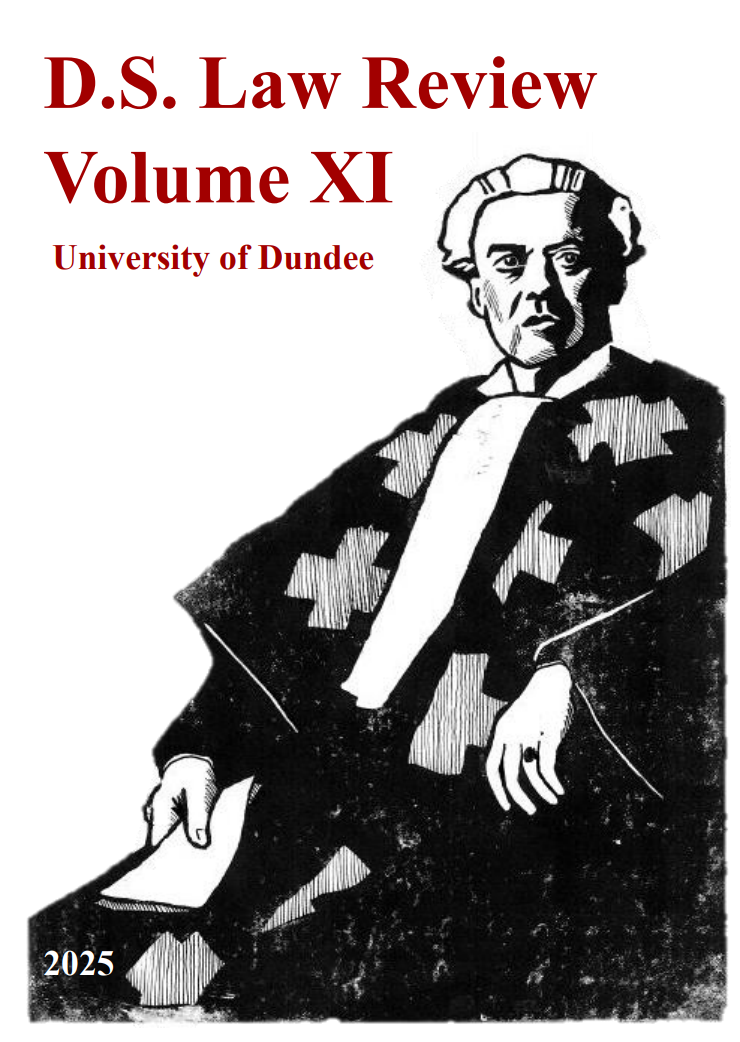
Dundee Student Law Review volume XI out now

Dundee Student Law Review volume XI out now

Volume XI of the Dundee Student Law Review is now available.

The volume comprises four full-length research articles each addressing distinct international research areas.

Tom Edwards, senior managing editor and chair, said: “I am grateful to Neil Hay of Levy & McRae Solicitors, a University of Dundee alumnus, for his incisive introductory remarks, and to John Brannigan, Black Chambers, for conducting the peer review of the volume with such thoroughness.”

Quote of the day

Life starts all over again when it gets crisp in the fall.

F. Scott Fitzgerald, ‘The Great Gatsby’ (1925)

And finally… vice city

And finally... vice city

The Taliban has banned high-speed internet across much of northern Afghanistan in order to “prevent immoral activities”.

Fibre-optic internet access has been shut off in between five and 10 provinces, though slower mobile internet still works, according to Sky News.

A local Taliban spokesperson said — in a social media post — that the measure “was taken to prevent immoral activities, and an alternative will be built within the country for necessities”.

Online dating and pornography are understood to be chief among the “immoral activities” in question.

Local media reports that the ban is eventually expected to be extended nationwide.

However, business leaders relying on the internet have urged the Taliban to reverse the ban.

Are you a law firm partner wishing things could be different?

Are you a law firm partner wishing things could be different?

As a law firm partner, are you:

  • Fed up with office politics?
  • Annoyed with the decisions made?
  • Frustrated by some of your fellow partners?
  • Disgruntled by the way the cake is divided up?
  • Confused why you ended up in charge of HR or IT?
  • Wishing you could concentrate on just doing the law?

Becoming a partner in a law firm is an incredible achievement. You have worked really hard to get there, following the traditional path.

However, maybe it is not giving you the satisfaction or fulfilment you thought it would?

Would you like to change all of that?

Now, imagine your future. One that gives you more of the fees you generate; complete freedom of how, where and when you work; and allows you to focus on doing the legal work that you love to do.

If you are a law firm partner, and wish things could be different, then find out now if Plug & Play Law is the answer for you.

What is Plug & Play Law?

Plug & Play is a term coined by Mitch Kowalski in his book ‘The Great Legal Reformation: Notes from the Field’. A book that features Inksters.
Mitch Kowalski refers to Plug & Play Platforms when describing law firms such as Inksters who have developed a model where senior lawyers can work as a collective, with enhanced technology and back-office support.

Inksters and Plug & Play Law

Inksters is the foremost Plug & Play Law firm in Scotland. Specifically with, by far, the largest number of consultant solicitors and the greatest geographical reach. Inksters have operated and perfected this model for 13 years and been in business as a law firm for 26 years.

Discover whether Plug & Play Law is the right fit for you

If you are a law firm partner, and wish things could be different, then complete the Plug & Play Law scorecard online. There are just 11 simple questions and it takes less than 60 seconds to complete. You will then receive an immediate personalised report on whether Plug & Play Law is a good fit for you.

In Case You Missed It...

Please note that Scottish Legal News accepts no responsibility for viruses. It's your responsibility to scan attachments.

Scottish Legal News strives to be accurate. If you see anything in our publication which is misleading or wrong, please contact us.

You can find the most up-to-date information about how to contact Scottish Legal News on our website.

© E-News Now Ltd 2026
You are receiving this email because you are subscribed to Scottish Legal News.