Is this email not displaying correctly? View it in your browser.
28th May 2026
Scotland's news service for lawyers
Events & Courses At A Glance
Today’s Headlines
Jobs At A Glance
Latest News

Retired boiler fitter fails to prove noise-induced hearing loss case against former employer

By Mitchell Skilling

Retired boiler fitter fails to prove noise-induced hearing loss case against former employer

A personal injury sheriff has granted decree of absolvitor in an action by a retired boiler fitter seeking damages from his former employer for alleged hearing loss after determining that his loss of hearing was attributable to age and not to any injury suffered during his employment.

John Pollock raised an action against Marshall & Anderson Ltd and Tata Steel UK Ltd, as the successors to the rights and liabilities of his former employees Alexander Anderson and Sons and British Steel, seeking £25,500 plus interest in damages. However, the pursuer abandoned his claim against the second defender on the third day of the proof, leaving only his case against the first defender.

The case was heard in the All-Scotland Sheriff Personal Injury Court by Sheriff Douglas Keir, with McQuade, advocate, appearing for the pursuer and Oliver, advocate, for the defenders.

Significant inconsistencies

From 1964 to 1971 the pursuer was employed as a boiler fitter for various companies, including two years with the first defender’s predecessor at their factory in Carfin, Lanarkshire. He was exposed to noise for around 75 per cent of his working day, requiring to shout to communicate with his colleagues and regularly work alongside people using pneumatic tools. From tax year 1970/1 to 1983/4 he was employed by the second defender’s predecessors as a shift engineer and then shift foreman, during which time he was provided with hearing protection.

In his evidence, the pursuer categorised his hearing as “terrible”, although he had not taken any steps to address the problem. He said that the first defender had not provided him with ear protection and, while he wore ear defenders for most of his time with the second defender, there were times when it was impracticable to wear them when working on smaller machines. The pursuer also accepted that he had undergone a hearing assessment around 10 years ago and was told at the time that his hearing loss was age-related.

For the pursuer it was submitted that it was clear from the evidence that the pursuer had been exposed to average weekly noise in excess of 95 decibels while employed by the first defender, which had not taken any steps to reduce noise in its factory. The evidence of acoustic consultant Gary Percival, who prepared a report based on information provided by the pursuer’s agents but did not interview him personally, estimated the pursuer’s average daily noise exposure to be in the range 98.2 dB LEPd to 107.5 dB LEPd.

Counsel for the first defender submitted that there were significant inconsistencies in the pursuer’s evidence and that of the experts instructed for his claim, which had a fatal impact on the calculations carried out by Mr Percival in relation to noise exposure. Furthermore, Mr Percival had failed to produce the pursuer’s precognition and questionnaire upon which he had based his calculations and to include the workings for those calculations, and in any event the pursuer had not proved that any breach of duty on the part of the first defender had caused him to develop noise-induced hearing loss.

Undermined the reliability

In his decision, Sheriff Keir said of the pursuer’s evidence: “I consider that the pursuer made a reasonable impression in court and appeared to be doing his best to assist the court. Standing the nature of his employment with the first defender, it cannot be reasonably disputed that he was exposed to high levels of noise. However, it was clear that there were material discrepancies between what he told the court and what he had told his solicitors and the experts involved in the case prior to that time in relation to key issues to be determined by the court.”

He continued: “I accept that the pursuer was giving evidence about events that occurred over 55 years ago and he should be afforded some latitude in that regard. I also accept that a witness will not necessarily give the same answer to a question asked by a different person at a different time, particularly in the unfamiliar confines of a witness box in court. However, I consider these discrepancies on critical issues to be significant and undermine the reliability of key elements of his evidence. Moreover, insofar as Mr Percival’s opinion is reliant on certain facts being established, the weight to be given to his evidence is similarly weakened.”

Considering expert views on three audiograms prepared for the purposes of the claim, Sheriff Keir said: “Taking the pursuer’s case at its highest, a potential diagnosis of NIHL was borderline standing Mr Newton’s quantification of NIHL in the right ear of only 2 dB based on the Paterson audiogram (the most recent of the three). Notwithstanding his acceptance that such a bulge was small, Mr Newton considered that it was still sufficient to satisfy Note 11(i) for a diagnosis of NIHL where there was a bulge of at least 10 dB in the left ear. His assertion that such a small bulge should be viewed as decisive was at odds with his evidence that a bulge would have to be 5 dB to be clinically significant. It was also at odds with Mr Robertson’s unchallenged evidence that a noise differential of 2 dB would be imperceptible to the listener.”

He concluded: “I therefore prefer the evidence of Mr Robertson to Mr Newton with particular regard to their key areas of dispute. It follows that I accept Mr Robertson’s evidence that any NIHL in the pursuer’s right ear sits squarely in the Note 11(iv) category and should be classified as ‘little or no trace’.”

Decree of absolvitor was therefore granted in favour of the first defender.

Interview: Lord Reed reflects on UKSC Glasgow sitting, changing times and AI

By Kapil Summan, editor

Interview: Lord Reed reflects on UKSC Glasgow sitting, changing times and AI

Lord Reed

Fresh from the UK Supreme Court’s Glasgow sitting, president of the court, Lord Reed of Allermuir, spoke to SLN editor Kapil Summan. 

Upon his appointment as president of the Supreme Court in 2020, Lady Elish Angiolini recalled that in her practising days she once asked Robert Reed to write a paper on public interest immunity, which she suggested he take a few weeks to do. He appeared in her office with the completed paper the next day. He had, she said, produced a “masterpiece”. His erstwhile colleague on the bench, Lord Sumption, said that Lord Reed is “not a swaggerer” and that “he is not a bully”. “He doesn’t raise his voice. But he doesn’t need to because he’s highly respected as a thoughtful and highly intelligent judicial figure.”

The court sat in Glasgow’s City Chambers last week, following the previous regional sitting in Manchester in 2023 and before that Cardiff, Belfast and Edinburgh. Asked about the value of these regional sittings Lord Reed says that “a large part of the thinking behind setting up the Supreme Court was to bring the processes of the highest court in the country into the public gaze and make it more transparent – and we’re not going to achieve that by sitting all the time in London” and that he was keen to bring the court to Glasgow before he retired. The justices had a “very full programme of events” meeting with students, the public, community leaders. “I think the message came over that we’re a court that exists to serve all the people of the UK – the people of Scotland just as much as anywhere else.”

He says it was also an opportunity to dispel misconceptions the public have about the court’s constitutional role, which is more important than ever in an age of Magna Carta enthusiasts and so-called sovereign citizens.

“During the Q&As over the course of the week, people would ask things like why the Supreme Court was blocking Scotland’s right to independence. You explain to them: do you agree the Supreme Court’s job is to apply the law? ‘Yes’. Do you know that the law governing the powers of the Scottish Parliament is set out in an Act of Parliament? ‘Yes’. So do you think it’s the Supreme Court’s duty to implement what the Act says? ‘Yes’. And then you tell them what the Act says, and they come away understanding why we decided the case the way we did.”

This points to a general problem with how the court’s function and its judgments are often misunderstood by the public. I suggest to Lord Reed that last year’s judgment in For Women Scotland was received by the public as a verdict on the ontological claims of transgender people rather than what it was: a clarification of the correct interpretation of ‘sex’ in the Equality Act and that, despite the media relaying what comes from the courts, there is perhaps an explanatory layer missing.

He says that the topic of communication with the public is “something we and other courts are giving a great deal of thought to” and that he is meeting his opposite number in Canada soon to discuss ideas on how to address it. He also says they have to consider that young people are “getting their information from media which cater for – or actively encourage – the dissemination of information in a very short and very visual format”.

“We need to develop ways of communicating with them in the way they communicate with each other, otherwise we’ll be speaking past them – and frankly, we won’t be defending the rule of law adequately unless we engage with them effectively.”

For example, the Supreme Court’s exhibition space deals mainly with the “reasons for the move from the House of Lords to the Supreme Court”, yet the typical visitor is 15-years-old – and this event now took place before they were born.

“We’re looking at ways of communicating that use very small amounts of text, and where text does appear, it presents information through personalised stories – the way even mainstream media tells a legal story, focusing on the individuals concerned and how the case affects the people involved, ending perhaps with a statement from a young person about how they think the case might affect their own life. It’s quite a radical departure from the traditional approach.”

The court is also working with the Attorney General’s Youth Ambassadors Programme which will “enlist young people with large followings on social media to act as ambassadors for the rule of law, explaining relevant events in a way other young people can relate to”, Lord Reed explains.

I put it to him that the judiciary has, in the wake of the Daily Mail’s ‘Enemies of the People’ headline, become more embroiled in politics – in the perception of the public – and that perhaps something stronger and more independent than the lord chancellor of the day, like an office for the rule of law, is needed to defend judges.

“The problem more recently has been the vilification of judges dealing with immigration cases – much more junior people in the legal system, far more vulnerable in all kinds of ways. They’re having to take potentially controversial decisions under intense time pressure, and they can be hung out to dry in the media. Some have actually faced very unpleasant and menacing behaviour towards themselves and their families – home addresses becoming known, for example. That is a serious worry. It’s something the lady chief justice has been giving a great deal of thought to, and I’ve been in discussion with the lord chancellor about whether there are ways of addressing it.

“Institutional ideas of the kind you’re suggesting – a rule of law office – have been given thought,” he says.

Yet he worries about disproportionate remedies.

“One of the difficulties is: how do we actually prevent it? Are we going to effectively reintroduce some form of contempt of court, or murmuring of judges – offences we’ve only just abolished within relatively recent times? If a politician decides there’s mileage in attacking the judiciary, are we seriously going to prosecute him for some offence? My own view is that any steps taken to protect the judiciary, in order to be durable, have to be based on a reasonable level of consensus within Parliament – at least the support of the major parties.”

Recent headlines on AI and law have frequently been about its misuse by practitioners but judiciaries around the world are recognising the need to embrace the technology.

Another Supreme Court justice, Lord Briggs, recently spoke about plans in Brazil to introduce court-approved AI for judges to use as the country faces a backlog of cases that stands at an incredible 80 million. Lord Reed thinks this is the “direction of travel for courts in the UK” too.

“We’re going to have to embrace AI for a variety of reasons, one of which is that litigants are already embracing it – resulting in a large increase in caseload for lower courts, which will eventually affect us. Using AI as a legal research tool isn’t particularly problematical, but using it to help produce work raises issues about confidentiality, which is why you don’t want to use a public system like ChatGPT. You need something bespoke – something like Copilot can be tailored for a particular organisation, and I think that’s the kind of model we’ll probably be adopting, though we haven’t got there yet.”

Lord Reed is stepping down from the court next January, when the Lords will benefit from his insight. What else does retirement hold?

“I would like to remain involved with the law. I enjoy problem-solving – that’s really the main attraction of being an appellate judge. I could sit in an armchair in my slippers doing Sudoku puzzles, or I could be working on legal problems, and I’d rather be doing the legal problems.

“I’m a member of the House of Lords, so once I retire from the bench I’ll be able to take part in the activities of the upper house, which is a great privilege. I’d also quite like to do some teaching if I get the opportunity. Besides that, I’m not entirely sure – but I think my wife and family would probably like to see a bit more of me than they have done in recent years, and I’d like to see more of them.”

UK laws ‘not ready’ for humanoid robots

UK laws ‘not ready’ for humanoid robots

Dr Carl Strathearn

Humanoid robots are moving closer to everyday life, but the UK lacks the laws and safeguards needed to protect the public, a researcher at Edinburgh Napier University has warned.

Dr Carl Strathearn, a lecturer in computer science and researcher in autonomous social robotics at the university, said the rapid growth of humanoid robots is outpacing regulation and public understanding.

He was speaking ahead of DataFest 2026, Scotland’s national data and AI conference, which is hosted by The Data Lab and began yesterday at the Assembly Rooms in Edinburgh.

This year’s event explores how data and AI are changing business, public services and society, with sessions covering trust, regulation, skills, robotics, infrastructure, creativity and AI consciousness.

Dr Strathearn is among a line-up of international speakers including Wikipedia founder Jimmy Wales, OpenUK chief executive Amanda Brock, and AI governance expert Professor Rachel Adams.

He said falling costs mean humanoid robots are becoming increasingly affordable to buy, and that the UK should act to regulate them now rather than waiting for problems to emerge.

He said: “Humanoid robots are not science fiction anymore. They’re science fact. We are developing the technology faster than the safeguards around it.
“The time to act is now. Rather than waiting for it to come to our door, we should start now.

“At the moment, anyone can buy some of these robots online.”

Dr Strathearn said much of the current public understanding of humanoid robots is being shaped by highly controlled demonstrations and promotional videos.

He argued that many robots still struggle outside carefully managed environments, despite the impression often created online.

He added: “I don’t think robots are going to take over the world. A choreographed video is not the real truth of a robot’s capabilities. But the risk is that they are misused, and it only takes one major incident for it to ripple through the whole industry.

“We should also be teaching schoolchildren about robot ethics. Robots are a really tangible way of learning key STEM skills, and preparing people for the future economy.”

Humanoid robots are increasingly being developed by some of the world’s biggest technology firms, with companies promoting visions of robots working in factories, warehouses, homes, and public spaces.

But there are currently no specific UK laws governing their use in public spaces, around children, or in situations where people could be harmed. There are also unresolved questions around safety, liability, privacy, and misuse.

Dr Strathearn said other major economies, including China and the US, are already beginning to look more closely at humanoid robot standards and oversight, while the UK risks falling behind.

New guide launched to help smaller firms retain talent

New guide launched to help smaller firms retain talent

The Law Society of Scotland has published a new guide offering “practical and evidence-based advice” on retaining staff.

The Guide to Retaining Talent in Smaller Law Firms outlines the financial and organisational cost of losing talent, along with changes that can be made to improve staff retention such as:

  • Understanding what a firm’s staff value
  • Creating a culture people want to be part of
  • Building clear career pathways
  • Offering realistic work-life balance
  • Strengthening leadership and supervisory capability
  • Improving learning and development

Law Society of Scotland president, Patricia Thom, said: “This new guide is full of insights and practical tips for smaller firms to retain the people who drive their business’s success and the services that clients depend on.

“I know from personal experience that smaller firms can sometimes feel at a disadvantage when it comes to attracting and retaining staff, but this guide makes it clear how many positives there are that should be promoted to colleagues and developed to their full potential.

“Smaller firms are a vital part of Scotland’s legal sector. This guide is one of several new initiatives the Law Society has developed to help smaller firms grasp opportunities and deal with the challenges of running their businesses.”

The guide has been developed in collaboration with Professional Training, a legal sector focused training company with a focus on staff retention.

CMS appoints Christy Farrer as first chief operating officer

CMS appoints Christy Farrer as first chief operating officer

Christy Farrer

Christy Farrer has been appointed as the first chief operating officer of CMS UK.

In this newly created role, Ms Farrer will lead the firm’s operational strategy across its international offices.

She has spent the last seven years at CMS, where she has played a central role in building the firm’s practice management function. Most recently, she served as the firm’s chief strategy & practice management officer, driving the design, implementation and execution of firmwide strategy and leading the practice group and regional business management function.

Adrian Bell, managing partner at CMS UK, said: “Christy has already made a valuable contribution to CMS, particularly in the development of our practice management capability and in helping to shape and deliver our firmwide strategy. The creation of our first chief operating officer role is critical to strengthening how we run the firm and in ensuring we are set up to deliver consistently for our clients and our people. Christy brings exactly the combination of strategic insight and operational discipline that this role demands.”

Ms Farrer said: “I am delighted to take on this role at such an important time for CMS. This is a firm I know well and care deeply about, and I look forward to working alongside Adrian and the wider leadership team to ensure our operational foundations match our ambition. My focus will be on working with colleagues across the firm to continue to build on our strengths and create the conditions for all our people to do their best work.”

Cameron Irons: Nicola Sturgeon’s ‘no comment’ – beyond the headlines

Cameron Irons: Nicola Sturgeon's 'no comment' – beyond the headlines

Cameron Irons

Few expressions in criminal justice attract as much scrutiny as this one, and in recent days it has moved to the centre of controversial public debate, writes Cameron Irons.

In the wake of widespread reporting on former First Minister Nicola Sturgeon’s police interview, two words have been dissected, criticised, and, in many quarters, plainly misunderstood.

It is, then, an apt moment to move beyond the noise and examine what “no comment” really means, and why it remains so significant in Scots criminal law.

In public discourse, those words are rarely treated as neutral. They are often framed as evasive, strategic, even incriminating. They invite speculation and narrative. In a political context, they quickly become the subject of commentary that says more about perception than law.

But step inside a Scottish police interview room, and the meaning of those two words changes entirely.

A “no comment” interview is neither unusual nor exceptional. It is not, in legal terms, a tactic designed to frustrate the process. It is the routine exercise of a core right, engaged at a critical stage: before charge, often before full disclosure, and always within a setting controlled by the police.

To better understand that one should move away from the headlines and return to what actually happens at the outset of the interview.

The beginning: what the police actually say

Before any questions are asked in a Scottish police station, the interview begins in a structured way that defines the legal framework for everything that follows.

The officer will introduce themselves, confirm who is present, and ensure the interview is being recorded. What follows is the formal setting of the legal stage.

They will often begin in these terms:

“Before beginning this interview… I must remind you of certain information. Please listen carefully.”

The suspect is then told:

“You are under no obligation to say anything other than to provide your name, date of birth, place of birth, nationality and address.”

That reflects the requirement under section 31 of the Criminal Justice (Scotland) Act 2016 that a person is informed they are under no obligation to answer questions beyond basic identifying details.

The officer then reinforces the framework of rights:

“While you are in police custody you have the right to a private consultation with a solicitor at any time…You have the right to have a solicitor present while being interviewed by police.”

The suspect is reminded they may request breaks, seek further legal advice, or indicate if they do not understand a question.

Only then does the interview turn to the moment that arguably matters most - the common law caution:

“I am now going to ask you questions about [the offence]. You are not obliged to answer any questions, but anything you do say may be noted, may be recorded, and may be used as evidence. Do you understand that?”

Only when that is confirmed does questioning begin.

Why that wording matters

Those words are deliberate and precise. They establish three essential propositions: the suspect does not have to speak; anything said will be recorded and used; and the decision rests with them.

Just as important is what is not said.

There is no warning that silence may harm a defence. There is no suggestion that failure to answer will carry consequences. That omission is deliberate. It reflects a legal system in which silence remains protected.

Crucially, a “no comment” interview is not defiance or obstruction. It is a direct and repeated answer, given after the suspect has been told, clearly, that they are entitled not to respond.

The officer may ask. The suspect may answer. Or they may choose not to do so.

How the interview unfolds in practice

The structured beginning does not detract from the intensity of the questioning that may follow.

Police interviews are very structured, and the questions are routinely prepared well in advance. In HMA v Hawkins, [2017] HCJAC 79, evidence demonstrated that officers prepared and followed a plan for questioning. The interview proceeded in stages, including what was described as an “impact” phase, during which the tone became firmer, and the allegation was put directly.

In Hawkins, more than 200 questions were asked on the allegation, and the accused was repeatedly invited to reconsider his position of answering “no comment”, which he eventually did.

The court ultimately excluded what he said, with Lady Scott stating:

“It should be obvious to the police that to seek to undermine a solicitor’s advice to a suspect is wholly improper…I have concluded the repeated and prolonged questioning here… combined with repeated suggestions he should re-consider his exercise of that right constituted undue pressure.”

The principle is therefore clear. Questioning may be robust, but it may not be coercive. Where pressure, particularly where it undermines legal advice, crosses that line, the consequence may be that the evidence is not used.

A different approach from England

The Scottish position becomes clearer when set alongside that of England and Wales. South of the border, the standard caution includes an additional warning:

“You do not have to say anything. But it may harm your defence if you do not mention when questioned something which you later rely on in court…”

That single line reflects a statutory regime, principally sections 34 to 37 of the Criminal Justice and Public Order Act 1994, which allows adverse inferences to be drawn from silence.

Scotland has not adopted that approach. A Scottish court cannot invite a jury to conclude that a defence is fabricated simply because it was not disclosed in interview, nor can silence be used to supply proof. That reflects a deliberate choice to preserve the principle that the burden rests entirely with the Crown.

In Scotland, there is no adverse inference from silence in interview. The accused is under no obligation to assist the Crown, and what is sometimes characterised as a tactic is simply the exercise of a right.

Legal advice: timing and protection

The right to silence is rarely exercised in isolation.

Since the landmark case of Cadder v HM Advocate, [2010] UKSC 43, access to legal advice before questioning has been recognised as essential to fairness. Cadder concerned an accused who was detained and interviewed without access to a solicitor, and whose admissions were subsequently relied upon by the Crown at trial. The Supreme Court allowed the appeal, holding that the lack of access to a solicitor before police questioning breached the accused’s right to a fair trial under Article 6 of the ECHR, and ruled that the use of those admissions rendered the conviction unsafe.

In Condron v United Kingdom, (2001) 31 EHRR 1, the European Court of Human Rights reaffirmed that the right to silence and the privilege against self-incrimination lie “at the heart of the notion of a fair procedure”, and made clear that where silence is exercised on legal advice, that position must be properly taken into account in assessing fairness.

That very much matters in practice. A suspect may be asked to respond to an evidential case they only partially understand. Disclosure may be limited. The risks of speaking, of giving an incomplete or inconsistent account, are immediate and irreversible.

Advice to answer “no comment” is therefore not disengagement. It is often the only way to preserve position until the evidential picture becomes clear.

Beyond the headlines

From the outside, particularly in the glare of political commentary, “no comment” is easily turned into something it is not.

Inside the interview room, it is a clear and deliberate exercise of a right, invoked at the point where the individual faces the full authority of the state, often without sight of the evidence said to exist against them.

The courts have been consistent. Silence is not suspicion. It cannot be used to fill gaps in the Crown case, and it does not alter where the burden of proof lies.

What may be portrayed publicly as strategy is, legally speaking, something much simpler. It is a protection afforded to every suspect, regardless of the allegation or indeed the suspect’s status and profile.

A police interview in Scotland is not a demand for answers, but a legal process in which the individual retains the choice whether to provide them. And whatever is made of that choice beyond the interview room, the protections afforded by the law remain unequivocal.

Cameron Irons is a solicitor at Levy & McRae


Actors launch short film ‘SLAPP Suit’ on threat of corporate intimidation

Actors launch short film ‘SLAPP Suit’ on threat of corporate intimidation

Javier Bardem
© Greenpeace

Academy Award-winning actor Javier Bardem and Children’s and Family Emmy Award-nominated actress Yasmin Finney star in a new film, SLAPP Suit, that dramatises the threat of – and resistance to – abusive SLAPP lawsuits, released globally today by Greenpeace International.  

Strategic Lawsuits Against Public Participation (SLAPP) are used to bury activists, journalists, whistleblowers, and non-profit organisations in legal fees, drain their time and resources, and ultimately make the cost of dissent too high. 

US-based fossil fuel pipeline company Energy Transfer has been bringing SLAPP lawsuits against Greenpeace in the US and Greenpeace International for nearly a decade in a “blatant attempt to silence free speech, erase Indigenous leadership of the Standing Rock movement, and punish solidarity with peaceful resistance to the Dakota Access Pipeline”.

Mr Bardem said: “I made this film with Greenpeace because they’re fighting a monumental legal battle about free speech, but really it’s about something much bigger: widespread attempts to silence activism. The type of lawsuits used by pipeline company Energy Transfer are also being used to silence journalists, artists and ordinary people who care about their communities. The question is not why to speak out. But how could we not, if we want to have the same freedom in the future?”

The threat of corporate intimidation tactics like SLAPP lawsuits is far bigger than Greenpeace. Corporate polluters and greedy oligarchs know protest works – that’s why they’re trying to make the stakes so high no one will be willing to take the risk to defend people or the planet. 

Ms Finney said: “The right to protest in the UK is a huge battle. People demanding better is what built our country, but increasingly it’s becoming criminalised. Not enough people believe or see that our rights are really under threat, and that’s why we made this film: Greenpeace’s legal fight against Energy Transfer is one example of resistance, but there are many more. Bullies respond to strength and togetherness, and that’s what we need more of right now.”

Susannah Compton, Greenpeace International, head of programme – civic resistance and freedoms said: “The global threat of corporate intimidation tactics such as SLAPP lawsuits is an existential crisis for freedom of speech and protest for everyone who dares speak out against the powerful - whether Greenpeace would agree with them or not. If we do not defend our right to resist, we surrender the future to a few oligarchs who see power as a tool for empire rather than a shared responsibility.”

Horizon: Criminal inquiry faces five-year delay without extra funding

Horizon: Criminal inquiry faces five-year delay without extra funding

Credit: William - stock.adobe.com

The criminal investigation into the Post Office Horizon scandal could be delayed by up to five years unless millions of pounds is secured, the senior officer leading the inquiry has warned.

Commander Stephen Clayman said investigators need to almost double the size of the team working on the case if files are to be submitted to prosecutors for charging decisions by late 2027 or early 2028.

The Metropolitan Police-led inquiry currently has 111 staff but estimates it requires 210 investigators to meet that timetable. The projected budget for 2026/27 and beyond stands at up to £19.3 million, against a recently awarded Home Office special grant of £2.8m.

Mr Clayman said victims had already waited too long for answers.

“Many of these victims have been living with the impact of this for 24 years, some have already died and many more are reaching older age,” he said.

“Put simply, we do not have the luxury of time and must provide answers as soon as possible to those who so desperately deserve them.”

Police have so far interviewed 13 of 53 suspects under investigation, including seven this year. Mr Clayman described the inquiry as “hugely complex”, with more than eight million documents requiring forensic review.

He warned: “Without this, we risk our timelines being pushed back by as much as five years, which we know is unacceptable for those who have already been living with this for decades.”

Around 1,000 subpostmasters were wrongly prosecuted after Fujitsu’s faulty Horizon accounting system made it appear money was missing from branches. Some victims were imprisoned, financially ruined or ostracised, while others took their own lives in what is regarded as one of Britain’s gravest miscarriages of justice.

Public attention intensified after ITV broadcast Mr Bates Vs The Post Office.

A UK government spokesperson said: “The National Police Chiefs’ Council and the Metropolitan Police Service are carrying out an investigation into potential criminality in the prosecutions of sub postmasters and the wider presentation of the Horizon IT system as robust.

“The Home Office has provided £3.2m since 2023 to the MPS for Op Olympos and has allocated a further £2.8m in 26/27 and is considering requests for further funding.”

Hired gunman jailed over failed plot to shoot gangland figure

Hired gunman jailed over failed plot to shoot gangland figure

A hitman who backed out of a plot to murder a high-profile gangland figure at the last minute has been sentenced.

James Richards, 36, was hired by Glasgow-based gang leader David Nisbet to travel from Liverpool to carry out the shooting of crime rival Ryan Carvil for between £70,000 and £100,000.

But evidence gathered by police and prepared by prosecutors showed the plan faltered when Richards reneged on the arrangement at the 11th hour.

He was imprisoned at the High Court in Edinburgh for seven years and six months after pleading guilty to a charge of being involved in serious organised crime between April 9 and 13, 2020.

Richards was also made subject of a serious crime prevention order (SCPO) which will last for three years following his release from prison and is aimed at ensuring he does not return to a life of crime.

Messages on the encrypted communications platform Encrochat, favoured by criminals, revealed how Nisbet, the principal of an organised crime group in Glasgow, discussed the assassination plot with Richards and two other associates.

Eventually, he reached an agreement for Richards to carry out the shooting for payment that varied between £70,000 and £100,000. Conversations included plans for Richards to travel up from England to a flat in Lenzie near Glasgow before carrying out the plan to shoot Carvill.

Images were also posted showing a gun and a wrapped bundle of cash. On April 11, 2020, the accused was given a gun and taken on a tour of places where his victim was likely to be that day by criminal associates of Nisbet.

But Richards pulled out hours before the killing was due to take place over fears that his getaway car was not fast enough as well as doubts over the arrangements. Police officers then stopped Richards’ car on the M74 as he headed back south.

Although nothing of note was found in the vehicle, a subsequent analysis of the Encrochat communications revealed the scope of his involvement in the conspiracy to commit murder.

Prosecutor Sineidin Corrins said: “This was appalling criminality with all the hallmarks of a dispute between serious organised criminals.

“It was nothing less than an attempt to import lethal gangsterism from the wider UK on to the streets of Scotland. It could easily have jeopardised the lives of innocent people.

“James Richards has been brought to justice and is now serving a lengthy prison sentence. This conviction should send a strong message to others involved in this kind of criminal behaviour.”

Report exposes widespread killing of Scotland’s birds of prey

Report exposes widespread killing of Scotland’s birds of prey

Despite full legal protection, Scotland’s birds of prey continue to be shot, poisoned and trapped by criminals across the country, according to a new report.

The new Patterns of Persecution report documents that between 2015 and 2024, there were 182 confirmed raptor persecution incidents in Scotland, with victims including nine Golden Eagles, ten Peregrine Falcons, 12 Goshawks, 27 Red Kites and 52 Common Buzzards.

The report’s analysis of government laboratory postmortem examinations, police investigations, prosecutions, intelligence reports, and eye-witness evidence shows there were a total of 62 shooting incidents, 54 poisoning incidents and 41 incidents involving the illegal use of traps.

The majority of these crimes take place in remote and difficult to access areas of the countryside with little chance of detection by the public. Previous cases have shown that culprits go to significant lengths to dispose of evidence of their offending, including the destruction of satellite tags.

Ian Thomson, RSPB investigations manager, said:“This report makes horrendous reading for anyone who cares about the protection of some of our rarest and most spectacular species. 

“Documented incidents were widely scattered across the country, from the Scottish Borders to the Western Isles, but it is telling that a significant majority, almost two thirds of recorded incidents (64.3 per cent), occurred on land managed for gamebird shooting.”

Duncan Orr-Ewing, RSPB Scotland’s head of species and land management, added: “The Scottish Parliament has recognised the adverse impact that criminal incidents on some grouse shooting estates have had on Scotland’s birds of prey and introduced legislation, the Wildlife Management and Muirburn (Scotland) Act 2024, licensing grouse shoots. 

“We hope that the very welcome passing of this legislation, during the last year covered by our report, has created a significant deterrent to these crimes, and that the skies above our grouse moors will be safer for eagles, Hen harriers, Red Kites and Peregrines. This legislation therefore needs to be backed up with monitoring and effective enforcement.

“Time will tell, but recent incidents of raptors being shot, suspicious disappearances of satellite-tagged eagles and illegal trap use suggest that there is still a long way to go.”

The report also outlines the challenges in obtaining a sufficiency of admissible evidence to facilitate a prosecution. 

The recent conviction of a Perthshire gamekeeper who bludgeoned a Goshawk to death relied on the submission of video evidence taken by a covert camera deployed the RSPB to monitor the operation of a crow trap.

“There are hundreds of these traps in use in our countryside, with no compliance monitoring, little regulation and no accountability,” said Thomson. 

“We hope that NatureScot’s recently announced review of General Licences, which permit the use of such traps, will finally recognise the substantial evidence base documenting their widespread abuse and misuse and their indiscriminate nature, as well as the impact they are having on protected birds of prey”.

Blackadders LLP named as platinum STEP partner

Blackadders LLP named as platinum STEP partner

Laura McDowall

Blackadders has been accredited as a platinum employer partner for the Society of Trust and Estate Practitioners (STEP) for the second time.

The firm has retained its status as the highest-level partner in the global professional body which includes lawyers, accountants, trustees and other practitioners among its 23,000 members.

Laura McDowall, partner and head of private client at Blackadders, said: “This reaccreditation is a testament to the dedication and professionalism shown across our firm and it places us among only a handful of platinum partners in Scotland.

“We are also very proud to have one of the highest STEP member numbers of all firms in Scotland, with 16 full members and eight student members. This is a result of the commitment of our colleagues who have undertaken the STEP Diploma for Trusts and Estates (Scotland) which is a two-year course with four exams.

“Being a Platinum Partner not only reinforces our commitment to excellence but also sets us apart in our sector and supports our strong reputation for quality.”

Quote of the day

The title of my lecture draws on the title of a short story by the American writer Raymond Carver. The story’s central theme is captured by one of the characters who says, “it ought to make us feel ashamed when we talk like we know what we’re talking about when we talk about love”. The point is that love is something we think is familiar, when in fact, our understanding of it is limited and the language we use to talk about it is inadequate. I thought of this story because proportionality review in the human rights context can be almost as confusing, if possibly less likely to cause heartache.

Lord Reed of Allermuir, lecture at Oxford University on 13 May 2026

And finally… don’t bank on it

And finally... don't bank on it

Russia has passed legislation allowing its central bank and a number of major financial and state institutions to operate their own anti-drone defence systems as Ukrainian long-range strikes continue to test Moscow’s air defences.

The law, approved by the State Duma, authorises employees at Russia’s central bank to use systems designed to repel unmanned aerial vehicle attacks without relying on special forces.

Other organisations covered by the legislation include Sberbank, the Russian Cash Collection Association and the Special Postal Service, which handles classified state correspondence.

According to Russian reports, employees will be “empowered to prevent the operation of unmanned aerial vehicles, underwater and surface vessels and apparatus, unmanned vehicles, and other automated unmanned systems”.

The measures permit institutions to defend protected sites and personnel by jamming signals, interfering with drone controls or destroying the devices.

Ukraine has increasingly used long-range drone attacks against targets deep inside Russian territory, stretching Moscow’s defensive capabilities during the war, which began in February 2022.

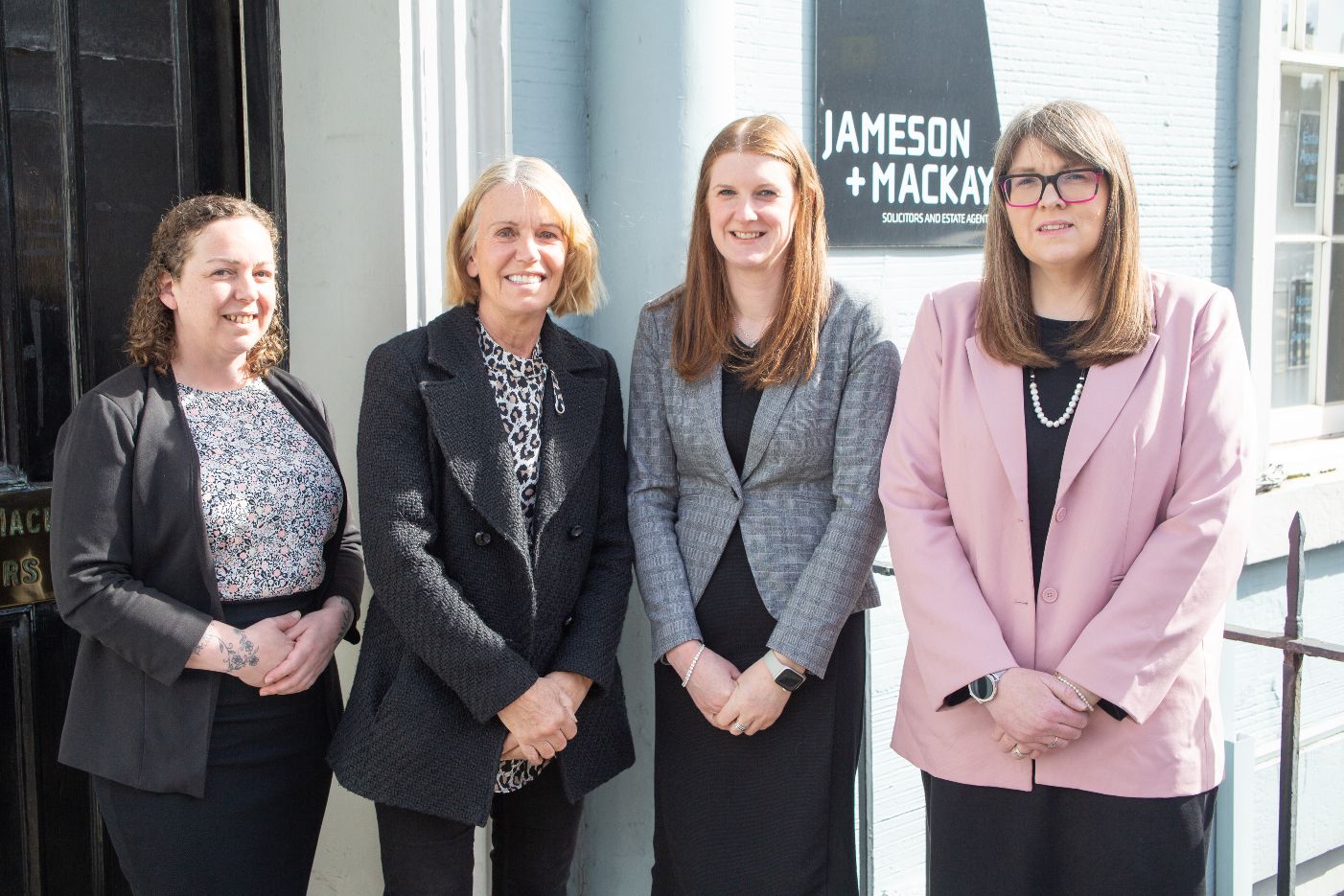
Jameson + Mackay Solicitors led by all-female partnership for first time in 145 years

Jameson + Mackay Solicitors led by all-female partnership for first time in 145 years

Lindsay Carr, Alison Ramsay, Victoria Buchanan and Debbie Macleod

A recent change in the partnership team at Jameson + Mackay Solicitors, sees the firm led by an all-female partnership for the first time in its 145 year history.

Newly appointed senior partner, Victoria Buchanan, who now heads up the firm alongside fellow partners Debbie Macleod and Lindsay Carr, said: “This is an exciting change for Jameson + Mackay as the only Perthshire firm currently led by an all-female team as well as being one of the youngest partnerships in the local faculty. With prominent offices in both Perth and Auchterarder, Jameson + Mackay is a well-established face within the Perthshire legal sector and we look forward to continuing to help and guide clients, both old and new, with their legal needs for many years to come.”

The new partners were joined recently by former senior partner, and first ever female partner of the firm, Alison Ramsay MBE, who said: “I spent my whole working life at Jameson + Mackay. More than 40 years ago when I became a partner there were not many female solicitors working in Perthshire and very few at partner level. I am absolutely delighted that the general ethos of the firm, combining its traditional values and personal service to its clients, is being continued and now for the first time by an all female partnership. I am confident that the firm will go from strength to strength under their leadership.”

www.jamesonmackay.co.uk 

Using AI Benchmarking in Scottish Law Firms: How LawY Drives Smarter Business Decisions

Using AI Benchmarking in Scottish Law Firms: How LawY Drives Smarter Business Decisions

Artificial intelligence is rapidly changing how law firms operate, but adopting AI isn’t enough. The real advantage comes from knowing which tools you can actually trust. For Scottish legal practices, relying on generic AI can introduce risk, uncertainty, and inconsistent results. So how do you separate hype from genuinely reliable legal technology?

In this article, we explore why AI benchmarking is becoming essential for modern firms and how LawY, built into Denovo’s platform, is helping Scottish solicitors take a more confident, data-driven approach. From delivering Scots Law–specific research with verifiable sources to enabling smarter decision-making across your business, LawY goes beyond efficiency to provide clarity and control.

If you’re considering AI for your firm, this is must-read. Discover how the right approach to AI can improve accuracy, reduce risk, and unlock real strategic value.

Read more

Are you a law firm partner wishing things could be different?

Are you a law firm partner wishing things could be different?

As a law firm partner, are you:

  • Fed up with office politics?
  • Annoyed with the decisions made?
  • Frustrated by some of your fellow partners?
  • Disgruntled by the way the cake is divided up?
  • Confused why you ended up in charge of HR or IT?
  • Wishing you could concentrate on just doing the law?

Becoming a partner in a law firm is an incredible achievement. You have worked really hard to get there, following the traditional path.
However, maybe it is not giving you the satisfaction or fulfilment you thought it would?

Would you like to change all of that?

Now, imagine your future. One that gives you more of the fees you generate; complete freedom of how, where and when you work; and allows you to focus on doing the legal work that you love to do.

If you are a law firm partner, and wish things could be different, then find out now if Plug & Play Law is the answer for you.

What is Plug & Play Law?

Plug & Play is a term coined by Mitch Kowalski in his book ‘The Great Legal Reformation: Notes from the Field’. A book that features Inksters.
Mitch Kowalski refers to Plug & Play Platforms when describing law firms such as Inksters who have developed a model where senior lawyers can work as a collective, with enhanced technology and back-office support.

Inksters and Plug & Play Law

Inksters is the foremost Plug & Play Law firm in Scotland. Specifically with, by far, the largest number of consultant solicitors and the greatest geographical reach. Inksters have operated and perfected this model for 13 years and been in business as a law firm for 26 years.

Discover whether Plug & Play Law is the right fit for you

If you are a law firm partner, and wish things could be different, then complete the Plug & Play Law scorecard online. There are just 11 simple questions and it takes less than 60 seconds to complete. You will then receive an immediate personalised report on whether Plug & Play Law is a good fit for you.

Why Failing to Upgrade Your Legal Software Could Be Hurting Your Firm’s Profitability

Why Failing to Upgrade Your Legal Software Could Be Hurting Your Firm’s Profitability

What if the biggest threat to your firm’s profitability isn’t competition, but complacency?

Across the legal sector in Scotland, many firms are still relying on legacy systems and manual processes simply because “that’s how it’s always been done.” But behind familiar routines often lie hidden costs: unbilled hours, slow invoicing, manual errors, frustrated staff, and client onboarding processes that quietly drain time and revenue.

While client expectations evolve and cloud-based technology enables faster, more connected ways of working, firms that delay upgrading their legal software risk falling behind - not dramatically, but gradually. The danger isn’t obvious failure. It’s missed opportunity.

Modern legal practice management software doesn’t just streamline admin. It accelerates billing, improves collection rates, automates client intake, reduces repetitive tasks, and frees your team to focus on higher-value, billable work. The result? Stronger cash flow, improved staff satisfaction, and a more scalable, resilient firm.

The real cost isn’t investing in new technology. It’s sticking with systems that limit your growth.

If you’re unsure whether your current setup is holding you back, this is a conversation worth having. Read on to discover how upgrading your legal software could transform your firm’s efficiency, and its profitability.

Read more

In Case You Missed It...
Jobs

We’re looking for a residential conveyancing solicitor to work with our conveyancing team in our Bathgate office. You’ll be a confident communicator who can work well with colleagues and meet demanding client expectations. You’ll be a hard worker who isn’t precious about helping out whatever is required. We have a history of developing and retaining talent (one of our Directors started with us as a Trainee).

This is an opportunity to be part of a forward-thinking firm where your contribution is valued and your professional development is supported.

The Role

Working in our dynamic property team, you will manage residential property transactions, including purchases, sales, and security work. You’ll work closely with clients, providing expert advice and ensuring smooth completion of transactions.

Key Responsibilities:

• Handle all aspects of residential property transactions, including purchases, sales, new builds, re-mortgages, and title transfers.
• Draft and review conveyancing contracts and legal documents.
• Provide tailored legal advice to clients.
• Conduct property searches and due diligence.
• Liaise with clients, lenders, and other professionals.
• Ensure compliance with legal and regulatory requirements
• Fostering and developing relationsips with introducers

What we’re looking for:

• A Qualified Scottish Solicitor with experience in property law.
• A natural relationship builder, commercially minded and proactive in business development.
• Strong organisational skills with the ability to manage competing deadlines.
• A team player with the ability to mentor colleagues and collaborate effectively.
• A passion for delivering outstanding client service and achieving the best results.
• A drive to contribute to the team and support business growth across the Central Belt and beyond.

What We Offer:

• A supportive and inclusive culture where your ideas and ambitions matter.
• Career development opportunities within a growing firm.
• A Competitive salary based on experience.

If you are a motivated solicitor looking for a new challenge, we would love to hear from you. If you would like to apply for this position, send a CV and covering letter in the first instance to Margaret McMillan (margaret@wallacequinn.co.uk)

Litigation Solicitor

Wheatley Group

Location: Wheatley House, 25 Cochrane Street, Glasgow, G1 1HL.

This role will be an Agile Home Based Worker primarily based from home with some regular travel when required to offices and to courts.

Salary: SCP 39-44 (£52,176 - £59,032) / SCP 45-48 (£60,357 - £64,681) per annum pro rata depending on years qualified

Work pattern: 28 hours per week, worked over 4 days – work pattern to be confirmed

Duration: Permanent

Wheatley is Scotland’s leading housing and property-management group. It comprises four Registered Social Landlord and a commercial subsidiary. The Group provides
homes and services to over 210,000 people in 19 local authority areas across Scotland.

Wheatley Group believes that providing a great service to our customers starts with employing great staff and works hard to be an employer of choice in Scotland. Wheatley
offers a comprehensive benefits package which includes a generous holiday allowance.

The Litigation Team provides support services to the Group. An exciting opportunity has arisen for a litigation solicitor to join our team. The role is varied and challenging with
the provision of robust, pragmatic client-focussed legal advice at its core, with a particular emphasis on working in the area of anti-social behaviour but also including
housing management and debt recovery.

Communications skills are essential to establish solid client relationships quickly and provide effective and practical advice to colleagues at all levels. You must also be able
to demonstrate established civil litigation experience and a knowledge of Housing Law and practice, a flexible approach in meeting the changing demands and priorities of the
Group and be able to effectively manage your own workload in a fast paced multiple-client environment.

Required qualifications: LLB Degree, Diploma in Legal Practice, Membership of the Law Society of Scotland with a current and unrestricted practising certificate.

The benefits we offer

We offer a sector-leading benefits package.

The successful candidate will receive:

• a rewarding career with a competitive salary;
• access to a contributory pension scheme;
• excellent leave entitlements;
• enhanced maternity, paternity, adoption and shared parental leave;
• contributions towards dental, optical, driving lessons and more;
• access to staff inclusion networks promoting an inclusive workplace; and
• 24/7 access to our employee assistance programme.

Committed to inclusion

• At Wheatley, are always looking to improve diversity within our teams. We want to create an inclusive environment where everyone can contribute their best
work and achieve their full potential.
• We actively celebrate our individual differences and recognise the collective strength this brings our organisation. It’s important our teams represent the
communities we serve, and we welcome applications from any under-represented groups.

For an application pack and detailed job profile, please see below

For an informal chat about the post, please contact Katie Graham, Associate Solicitor, on 07805751299 or email katie.graham@wheatley-group.com
Closing Date: Wednesday 3rd of June 2026

We want all our candidates to shine. If you need any reasonable adjustments to help you feel more comfortable during the recruitment process, please contact
recruitment@wheatley-group.com

Location: Glasgow or Edinburgh

The role

CMS is looking for an experienced Litigation Paralegal / Senior Paralegal to join our Legal Services Unit. This is a varied opportunity within our centralised paralegal team, with a strong focus on intellectual property litigation and support for a range of high-profile clients.

Key responsibilities

• Support Scottish Court of Session and English litigation processes, particularly undefended actions
• Prepare letters before action, court paperwork and productions
• Progress matters through the court process and support enforcement and recovery activity
• Manage caseflow, deadlines and direct communication with debtors or defendants
• Negotiate payment arrangements in line with client instructions
• Carry out investigations including asset tracing, property ownership searches and insolvency checks
• Provide additional support on document management, due diligence and project-based client work
What we’re looking for
• Previous litigation experience, ideally in debt recovery or a similar environment
• Experience of the Scottish Court of Session or English court process would be advantageous
• Confidence managing your own caseload and handling direct telephone contact with debtors or defendants
• Excellent attention to detail, organisation and time management
• Strong written and verbal communication skills
• A proactive, team-oriented approach and confidence using Microsoft Office and legal technology

Desirable

A relevant paralegal qualification and/or a law degree would be beneficial, but is not essential.

What’s in it for you

We want to reward you today and help you plan for tomorrow. We appreciate that everyone is different, therefore we have designed a benefits system that offers choice and flexibility based on individual needs and lifestyles. To name a few, these include:

•  Competitive basic salary (reviewed annually)
•  Flexible, hybrid working policy
•  Generous bonus scheme
•  Up to 25 days holiday (rising to 28 days with service)
•  Holiday exchange scheme
•  Private medical insurance
•  Enhanced parental leave
•  Reasonable adjustments and accommodation for disabled talent in accordance with the Equality Act 2010.

If you would like to read more information regarding our range of benefits, please visit our Rewards & Benefits page on our website.

To apply please do so via this link - Litigation Paralegal - Glasgow/ Edinburgh

Volunteer Solicitors

Location: Edinburgh University of Edinburgh Free Legal Advice Centre

The University of Edinburgh Free Legal Advice Centre is looking for volunteer solicitors to work with Edinburgh Law School students in supporting the local community.

The Free Legal Advice Centre (or as it is more commonly known, “FLAC”) delivers pro bono legal services to members of the public who are otherwise unable to access legal advice. In offering this service, students, including all Diploma students and a select number of undergraduate students, are given the opportunity to take part in hands-on legal work for the benefit of the wider community, whilst putting their legal skills into practice, often for the first time.

Volunteering with FLAC is an opportunity to contribute to access to justice while supporting the development of future lawyers. Our students consistently tell us that working with practising solicitors is one of the most valuable and rewarding aspects of their experience. For many students, this is their first opportunity to engage professionally with qualified solicitors in a legal environment.

During a case, volunteer supervising solicitors may:

  • Advise and support student advisers through the FLAC process from interview to closure
  • Provide feedback on draft letters and research notes until work is ready to be signed off
  • Assist students in setting goals and timelines for their case

This is a voluntary (unpaid) role.

Volunteers must hold a current practising certificate. Work undertaken through FLAC is however covered by our insurance arrangements.

We welcome solicitors from all areas of practice. In recent years, FLAC has seen a particular concentration of casework in Family; Dispute Resolution; Employment; and Property matters, and we would be especially pleased to hear from solicitors with expertise in these areas.

If you are interested in becoming a volunteer supervising solicitor, please complete the expression of interest form.

Prospective volunteers who would like to discuss the role, FLAC, or volunteering opportunities are welcome to contact Lourens Grove, Senior Lecturer in Clinical and Experiential Legal Education, Edinburgh Law School, at lgrove@ed.ac.uk.

Fergusson Law is a small client-focused firm, specialising in private client work and residential conveyancing.

We are looking for a legal assistant or paralegal to join our private client team. Previous experience with Wills, Powers of Attorney and executry administration would be helpful  However, good communication skills (spoken and written) and organisation skills are more important to us, and we are happy to provide training to the right candidate This would include a training pathway to becoming a qualified paralegal in this area of law, or (in the longer term) on the paralegal route to becoming a solicitor.

This is primarily a full-time post, 35 working hours per week, and office based, but we understand the importance of a good work/life balance and are open to some flexibility.

About the Role

As a private client legal assistant you will support three solicitors, including assisting with Letters of Engagement, fee notes, drafting Wills and Powers of Attorney, registration of Powers of Attorney, and administration of deceased’s estates. 

We pride ourselves on our client care, you will have direct contact with clients, and you will be expected to take responsibility for ensuring that clients receive a professional and courteous service. 

What we Offer

- Competitive salary commensurate with experience
- Pension Scheme
- Flexible working options
- Generous annual leave entitlement
- Ongoing Training and Development
- No time-recording (we work on fixed fees only)

How to Apply

If you are interested in joining our team, please send your CV to law@fergussonlaw.com, for the attention of Katy. 

If you would like to have a chat with us first, please call either Katy or Cara on 0131 556 4044.

Trainee Law Accountant

Location: Cumbernauld Hamiltons Law Accountants

Hamiltons Law Accountants is one of Scotland’s leading specialist law accountancy firms, supporting law firms across the country. Based in Cumbernauld, our team supports the legal profession with the preparation and negotiation of judicial accounts of expenses at all levels of the Scottish court system, including the Sheriff Court, the Court of Session, and the UK Supreme Court. We also deal with private client and executry feeing.

Combining industry-leading technical expertise with a modern, technology-driven and commercially focused approach, we work in true partnership with our clients to deliver exceptional results, faster recovery times and meaningful operational improvements.

Due to continued growth, we are seeking to recruit three ambitious Trainee Law Accountants to join our highly skilled and supportive team. This is an exciting opportunity to build a long-term professional career within a specialist and highly respected area of the Scottish legal profession, working alongside nationally recognised experts and gaining hands-on experience across complex, high-value and high-profile litigation.

The successful candidates will work as part of a team and follow a structured development plan which includes training in judicial accounting practices, private client feeing, and related tasks. They will also perform administrative duties as part of their daily role. The role is expected to lead to a fully trained Law Accountant position within 24 to 24 months.

As part of their development, the Trainees will be required to participate in the SOLAS qualification, funded by the company subject to conditions being met. The usual place of work will be Cumbernauld however there may be occasions when travel to and working from other locations is a requirement. After successful completion of training, a hybrid office/home working model will be available.

We are looking for someone with:

  • A good academic or work record
  • Excellent written and verbal communication skills with the ability to understand and interpret terminology and demonstrate attention to detail.
  • The ability to:-
    • take instruction and demonstrate understanding through written and verbal work
    • work accurately under pressure and manage competing priorities
    • handle sensitive information confidentially
    • maintain and build on existing client relationships.
    • work positively, productively and collaboratively within a team.
  • Strong analytical and problem-solving skills
  • Self-motivation with a desire to work daily with numbers and written communication.
  • Strong negotiation skills
  • Proficiency in Microsoft Office for example Outlook, Word, Excel & MS Teams.
  • The desire to continually develop and learn and share knowledge with colleagues.
  • UK Driving Licence.

In return we offer:

• Competitive trainee salary ranging from £25,903 to £33,026
• Upon qualification, salary progression from £34,596 to £45,447  
• Potential bonus opportunities
• 35-hour 5-day week
• Flexible working option once the initial training is complete
• Generous holiday entitlement
• Attractive contributory pension scheme
• Sick pay provisions
• Life Insurance
• Fully funded place on SOLAS Course
• Structured training and career development
• Supportive working environment promoting work-life balance and personal development
Every qualified Law Accountant within our business began their career as a Trainee Law Accountant and completed their training with Hamiltons. Trainee Law Accountants receive full support to develop their skills, knowledge, and career path, leading to expanded earning potential within the organisation.

How to Apply

Please send the following to our recruitment team at recruitment@hamiltonslawaccountants.co.uk , no later than 12 noon on Monday 1st June 2026:

  1. Your current CV containing up to date email and telephone contact details
  2. A short covering note on why you’re a great fit for this role and Hamiltons
  3. Law accountancy requires more than numerical accuracy. It also involves commercial awareness, client service, and professional judgement. Please prepare and submit a short statement outlining how you would approach balancing accuracy, deadlines, and client expectations in a professional services role.
  4. Confirm if you have a current UK Driving License
  5. Confirm your availability for interviews which are planned for week commencing 8th June 2026.
    Please ensure all requested information is submitted, as incomplete applications may be excluded from the recruitment process.

Solicitors

PSD Scotland

Gyle Square, 1 South Gyle Crescent, Edinburgh, EH12 9EB/hybrid
£65,125 - £70,303
3 Posts available

On 1 April 2026, NHS National Services Scotland (NSS) and NHS Education for Scotland (NES) became one national organisation, focused on continuity today and a stronger, more connected service for tomorrow.

As part of this transformation, NSS and NES have joined to form a new organisation: Public Services Delivery Scotland (PSD Scotland). This new organisation will play a pivotal role in supporting the renewal and ensuring the long-term sustainability of health and care services across Scotland.

About the Organisation

PSD Scotland unites expertise from NES and NSS in a way that will allow us to accelerate national programmes to support the NHS to deliver better care, now and in the future.

We support staff with education and training, provide the tools and data that improve services, and run vital national functions such as procurement, logistics and blood, tissue and cell services.

The Post

The Central Legal Office (CLO) is part of Public Services Delivery Scotland. CLO provides legal services to the NHS in Scotland and to the wider public sector.

This post is an exciting opportunity to join the Litigation Department, and work in a team that delivers a comprehensive litigation service to the NHS in Scotland.

The Department is looking for a solicitor with proven experience in civil claims litigation to join our busy litigation teams either to support the work being done for Scottish Health Boards during the Covid-19 Public Inquiry, or to back-fill for existing solicitors who are drawn into the Inquiry work.

The Candidate

You will have an interesting and diverse workload and enjoy all aspects of contentious and non-contentious legal work. You will be a team player and enjoy working in a supportive collegiate environment. The posts would be suitable either for a newly qualified solicitor, or those with some post-qualifying experience.

The successful candidate will be required to undergo a Disclosure Scotland check. Any candidate who has lived/worked overseas for more than 12 months in the preceding 5 years will also be required to provide a criminal record check from the appropriate overseas agency.

Benefits

Our benefits package includes pension scheme, comprehensive range of work life balance policies, occupational health services, learning resource centres and discounted leisure, financial and shopping benefits. HR Benefits Brochure.

Inclusion

Public Services Delivery Scotland is a national organisation and, as an anchor institution, it is our ambition to be a diverse and inclusive organisation where everyone feels welcome. We recognise that flexible working creates an inclusive workplace where employees can thrive and feel confident about their ability to balance their personal and professional responsibilities. This is supported through Once for Scotland flexible working policies. PSD Scotland has made a long-term commitment to staff health and well-being and offers many learning and development opportunities to support and improve our approaches to diversity, inclusion and mental health in the workplace. There are a number of equality staff networks in place which all staff are welcome to join. We are also an equal opportunities employer and as such guarantee to interview all disabled applicants who meet the minimum criteria for our vacancies. As an accredited Disability Confident Leader, it is the aim of PSD Scotland to offer a fully accessible and inclusive recruitment service that supports applicants on their candidate journey. If you are interested in any reasonable adjustments, please contact the Recruitment Team on NSS.wfrs@nhs.scot

Further information

For an informal discussion on the post, please contact Michael Stewart, Head of Litigation via email Michael.Stewart5@nhs.scot. Apply Here

Closing date for completed applications is 1 June 2026.

Please note that the majority of correspondence is sent by e-mail only, so please check your e-mail regularly (including junk folders).

We are an equal opportunities employer and as committed participant in the disability confident scheme, guarantees to interview all disabled applicants who meet the minimum criteria for our vacancies

At Thorntons Law, every moment matters. Join our IP team and you’ll feel inspired. You’ll feel connected. You’ll feel like you belong. And it all begins from the moment you join us.

That’s because we’ve created a different kind of law firm. Here, you’ll build relationships with clients and colleagues that really last. You’ll help shape what happens now, and what comes next. And we’ll support and encourage you to be the best you can be.

This is what life at Thorntons is all about. And this is your moment to be part of it.

About the role

Be the expert clients rely on.

At Thorntons, our dedicated Intellectual Property team advises clients across a broad range of sectors on how to protect, commercialise and maximise the value of their ideas, brands and innovations. From global businesses with extensive trademark portfolios to innovative start-ups and family-owned companies, we provide pragmatic legal advice tailored to each client’s commercial objectives.

As part of one of the largest specialist Intellectual Property teams in Scotland, you’ll advise on the protection, exploitation and commercialisation of intellectual property assets while building strong client relationships across a varied and rewarding workload. This is an excellent opportunity to further develop your expertise within a collaborative and highly regarded team recognised in both Legal 500 and Chambers, working across a diverse range of industries. It’s about:

• Trademarks and Branding - advising clients on brand protection strategies, trademark clearance, registration, portfolio management and enforcement across the UK and internationally.
• Copyright, Design Rights and IP Protection – providing guidance on the creation, ownership, protection and commercial exploitation of rights including copyright, database rights, design rights, know-how and trade secrets.
• Commercial Contracts - drafting, reviewing and negotiating a range of commercial agreements including licensing, collaboration, confidentiality, software, sponsorship and supply agreements.
• Intellectual Property Advisory Work – supporting clients on a broad range of IP matters including infringement issues, ownership disputes, commercialisation strategies and risk management.
• Client Relationships - developing trusted relationships with clients by delivering pragmatic, commercially focused advice aligned with their business objectives.
• Collaboration – working closely with colleagues across the firm to deliver integrated legal solutions for clients operating in sectors including technology, media, life sciences, food and drink and education.

What you’ll need

We’re looking for:

• A qualified Solicitor with ideally 2 – 4 Yrs post-qualified experience, although candidates out with this range will also be considered and are encouraged to apply.
• Experience in intellectual property and/or commercial contracts work
• A strong interest in branding, innovation, technology and commercial legal issues
• Excellent drafting, analytical and problem-solving skills
• A commercial and solutions-focused mindset
• Strong communication skills and the ability to build lasting client relationships
• The ability to manage a varied workload and work effectively as part of a collaborative team
• A proactive and enthusiastic approach to business development and client service

Why Thorntons

• A highly regarded Intellectual Property team recognised in Legal 500 and Chambers
• High-quality, varied and intellectually interesting matters across multiple sectors
• A collaborative, supportive and inclusive working environment
• Genuine opportunities for progression and professional development
• The opportunity to build strong client relationships and play a meaningful role in growing a well-established practice
• You’ll be working alongside leading and supportive lawyer who are passionate about delivering practical, commercially focussed solutions for an impressive client base.

What we offer

We offer much more than just a competitive salary, and we’re committed to looking after our people in every way. Here’s just some of the benefits available:

Benefits

• 39 Days Annual Leave (includes 5 fixed public holidays)
• Contributory Pension Scheme with salary exchange
• Private Medical Insurance
• Critical Illness Cover
• Income Protection Cover
• Group Life Assurance
• Exceptional maternity, paternity, partner and adoption leave packages
• Assisted Conception & IVF Leave
• Health care cash plan to support everyday health expenses
• 24-hour wellbeing support
• Free Legal fees for moving home and life planning
• Cycle to Work Scheme
• Gym Discounts
• Retail Discounts
• Hybrid Working

Professional development

Access to a wide range of opportunities to build your expertise and advance your career, through courses, specialist accreditations, training, or business skills development.

Belonging

At Thorntons, we embrace diversity and are committed to creating a welcoming and inclusive workplace where everyone can thrive.

As a Disability Confident employer, we want to ensure that everyone has a positive experience when applying to join us. If you have a disability or are neurodivergent and need any adjustments during the recruitment process, just let us know — we’ll do everything we can to support you.

We work flexibly to meet the needs of our clients and our people. While not every role is the same, most offer a hybrid working pattern. We’ll work with you to agree the right arrangement that supports you, the role, and our clients.

Make the moment matter

If you’re looking for a career with a different kind of law firm, this is the moment to find out more - and apply.

Choosing the right company is about more than just the work—it’s about the people, the culture, and the opportunities to grow. At Thorntons Law, we’ve built something different. We’re one of Scotland’s largest and most respected full-service legal firms, but more importantly, we’re a firm that invests in you—your development, your ambitions, and your future.

All you need to do is apply here OR send a CV to opportunities@thorntons-law.co.uk and we’ll be in touch.

At Thorntons Law, every moment matters. Join us as an Employment Associate and you’ll feel inspired. You’ll feel connected. You’ll feel like you belong. And it all begins from the moment you join us.

That’s because we’ve created a different kind of law firm. Here, you’ll build relationships with clients and colleagues that really last. You’ll help shape what happens now, and what comes next. And we’ll support and encourage you to be the best you can be.

This is what life at Thorntons is all about. And this is your moment to be part of it.

About the role

At Thorntons, our Employment team advises clients across a broad range of sectors on the full spectrum of employment law matters, helping them navigate complex workplace issues with confidence. From high-growth businesses and owner-managed companies to public sector organisations and established national employers, we provide pragmatic legal advice tailored to our clients’ commercial objectives.

As part of a highly regarded team, you’ll work across a varied mix of contentious and non-contentious employment matters, with a particular focus on contentious work. This is an excellent opportunity to further develop your expertise within a collaborative and supportive team, working closely with clients across a diverse range of industries. It’s about:

• Employment Disputes – advising clients on a broad range of employment disputes including unfair dismissal, discrimination, whistleblowing and breach of contract claims
• Tribunal Litigation – assisting with the preparation and defence of Employment Tribunal proceedings, representing clients at hearings and participating in judicial mediations
• Advisory Work – providing practical day-to-day advice on disciplinary, grievance, absence management and workplace policies and procedures
• Transactional Support – supporting our high-growth and innovations teams on transactional matters including mergers and acquisitions, due diligence and TUPE-related issues
• Employment Contracts and Agreements – drafting and reviewing employment contracts, consultancy agreements, service agreements and Non-Executive Director (NXD) appointments
• Restructuring and Workforce Change – advising clients on restructures, redundancies, settlement agreements and negotiated exits with sensitivity and commercial awareness
• Restrictive Covenants and Business Protection – collaborating with dispute resolution colleagues on matters involving restrictive covenants and post-termination obligations
• Client Training and Thought Leadership – delivering client training sessions and webinars, as well as drafting articles, blogs and legal updates on employment law developments
• Client Relationships – developing trusted relationships by delivering commercially focused advice aligned with clients’ business objectives
• Collaboration – working closely with colleagues across the firm to deliver integrated legal solutions and excellent client service

What you’ll need

We’re looking for:

• A lawyer with established experience in Employment Law, ideally at Associate level, although candidates outwith this level are encouraged to apply
• Experience handling a mix of contentious and non-contentious employment law matters
• Strong knowledge of employment and discrimination law
• Experience of Employment Tribunal litigation and advocacy support
• Some experience of transactional work, including M&A and TUPE matters, would be advantageous
• Excellent drafting, negotiation and communication skills
• A commercial and solutions-focused mindset
• The ability to manage a varied workload and work effectively both independently and as part of a collaborative team
• A proactive and enthusiastic approach to business development, networking and client service

Why Thorntons

• A genuinely varied mix of contentious, advisory and transactional employment matters across a diverse client base
• The opportunity to play an active role in established and new client relationships
• Working with colleagues across the firm on complex and high-profile matters
• A supportive and approachable culture where collaboration, mentoring and development are genuinely valued.
• An environment that values practical thinking, commercial awareness and delivering solutions that make a real difference to clients
• High-quality work while being part of a firm that appreciates the importance on flexibility, wellbeing and work-life balance

What we offer

We offer much more than just a competitive salary, and we’re committed to looking after our people in every way. Here’s just some of the benefits available:

Benefits

• 39 Days Annual Leave (includes 5 fixed public holidays)
• Contributory Pension Scheme with salary exchange
• Private Medical Insurance
• Critical Illness Cover
• Income Protection Cover
• Group Life Assurance
• Exceptional maternity, paternity, partner and adoption leave packages
• Assisted Conception & IVF Leave
• Health care cash plan to support everyday health expenses
• 24-hour wellbeing support
• Free Legal fees for moving home and life planning
• Cycle to Work Scheme
• Gym Discounts
• Retail Discounts
• Hybrid Working

Professional development

Access to a wide range of opportunities to build your expertise and advance your career, through courses, specialist accreditations, training, or business skills development.

Belonging

At Thorntons, we embrace diversity and are committed to creating a welcoming and inclusive workplace where everyone can thrive.

As a Disability Confident employer, we want to ensure that everyone has a positive experience when applying to join us. If you have a disability or are neurodivergent and need any adjustments during the recruitment process, just let us know — we’ll do everything we can to support you.

We work flexibly to meet the needs of our clients and our people. While not every role is the same, most offer a hybrid working pattern. We’ll work with you to agree the right arrangement that supports you, the role, and our clients.

Make the moment matter

If you’re looking for a career with a different kind of law firm, this is the moment to find out more - and apply.

Choosing the right company is about more than just the work—it’s about the people, the culture, and the opportunities to grow. At Thorntons Law, we’ve built something different. We’re one of Scotland’s largest and most respected full-service legal firms, but more importantly, we’re a firm that invests in you—your development, your ambitions, and your future.

All you need to do is apply here OR send a CV to opportunities@thorntons-law.co.uk and we’ll be in touch.

Location: Edinburgh or Glasgow

We operate hybrid working with the opportunity to work from home some of the time. Regular attendance in both our offices to work collaboratively with colleagues is required, as is travel to client visits, court and children’s hearings in different areas of Scotland.

Working Hours: 35 hours.

Salary: Commensurate with Experience

Contract Type: Permanent

About the Role

We are seeking an enthusiastic and committed Children and Young People’s Rights Lawyer to join our team and strengthen Clan’s work at the forefront of using the law to change children’s lives in Scotland. Clan Childlaw was established to empower children and young people to have their own lawyers, specially trained to work with them in a child centred way. We are experts in empowering children and young people in Scotland to use their rights to improve their lives. If you are looking for an opportunity to become a child- centred lawyer and are motivated by working differently and using your legal knowledge, problem solving and communication skills to represent the interests and rights of children and young people, then we want to hear from you. You will provide legal advice and representation to children and young people in areas including children’s hearings, child law, public family law, and youth homelessness. You will play a vital role in delivering our Children’s Rights Helpline giving practical information about children and young people’s rights to children and young people and those that support them. You will provide training to partner agencies and external stakeholders on children’s rights.

About You

This role would suit a highly effective, adaptable and resilient solicitor with excellent communication and relationship-building skills. You will be motivated by the opportunity to do things differently as a lawyer delivering professional legal advice and representation that makes a direct difference to the lives of individual children and young people. You will welcome the opportunity to take innovative casework that contributes to systemic change, and make contributions from practice to influence the law, policy and practice. You will be comfortable managing competing priorities in a fast-paced environment, while maintaining high professional standards and contributing positively to a collaborative team culture.

About Clan Childlaw

Clan wants a Scotland where all children and young people’s rights are respected, protected, and fulfilled. For that to happen, Scotland has to be a place where all children and young people can stand up for their rights. That means we work to ensure children and young people have: 

• Lawyers that are experts in working with children
• People around them who can enable them to use their rights and amplify their voices 
• Respect as rights-holders, who are entitled to hold duty-bearers to account if their rights are not fulfilled.

What We Do

To find out more about what we do you can visit our website: About Clan Childlaw - Clan Childlaw

Our Values

Our values are the principles we uphold in all our work, no matter what. They are the foundation of our workplace culture. Everyone who works at Clan shows our values in all they do and say.
We are supportive: We listen and respond, we provide encouragement and emotional help to children and young people, to others who support young people, and to each other.
We are bold: We are confident and courageous in amplifying the voices of children and young people. We are prepared to take risks when we need to, to defend children and young people’s rights.
We are dynamic: We are always active, always progressing. We are positive, full of energy and new ideas. We ask for change where it is needed.
“I love my job at Clan. It’s busy and varied and no two days are ever the same. We have a great team here and everyone is really supportive.” - A member of the Clan Childlaw team

What we can offer you

Clan Childlaw’s mission is very important to us, but our people are important too. We recognise the importance of a good work-life balance and a friendly supportive work environment. We offer:

• 33 days annual leave (inclusive of public holidays) increasing to 35 after 2 years’ service
• Auto-enrolment into our pension scheme after 3 months service
• Flexibility around your working day, with the opportunity to work your hours between 7am and 7pm and, the option to work from home for part of the working week. Flexibility arrangements will vary depending on the role and business needs, with some positions requiring closer alignment to core working hours to support service delivery.
• Access to our employee counselling service.
Learning and development is important to us and our team. We hope it’s important to you too. You will be encouraged to engage in learning and continued professional development.

“I have never worked in such a lovely organisation before! I feel valued, seen and heard as an individual here.” - A member of the Clan Childlaw team

“I love my job at Clan. It’s busy and varied and no two days are ever the same. We have a great team here and everyone is really supportive.” - A member of the Clan Childlaw team

Please apply with an anonymised CV and cover letter outlining your motivation to work with Clan and how your experience meets the role requirements. As part of our commitment to equitable recruitment, we operate an anonymised screening process, so please ensure your CV does not include your name, contact details, photographs, or other identifying information. Non-anonymised CVs may not be considered.

You can apply via our online portal here.

Closing date for application is midnight on Monday 8th June 2026, with interviews anticipated to take place w/c 15th June 2026.

Clan Childlaw is an equal opportunity employer, and we are committed to diversity and inclusion in the workplace. We welcome and encourage applications from all qualified individuals regardless of race, ethnicity, religion, gender, sexual orientation, disability, or any other protected status.

Please note: To become an employee at Clan Childlaw you must be able to produce evidence of your Right to Work and Membership of the PVG Scheme is essential for this role and the successful candidate will be required to apply for the scheme and produce an acceptable PVG Scheme Record.

Location: Edinburgh or Glasgow

We operate hybrid working with the opportunity to work from home some of the time. The role will also require travel between our office locations and regular attendance at court and children’s hearings in different areas of Scotland.

Working Hours: 35 hours.

Salary: Commensurate with Experience

Contract Type: Permanent

About the role

We are seeking an enthusiastic and committed Policy and Strategic Litigation Lawyer to join our team and strengthen Clan’s work at the forefront of using the law to change children’s lives in Scotland. Clan Childlaw has successfully used strategic litigation and influencing the law to tackle a number of issues affecting children in Scotland including sibling rights, right to privacy, access to justice, voice of the child, minimum age of criminal responsibility, impact of childhood offending in later life, and care leavers rights. We are committed to delivering on The Promise Scotland and to the implementation of the United Nations Convention on the Rights of the Child.

If you are looking for an exceptional opportunity to be part of strategic litigation that improves the lives of children and young people in Scotland and aims to strengthen children’s rights and achieve lasting systemic change then we want to hear from you.

This role includes undertaking strategic litigation, and contributing to our work influencing policy, practice and law to advance children’s rights in Scotland. Working closely with the Principal Solicitor, Director of Legal and Policy and Head of Legal and Policy, the postholder will manage a caseload of complex, and high-profile child and public law strategic litigation, contribute to policy work, and work collaboratively with external stakeholders to influence lasting change that improves the lives of children and young people in Clan’s strategic areas.

About You

This role would suit someone with significant litigation experience and a demonstrable commitment to children’s rights and social justice. You will be motivated by the opportunity to undertake impactful, values-driven legal work that makes real change in the lives of children and young people

You will be a highly effective litigation lawyer with excellent problem solving skills, who thrives on challenging and varied work. You will be able to deliver on a range of competing priorities. You will be an excellent communicator who is resilient and adaptable, with the ability to manage sensitive and high-profile matters while maintaining high professional standards and a client-centred approach. You will have experience of collaborative working to influence change and demonstrable ability to build effective working relationships with colleagues, clients, and external stakeholders. You will also be committed to reflective practice, continuous learning, and contributing positively to a supportive and collaborative team culture.

About Clan Childlaw

Clan wants a Scotland where all children and young people’s rights are respected, protected, and fulfilled. For that to happen, Scotland has to be a place where all children and young people can stand up for their rights. We work to ensure children and young people have:

• Lawyers that are experts in working with children
• People around them who can enable them to use their rights and amplify their voices 
• To be respected as rights-holders, who are entitled to hold duty-bearers to account if their rights are not fulfilled. 
What We Do 
To find out more about what we do you can visit our website: About Clan Childlaw - Clan Childlaw

Our Values

Our values are the principles we uphold in all our work, no matter what. They are the foundation of our workplace culture. Everyone who works at Clan shows our values in all they do and say. 
We are supportive: We listen and respond, we provide encouragement and emotional help to children and young people, to others who support young people, and to each other.
We are bold: We are confident and courageous in amplifying the voices of children and young people. We are prepared to take risks when we need to, to defend children and young people’s rights. 
We are dynamic: We are always active, always progressing. We are positive, full of energy and new ideas. We ask for change where it is needed.
“I love my job at Clan. It’s busy and varied and no two days are ever the same. We have a great team here and everyone is really supportive.” - A member of the Clan Childlaw team

What we can offer you

Clan Childlaw’s mission is very important to us, but our people are important too. We recognise the importance of a good work-life balance and a friendly supportive work environment. We offer:

• 33 days annual leave (inclusive of public holidays) increasing to 35 after 2 years’ service
• Auto-enrolment into our pension scheme after 3 months service
• Flexibility around your working day, with the opportunity to work your hours between 7am and 7pm and, the option to work from home for part of the working week. Flexibility arrangements will vary depending on the role and business needs, with some positions requiring closer alignment to core working hours to support service delivery.
• Access to our employee counselling service.
Learning and development is important to us and our team. We hope it’s important to you too. You will be encouraged to engage in learning and continued professional development.

“I have never worked in such a lovely organisation before! I feel valued, seen and heard as an individual here.” - A member of the Clan Childlaw team

“I love my job at Clan. It’s busy and varied and no two days are ever the same. We have a great team here and everyone is really supportive.” - A member of the Clan Childlaw team

Please apply with an anonymised CV and cover letter outlining your motivation to work with Clan and how your experience meets the role requirements. As part of our commitment to equitable recruitment, we operate an anonymised screening process, so please ensure your CV does not include your name, contact details, photographs, or other identifying information. Non-anonymised CVs may not be considered.

You can apply via our online portal here.

Closing date for application is midnight on Monday 8th June 2026, with interviews anticipated to take place w/c 15th June 2026.

Clan Childlaw is an equal opportunity employer, and we are committed to diversity and inclusion in the workplace. We welcome and encourage applications from all qualified individuals regardless of race, ethnicity, religion, gender, sexual orientation, disability, or any other protected status.

Please note: To become an employee at Clan Childlaw you must be able to produce evidence of your Right to Work and Membership of the PVG Scheme is essential for this role and the successful candidate will be required to apply for the scheme and produce an acceptable PVG Scheme Record.

An exciting opportunity has arisen in our Glasgow office and we are looking to recruit a talented Professional Indemnity Lawyer at Senior Associate level, to work in our growing Professional Indemnity team in Glasgow. This is a great opportunity to join a successful and fast-growing Professional Indemnity team in Scotland. The Professional Indemnity team are highly regarded in Scotland with rankings in both Chambers and Legal 500. The team regularly act on behalf of a variety of Insurers throughout the UK. The team handle high value and complex claims against solicitors, accountants, IFAs and surveyors. You will also be assisting in the handling of complex PI construction claims against architects, engineers and contractors.

We are a specialist Construction and Professional Indemnity practice, with offices in Bristol, London, Dublin, Dubai and now 2 newly established offices in Glasgow and Toronto.

The Role

You will be responsible for:

• Advising professional clients and their insurers on case strategy, claim and cost reserves and insurance coverage matters.
• Handling high value and complex claims from policy response to conclusion.
• Preparing reports for Insurers with the ability to explain and advise succinctly on difficult and complex areas.
• Managing the Insurer/Insured relationship, being aware of potential conflicts.
• Monitoring critical dates and ensuring compliance with Insurer service level agreements.
• Preparing for Court cases at all levels.
• ADR, including negotiation and mediation.
• Adjudication.
• Identifying and advancing business development opportunities.
• The supervision of less experienced members of the team.

Essential Skills & Experience

The successful candidate will, therefore, have a minimum of 8 years PQE, ideally in Professional Indemnity, however we will consider candidates with a strong litigation background and who displays excellent legal ability and initiative, strong technical skills as well as confidence in managing and prioritising a full and varied caseload. You will be a strong communicator with good attention to detail.

We are looking for an individual who is willing to take the lead on matters and act as a mentor and supervisor for junior members of staff in dealing with complex cases. The successful candidate will be expected to delegate and monitor workload and tasks to ensure the effective case management of claims.

In addition, you will have excellent academics and a willingness to learn and develop your legal knowledge.

In return, you will benefit from being part of an organisation that is genuinely committed to its people.

For further information on the role, please apply send your CV to HRDept@beale-law.com or if you want a confidential chat about the role, then feel free to call Jonathan Brett on 0203 053 3091.

Principal Solicitor

Scottish Enterprise

Location: Based in our Glasgow office, with flexibility for hybrid home working

Salary: £52,527- £60,812 (salary on appointment will normally be at the bottom of the range)

Hours: Full time, with flexible working. Part time options considered

Vacancy ref:​R00703​

Closing Date:​3rd June 2026

Be part of building Scotland’s future

At Scottish Enterprise, we operate at the point where public and private sectors come together – working across Scotland to help drive economic growth in a global context.

The role

Our Principal Solicitors play a central role in how our organisation manages legal risk.

This is a varied role, working across a range of legal specialisms including public law and governance, subsidy, real estate, company and commercial law, corporate finance, data protection, procurement and litigation.

You’ll provide strategic advice on changes to the law and how they apply to our organisation. You’ll identify legal risks in day-to-day operations and help solve complex problems so we can deliver impactful and innovative projects.

Who we’re looking for

You must be a fully qualified solicitor with a current practising certificate and relevant post-qualification experience:

Ideally, you will have experience in one or more of: public law, governance, subsidy, real estate, company and commercial law, corporate finance, procurement, data protection or litigation.

Other essential requirements include:

• The ability to identify and advise on a wide range of legal risks at both project and organisational level
• Confidence in taking a high degree of responsibility as part of a structured and supportive legal team
• Strong communication and influencing skills, and the ability to work effectively with a wide range of people both inside and outside the organisation
• Responsibility for the effective delivery of routine transactions, and working with external law firms and legal colleagues on more complex projects
• Keen intellectual curiosity and an interest in learning about new areas of law and business.
Life at Scottish Enterprise

We are one of Scotland’s Top 10 Flexible Employers. Learn more about working with us.  

How to Apply

For a full job description and application please visit our website: Principal Solicitor | Scottish Enterprise

Events & Courses

5 June 2026

Glasgow | 4 hours’ verifiable CPD

There is still time to book your free place at our Legal Tech Conference 2026. With the programme now confirmed, join us in Glasgow for a day of practical insights into the latest developments in legal technology, AI and innovation.

Alongside plenary sessions, workshops and live demonstrations, there will be plenty of opportunities to connect with colleagues and technology providers.

Programme highlights include:

  • An International Perspective on Legal Tech
  • Is AI the future or a blip in time? What Skills does the Future of the Profession Require
  • AI Isn’t Always the Answer: Other Legal Technologies to Watch

Catering will be available throughout the day, including morning pastries, lunch, teas and coffees, plus ice cream from S Luca.

For more information or to book your place, please visit our website.

Join Professor Laura Macgregor and Lorna Richardson for this webinar on the new Contract (Formation and Remedies)(Scotland) Act 2026. This session will provide valuable insights and deal with imminent changes to the law arising from the Act, essential for all working in the broad field of contract law, whether as drafters or those advising on disputes.

The presentation will last 90 minutes and cover the clarifications to aspects of formation of contract which have, until now, been unclear, as well as developments to the law of formation made by the Act. The session will also provide an in-depth assessment of changes made to various remedies for breach of contract and what they mean for your practice. The final 30 minutes will allow time for questions.

Date: Tuesday 23 June 12.00-14.00
Fee: £168 per person

Register here

3 June 2026

Live online | 1.5 hours’ verifiable CPD

Keeping talented people has become a real challenge for legal teams. This ‘lunch and learn’ session with Nadine Stanton, founder of Professional Training and a former corporate lawyer, takes a practical, interactive look at what genuinely supports long-term commitment and what tends to undermine it over time.

Drawing on tried-and-tested approaches, Nadine will explore ways to build engagement, encourage trust, and address the kinds of issues that often lead to people leaving, taking valuable time, knowledge, and continuity with them. The session is designed to be useful and grounded, with ideas you can apply straight away, whether you are leading a small team, managing a department, or thinking more broadly about retention across your firm.

For more information or to book your place, please visit our website.

3 June 2026

Live online | 1 hour’s verifiable CPD

It’s common for non-specialist small firms to be asked to deal with settlement agreements when clients leave a job.  However, these can be daunting for firms without a dedicated employment law department.

So what do they need to know to do this effectively? Simon Mayberry, Head of Employment at Balfour & Manson, will take a practical look at all aspects of settlement agreements, including confidentiality clauses, post-employment restrictions, waivers of claim and considering common areas where a client’s needs should be protected.

For more information or to book your place, please visit our website.

23 & 24 June 2026

Live online | 6 hours’ verifiable CPD

Our Wills, Trusts and Executries Conference will bring together leading practitioners and experts for two informative mornings focused on the latest developments in estate planning, trusts and executries.

Sessions will cover a range of current and practical topics, including prior and legal rights, the proposed Digital Assets (Scotland) Bill, executry and trust accounting, and the growing role of alternative dispute resolution. Designed to support both newly qualified and experienced solicitors alike, the conference will combine legislative updates with practical guidance to provide you with a complete overview of the current landscape.

For more information or to book your place, please visit our website.

Please note that Scottish Legal News accepts no responsibility for viruses. It's your responsibility to scan attachments.

Scottish Legal News strives to be accurate. If you see anything in our publication which is misleading or wrong, please contact us.

You can find the most up-to-date information about how to contact Scottish Legal News on our website.

© E-News Now Ltd 2026
You are receiving this email because you are subscribed to Scottish Legal News.