Is this email not displaying correctly? View it in your browser.
14th July 2025
Scotland's news service for lawyers
Today’s Headlines
Latest News

Company ordered to pay royalties for remainder of licensing period for expired patent loses appeal against decision

By Mitchell Skilling

Company ordered to pay royalties for remainder of licensing period for expired patent loses appeal against decision

The Inner House of the Court of Session has refused a reclaiming motion against a decision that the licensee of several patents owned by a UK company was liable to pay royalties until the end of the licence period, even though the patents themselves had expired three years prior to that date.

Lindal Dispenser GmbH appealed against a decision in favour of the pursuer and respondent, Rocep-Lusol Holdings Ltd, contending that the commercial judge erred in his construction of the contract and in rejecting a submission that the pursuer was in breach of its own obligations. The pursuer and respondent argued that the contract had been appropriately construed based on what a reasonable person would understand it to mean.

The appeal was heard by the Lord President, Lord Pentland, with Lord Doherty and Lord Ericht. The defender and reclaimer was represented by Tariq KC while Lord Davidson of Glen Clova KC and D Welsh, advocate, appeared for the pursuer and respondent.

Sensible commercial arrangement

Under the agreement between the parties, the defender licensed can and actuator patents for commercialisation from 1 January 2016, with an automatic end date of 31 December 2023. The defender paid royalties as per the agreement from the commencement date until 30 September 2022, however after that date it refused to do so. The pursuer therefore sought an accounting from the defender in a commercial action and payment of such royalties brought out by that accounting or failing that a payment of 350,000 Euros.

The defender’s position was that no royalties were due because, on a true construction of the contract, no royalties were payable for any period after 22 December 2020, the latter of the two expiry dates of the licensed patents. Esto there was an obligation to make payments, it was a counterpart of the pursuer’s obligation to grant the defender an exclusive license, which it was unable to do after their expiry.

It was held by the commercial judge that the defender continued to benefit from provisions of the contract that were binding on the pursuer after 22 December 2020, including an obligation not to deal in products using systems identical or similar to those detailed in the licensed patents. The contract made provision for the expiry of the patents by including a reduction in the royalties payable after 22 December 2020. It followed that the pursuer was not in breach of any of the terms of the license agreement.

Counsel for the defender submitted on appeal that the judge’s interpretation of “protected by a licensed patent” did not give the word “protection” its ordinary and natural meaning. On an ordinary and natural reading, the agreement obliged the pursuer to grant the defender an exclusive license after 22 December 2020, and the commercial judge had erred in concluding otherwise.

For the pursuer it was submitted that the contract was a sensible commercial arrangement, and the parties had been well aware while contracting what the expiry dates of the patents were. The obligations undertaken by the pursuer after 22 December 2020 continued to be of value to the defender.

Less damage done

Lord Doherty, delivering the opinion of the court, said of the court’s approach: “Our impression is that the contract is one of moderate complexity, and that the quality of the drafting is at best  reasonable. This is a case where we consider that the contract may be construed principally by textual analysis, but contextual factors are not irrelevant. Part of the relevant factual background is that the parties understood at the time of contracting that after the natural expiry of all of the patents a third party who wished to exploit them by bringing new products to the market would be likely to require to spend a significant period of time developing and launching them.”

He continued: “The parties cannot have intended that ‘falling under one or more of the Licensed Patents’ meant that the technology used in the products involved the exploitation of an unexpired Licensed Patent. That would make no sense because they knew that by 22 December 2020 all of the Licensed Patents would have expired. The defender’s construction would have involved both parties agreeing to a provision which they knew could never be triggered. On the defender’s approach the clause would be meaningless whereas the pursuer’s construction makes sense of it.”

Considering the advantages of the pursuer’s preferred construction, Lord Doherty noted: “We agree with the commercial judge that the expression ‘falling under the scope of protection of one or more of the Licensed Patents’ is open to construction. Two possible meanings are (i) that the product was manufactured etc exploiting at least one of the Licensed Patents at a time before that patent expired; or (ii) that the product was manufactured etc exploiting technology which fell within the claims of at least one of the Licensed Patents, whether or not that patent had expired.”

He added: “Like the judge, we are satisfied that the reasonable reader, looking at the whole terms of the contract, and being mindful of the factual background we have described, would conclude that meaning (ii) is what the parties intended. Much less damage is done to the integrity of the contract by giving the disputed provisions the meanings suggested by the pursuer than by giving them those suggested by the defender.”

The court concluded by briefly dealing with the second ground of appeal: “It is common ground that the pursuer duly performed its obligation to grant an exclusive licence on the patents for the periods before their expiry. Ground of appeal 2 is premised upon construing § 2(1) as also having obliged the pursuer to grant an exclusive licence on the patents for further periods until 31 December 2023. The premise is unsound.”

For these reasons, the reclaiming motion was refused.

Prison reform campaigners call for cap on Scottish prison population

By Alastair Tibbs

Prison reform campaigners call for cap on Scottish prison population

Emma Jardine

Prison reform campaigners have called for a cap on the number of prisoners in Scotland as jails grow dangerously overcrowded and under-resourced.

The country’s prison population reached an average of almost 8,000 last year, an eight per cent increase since 2023.

Scotland’s largest jail, HMP Barlinnie, runs at approximately 140 per cent capacity with outdated and consistently failing infrastructure.

Emma Jardine, the policy and public affairs adviser at the independent penal reform organisation Howard League Scotland, said: “I have a lot of sympathy for the argument that we set a cap.

“How we use prison at the moment is that the receiving prison has no alternative but to accept the people that are sent to it by the court. It’s not in a position to say ‘we’re full, we can’t accommodate anybody else’.”

Following the passing of emergency legislation last year, inmates serving less than four years in jail were released in March after 40 per cent of their sentence instead of 50 per cent, in an attempt to ease overcrowding.

Justice Secretary Angela Constance said the move should result in a “sustained reduction” in prisoner numbers, but admitted it was not a “complete solution”.

Ms Jardine said: “Given that these are people on a short term sentence, the difference between being released at the 40 per cent point and the 50 per cent point of your sentence for many people was just a matter of days.

“That was supposed to be a permanent reduction of about five per cent of the total prison population. That may well be the case but with all the other things that are going on, it is never going to be enough to solve the issue.”

A cap on the UK’s prison population was last supported by David Blunkett, who as UK Home Secretary from 2001 to 2004, planned to cap Britain’s inmate population to 80,000.

His target, however, was short-lived and his successor, Charles Clarke, scrapped it.

Similar discussions took place in Scotland following the Scotland’s Choice report published by the Scottish Prisons Commission (McLeish Commission) in 2008, which recommended reducing the country’s prison numbers to a target of 5,000.

“Rereading the Scotland’s Choice report, which talked about a target set of the population must never go over 5,000, is kind of laughable now when the population is around 8,100,” Ms Jardine said.

“The report laid out very clearly what our choice was then, in terms of how we choose to use prisons, and we made the wrong choice, and we’re continuing to make the wrong choice.

“People have known for a long time what the answer is.”

Since the 1990s, the Scottish prison population has nearly doubled, with the number of inmates per 100,000 of population increasing from 119 in 1991 to 150 in 2025.

Even as Scottish prisons are bursting at the seams, recorded crimes have been decreasing and current numbers are only half of what they were during a peak in the early 1990s.

Ms Jardine said: “As the rate of crime is decreasing, we are increasing the number of people that we send to prison, and we’re sending people with long prison sentences to jail for longer.

“The answer here is to reduce the prison population. It’s not to build more and or bigger prisons, because that just turns a blind eye to the problem, which is simply that we are sending far too many people to prison.”

At 150 inmates per 100,000 of population, Scotland has one of the highest incarceration rates in Europe, compared with 111 in France, and more than double most Scandinavian countries.

Norway’s prison system holds just 63 prisoners per 100,000 and, since undergoing major reforms during the 1990s, has received particular praise for its focus on rehabilitation.

As a result, its recidivism rate has seen a dramatic drop from 70 per cent of all released prisoners committing crimes within two years of release to now just 20 per cent.

Ms Jardine said: “Should we be looking to them to learn from their culture, the way they treat the justice system there? Yes, and I think we already have.

“That’s one of the frustrating things. There are very famous prisons in Norway that are held up as the perfect examples of a rehabilitative prison environment.

“The Scottish government are well aware of those alternatives. They’ve been to visit them. They’ve referenced them repeatedly over the years.”

Based on the Nordic system, the government introduced a new type of detention facility called Community Custody Units (CCU) in 2022, which sees female inmates serve their sentence in shared houses embedded in a community.

There are currently two in Scotland, providing low supervision housing to a maximum of 30 people.

However, for the vast majority of the prison population, rehabilitation is being hampered by overcrowding.

The former chief inspector of prisons for Scotland, Wendy Sinclair-Gieben, said last year that criminal behaviours cannot be addressed while numbers stay as they are.

It has been reported that waiting lists for sexual offence rehabilitation programmes could take up to 14 years to clear if they stay at the current speed.

Ms Jardine said: “Rehabilitative programmes now are completely under-resourced, so the waiting lists for those programmes are incredibly long. Therefore, it is harder and harder to be able to amass the evidence that you can be safely released.

“And the longer you’re in prison, the less likely you are to be able to demonstrate that, because you are effectively often institutionalised by the length of time you have been in prison. So for some prisoners, it’s a very difficult situation they find themselves in.”

For many in Scotland for who see their country as humanitarian-focused, vocal on issues of human rights and social justice, the prison system presents an awkward divergence from this rosy self-image.

Ms Jardine said: “We talk a lot about being very human rights-focused in Scotland and being more social welfarist, and the children’s hearing system is a very good example of that.

“But the rest of our attitude towards criminal justice is not nearly as enlightened as we think it is, and we’ve allowed ourselves to use that narrative to explain – possibly excuse – what we do.

“Between the theory and the practice, there’s a big implementation gap that has been obvious for a long time. And it’s not really excusable any more.”

In response to this article, a spokesperson for the Scottish government said: “We have made clear we have a rising and more complex prison population that must be tackled and have taken a range of actions to do so.

“We also know that it is the case that crime has decreased and sentences increased, but there is no single reason for the increased pressure in the prison system and no simple or single solution to resolve an issue which all nations in UK are experiencing.

‘We have established an independent commission to review sentencing and penal policy to identify the most effective ways to address offending behaviour to help reduce crime and lower the number of victims.”


Thorntons promotes 23 lawyers

Thorntons promotes 23 lawyers

Thorntons has announced 23 promotions, naming four new legal directors, seven new associates and 12 new senior solicitors.

The new legal directors are Andrina McDowall in the commercial property team in St Andrews, Kirsty Lynch in the commercial property team in Edinburgh, Megan Maclean in the private client team in Edinburgh and Jane McNicol in the dispute resolution and claims (DRC) team in Perth.

Five of the new associates are based in Dundee – DRC lawyer Baktosch Gillan, private client lawyer Corah Franco, commercial property lawyer Gemma Johnstone, personal injury lawyer Jamie Lyons and employment lawyer Jillian McLaughlan.

The other two new associates are Glasgow-based IP lawyer Roisin Donnelly and St Andrews-based private client lawyer Ross Cargill.

Of the 12 new senior solicitors, four are based in Edinburgh, three in Dundee, two in Perth and Glasgow, and one in Cupar.

In Edinburgh, the firm promoted Danielle Shand and Hannah Smethurst in the corporate ventures and innovation (V&I) team, Eve McBride in the personal injury team and Scott Mackie in the employment law team.

In Dundee, the firm promoted personal injury lawyer Annie Muir, commercial property lawyer Nikia Ferrie and DRC lawyer Rory Mellis.

The Perth promotions were for private client lawyer Maxine Chiverton and family lawyer Megan Carling.

In Glasgow, commercial property lawyer Erin Elyan and corporate lawyer Walter Buckman were promoted.

Finally, in Cupar, private client lawyer Duncan Shaw was promoted.

“Our promoted colleagues’ achievements reflect the talent, teamwork, and dedication that drives our firm forward, and we’re proud to support their continued growth at Thorntons,” the firm said.

Paisley now among six legal walks to take place in Scotland this year

Paisley now among six legal walks to take place in Scotland this year

Lawyers in six Scottish cities and towns will take part in “legal walks” in support of access to justice this autumn, including for the first time in Paisley.

The Scotland committee of the UK-wide Access to Justice Foundation (ATJF) organises the legal walks to promote access to justice and to help raise funds for local legal advice charities.

Over £1 million has been raised to date for charities including the Scottish Child Law Centre, Govan Law Centre, Clan Childlaw, Castlemilk Law and Money Advice Centre, JustRight Scotland, the Legal Services Agency and the Ethnic Minorities Law Centre.

“We are delighted to have added an inaugural Paisley legal walk and now have six super Scottish legal walks confirmed this autumn in Falkirk, Paisley, Glasgow, Dundee, Edinburgh and Aberdeen,” Scotland committee chair Graeme McWilliams told Scottish Legal News.

“The intended legal walk in Paisley will start off outside Paisley Sheriff Court and pass the statue of Mrs May Donoghue, who was a party to the famous 1932 House of Lords delict case decision in Donoghue v Stevenson, which all started off with a snail in a bottle of ginger beer at the Wellmeadow Café in Paisley in 1928.”

The legal walks will take place on the following dates:

  • Falkirk – Sunday 21 September 2025
  • Paisley – Tuesday 23 September 2025
  • Glasgow – Wednesday 24 September 2025
  • Dundee – Tuesday 30 September 2025
  • Edinburgh – Wednesday 1 October 2025
  • Aberdeen – Wednesday 8 October 2025

For more information, including on how to sign up, see the ATJF website.

Ashley Fleming: One week left for visa sponsors to lodge applications under the old rules

Ashley Fleming: One week left for visa sponsors to lodge applications under the old rules

Ashley Fleming

There is just over a week until changes to the immigration rules take effect, writes Ashley Fleming.

The Home Office has announced immigration rule changes, effective from 22 July 2025, which implement proposals set out in the Immigration White Paper. Approximately 180 occupation codes will be removed from the skilled worker route and the general salary threshold will rise.

However, visa applications supported by a Certificate of Sponsorship (COS) assigned before this date will still be assessed under current rules. Sponsors should urgently review their requirements and assign a COS for roles becoming ineligible before 22 July 2025.

The key changes include an increase to the minimum skill level: New applicants must be sponsored in roles assessed by the Home Office at Regulated Qualification Framework (RQF) level 6 (degree level), up from the current RQF level 3 (A-level). Whilst roles must be degree level, applicants themselves do not need a degree level qualification.

These changes apply only to new applicants. Skilled workers already in the UK and sponsored in roles below RQF level 6 can renew their visas, change employment and take supplementary employment at the same level. The Government has warned that these transitional arrangements will be reviewed in due course.

Further exceptions to the increased skilled level are provided through updates to the existing Immigration Salary List (ISL) and the introduction of a new Temporary Shortage List (TSL).

The ISL includes roles identified by the Migration Advisory Committee (‘MAC’) as experiencing labour shortages and eligible for salary discounts. Although the ISL will be phased out by the end of 2026, interim measures will allow RQF level 3-5 roles to remain eligible for the Skilled Worker route if they appear on:

  • the expanded ISL, which includes existing roles plus those at RQF levels 3-5 which the MAC identified as being in shortage in its 2023 and 2024 reviews; or
  • the interim TSL, which includes RQF levels 3-5 roles deemed important for the UK’s Modern Industrial Strategy by the Department for Business and Trade and His Majesty’s Treasury.

A total of 52 occupation codes are on the new TSL. These roles will not benefit from salary discounts, unlike those on the former Shortage Occupation List. Furthermore, main applicants will no longer be eligible to bring their dependants to the UK, which may deter them from coming.

Another change is that salary thresholds are rising. From 22 July, the general threshold will increase from £38,700 to £41,700, and the new entrants threshold increases from £30,960 to £33,400.

Transitional provisions apply to those sponsored before 4 April 2024, with their salary threshold increasing from £29,000 to £31,300 when extending or changing employer.

The changes are significant for the care sector. From 22 July, sponsors won’t be able to bring in care (SOC 6135) or senior care workers (SOC 6136) from overseas. In-country applications will be permitted until 22 July 2028, but the skilled worker must have been legally employed by the sponsor for at least three months at the time the CoS is assigned, or already hold a skilled worker visa as a care worker and be moving sponsor.

Sponsors should review their recruitment plans, particularly where sponsorship is being considered. For ineligible roles, consider assigning the CoS before 22 July, as visa applications made before then will follow current rules.

Ashley Fleming is a partner at Harper Macleod. This article first appeared in The Scotsman.

Glasgow University rector’s speaking ban in Germany to be challenged in court

Glasgow University rector's speaking ban in Germany to be challenged in court

Dr Ghassan Abu-Sittah (left)

A ban on Glasgow University rector Dr Ghassan Abu-Sittah speaking in Germany about Palestine is to be challenged in a court in Berlin today.

The legal action has been brought by the European Legal Support Center (ELSC), which provides legal support to advocates for Palestine, with support from the International Centre of Justice for Palestinians (ICJP).

Dr Abu-Sittah is an accomplished British-Palestinian plastic and reconstructive surgeon who has worked in hospitals in the Gaza Strip on numerous occasions, including in late 2023 during the current conflict.

He was due to travel to Germany in April 2024 after being invited to speak about his experience working at the al-Ahli, al-Shifa and al-Awda hospitals at a three-day conference called the Palästina Kongress (Palestine Congress).

However, the conference was banned by local authorities in Berlin and forcibly broken up by police, leading to criticism from leading human rights organisations, who have warned that repression of the Palestine solidarity movement is particularly acute in Germany.

On the day the conference was set to begin, Berlin’s immigration office banned Dr Abu-Sittah from participating in the event, whether in-person or online, and from participating or publicly speaking at any other events in relation to Palestine.

The ban was justified on the basis that Dr Abu-Sittah had publicly stated that Israel had attacked hospitals in Gaza and was committing genocide against the Palestinian people.

German federal police also added information to a Schengen area system which led to Dr Abu-Sittah being unable to enter Germany, France and the Netherlands.

Previous legal action taken by the ELSC with support from the ICJP led to the travel ban being overturned by the administrative court in Potsdam in May 2024.

The same organisations are now taking action in the administrative court in Berlin against the ban on public speaking, which will be heard by a chamber of three judges.

Alexander Gorski, lawyer with the ELSC, said: “Abu-Sittah’s participation as well as the Palästina Kongress itself were already banned by the German authorities.

“However, what we aim to achieve in court is a precedential ruling which prevents the German authorities from misusing sections of German migration law for authoritarian political purposes.

“We were successful in overturning the Schengen ban on Ghassan Abu-Sittah and I am optimistic that we can overturn the ban on political activities too.”

A spokesperson for the ICJP said: “Dr Ghassan Abu-Sittah continues to face harassment across the UK and Europe. The ICJP will continue to defend him wherever this happens, so he can carry on doing his life-saving work in Gaza and Lebanon.

“It is draconian that this case even needs to be heard before a court, but we will fight to ensure that his free speech is upheld.

“It is cowardice from any state to ban someone from engaging in political activity simply because they highlight states’ complicity in Israeli war crimes, crimes against humanity and genocide.”

Man who filmed his dogs attacking and killing animals jailed and handed animal ban

Man who filmed his dogs attacking and killing animals jailed and handed animal ban

A man who filmed his dogs while they hunted, injured and killed numerous wild animals has been imprisoned for 12 months and banned indefinitely from owning or keeping animals.

Brandon Robb, 28, of Fife, was sentenced at Kirkcaldy Sheriff Court after admitting a catalogue of wildlife offences.

Footage retrieved from his phones showed the two lurcher dogs being encouraged to hunt and attack deer, rabbits, hares, a fox cub and wild birds, as well as a domestic cat, over the course of 20 separate incidents.

After filming these incidents, Robb then uploaded some of the footage to social media.

Iain Batho, who leads on wildlife crime for the Crown Office and Procurator Fiscal Service (COPFS), said: “It is highly important to preserve Scotland’s natural heritage, including the wildlife that forms part of it. As such, wild animals are given strict protection by our law.

“Brandon Robb’s actions had no purpose or motive other than to fulfil his own desire to inflict pain and suffering on innocent animals. The shocking cruelty, quantity and frequency of these incidents will inevitably have had a detrimental effect on the local wildlife population.

“COPFS takes the prosecution of wildlife crime extremely seriously and prosecutorial action will be taken if there is sufficient evidence, if it is appropriate and in the public interest to do so.”

Robb’s offending took place between August and November 2022 in woods and farmland in Fife and Kinross usually under cover of darkness.

Some of the phone footage seen by the court showed him instructing his dogs to attack animals.

In one scene, he held up the bloodied body of a domestic cat which had been attacked by the dogs.

A vet who analysed the video suggested the cat may have gone into cardiac arrest or suffered a brain injury. He said the cat’s eyes showed it had suffered a haemorrhage and its breathing was likely the result of “extreme stress”.

Robb’s crimes became known after a member of the public saw him highlighting the footage on social media and it was eventually reported to Police Scotland.

Officers later arrested Robb after a search of his home recovered items that included a number of mobile phones, two torches, a pair of binoculars and a scope, a spot lamp and a hunting knife.

He was also convicted of assaulting one of the officers during his arrest.

Constable Ben Pacholek, wildlife crime officer at Police Scotland, said: “This was a complex investigation made harder by the fact that the majority of these offences were filmed on his phone and carried out at night on farmland and wooded areas, making it difficult to identify precise locations.

“Through dedicated police work, the investigation team was able to show that Robb was responsible for his dogs causing unprecedented suffering over several weeks.

“He boasted about the prowess of his dogs and gloried in the suffering of the animals he ordered them to harm. His actions were despicable.”

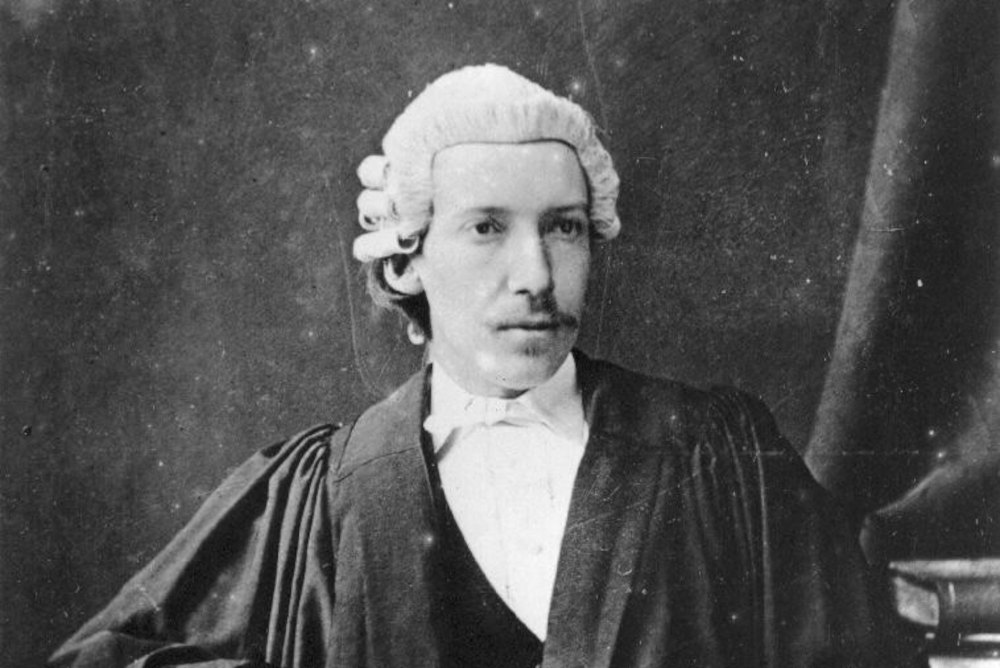
Our Legal Heritage: Robert Louis Stevenson as an advocate – 150 years on

Our Legal Heritage: Robert Louis Stevenson as an advocate – 150 years on

Michael Upton marks the 150th anniversary of Robert Louis Stevenson calling to the Scottish bar.

The Times Literary Supplement once averred that to describe Robert Louis Stevenson as a lawyer was “a howler” (11 June 2004, p. 14). Chambers’ Dictionary defines “a howler” as “a glaring and amusing blunder”.

On this day 150 years ago, 14th July 1875, 24-year-old Stevenson passed the entrance examinations of the Faculty of Advocates; two days later, “a wretchedly cold day”, he was admitted to the office of advocate.

His biographer Claire Harman, defending the TLS, described him as a lawyer “only in a technical sense” (Letters, 25th June 2004). She invoked the consideration that he entered the profession only to please his parents.

Well, if none of us who became lawyers just to please our parents are lawyers in substantialibus, then who shall scape whipping?

Stevenson’s intention to go the bar was no sudden decision. From 9th May 1872, he was conventionally enough of a lawyer to commence his bar apprenticeship with Skene Edwards & Garson, W.S., in Hill Street, Edinburgh. (The firm’s name is rendered variously; as Skene Edwards it merged with Morton Fraser in 2008; Morton Fraser Macroberts is now the heir to its practice.)

He passed the Faculty’s preliminary examinations that November, only for Gladstone’s Lord Advocate George Young (later Lord Young) to advise him to head for the English bar. In October 1873 he travelled to London for the necessary exams, but was prevented from sitting them by illness, which in effect turned his steps back to the Scots bar.

He read law at Edinburgh University in 1873-74. A project of joining the ranks of the many intending advocates who attended German universities in the 19th century, by studying law at Gottingen in the summer of 1872, failed to bear fruit (cf. Alan Rodger, ‘Scottish advocates in the nineteenth century: the German connection’, (1994) 110 Law Quarterly Review 563).

For that year the accounts of the Treasurer of the Faculty record payment of his entry money of £209/9, three years before his admission; over £20,000 in our terms.

A year after Stevenson’s calling, Walter Simpson was his paddling companion in An Inland Voyage; Simpson was a fellow advocate and subsequently a sheriff. For an apprentice and then a pupil at Parliament House supposed to have been aiming for the bar only technically, it is notable that Walter’s cousin Sir Robert Simpson recalled Stevenson’s talk of his prospects as an advocate as “exceptionally interesting”.

Admittedly Stevenson did not regard himself as a born lawyer – because he tells us he only ever encountered one such man. We can date to Sunday 27th June 1875, a fortnight before his admission to the bar, the walk that he took from Swanston to Glencorse, which in that evening he described in a letter to his beloved Frances Sitwell:

“I’ve been to church, and am not depressed – a great step. I was at that beautiful church my petit poëme en prose was about. … old Mr. Torrence preached – over eighty, and a relic of times forgotten, with his black thread gloves and mild old foolish face. One of the nicest parts of it was to see John Inglis, the greatest man in Scotland, our Justice-General, and the only born lawyer I ever heard, listening to the piping old body, as though it had all been a revelation, grave and respectful. — Ever your faithful
R. L. S.”

The cold, wet midsummer of 1875 did not dampen the tremendous joy and excitement Stevenson’s cousin Etta recorded as his reaction to passing the Faculty’s exams. His emotions do not seem wholly attributable to the promised reward of £1,000 which his father then bestowed upon him, though admittedly it was £100,000 at today’s prices.

He needed £10 for the Faculty’s examination fee, and £6/6 as Library dues; payments which again are still be found in the Treasurer’s accounts.

Justified pride may be reflected in his urgent letter of 15th July 1875 to the person then uppermost in his thoughts, Fanny Sitwell:

“Madonna,

Passed.

Ever your
R.
L.
S.”

After that, according to Harman, “The main benefit of his months at Parliament House … was the five- or six-mile walk he performed on the daily promenade of the precincts”.

If so, the promenade may have been lonely, given counsel’s habit of eschewing the windy precincts to rather walk within the warmth of Parliament Hall.

There Etta remembered him pacing conventionally, and Sheriff Charles Maconochie wrote of walking and talking with him often; or as R.L.S. expressed it to his solicitor Charles Baxter:

“And at the Court, tae, aft I saw
Whaur Advocates by twa an’ twa
Gang gesterin’ end to end the ha’
In weeg an’ goon,
To crack o’ what ye wull but Law
The hale forenoon.”

Technically indeed his practice may not have had substance, but many an advocate even today remembers the first morning when he opened the lid of his box, to find that an actual, live letter of instruction sufficed to make him feel very much like a real lawyer.

For Stevenson, that was on 25th July when nine days after calling he received his first instructions.

Charles Guthrie, later Lord Guthrie, was another of the eight intrants to the Faculty in 1875, and successor to the Stevensons as the tenant of Swanston Cottage. He reminisced about Stevenson in that summer of ’75:

“I do indeed remember one morning in the Parliament House, when he came dancing up to me waving a bundle of legal papers in great glee: ‘Guthrie, that simpleton So-and-so has actually sent me a case! Now I have tasted blood, idle fellows like you will see what I can do!’”

On idle days, like other idle advocates, Stevenson tells he found it “a great pleasure to sit and hear cases argued or advised”.

Recollections vary about the extent of his practice; he had a clerk, and his cousin Graham Balfour records his having as many as four briefs: “One piece of business might, he told me, have assumed real importance, but a compromise brought it to an end”.

Andrew Murray, later Lord Dunedin, had been admitted to the Faculty a year earlier; he and Stevenson had a mutual friend in Walter Simpson. Murray recalled Stevenson’s days ‘walking the boards of the Parliament House’, as did his fellow Senator Lord Dundas. Dunedin admitted it was only in after years that “we began to see that we had been friends with a genius”. Out of hours, RLS also trod other boards; amateur-dramatic ones with the Dean of Faculty, John Macdonald (later Lord Justice-Clerk Kingsburgh).

The roll of Senators who knew him continues with Thomas Shaw, Lord Shaw of Dunfermline, another of the 1875 calling. Stevenson was in his sixth year as a member of Faculty when Shaw, William Mackintosh (later Lord Kyllachy) and Charles Guthrie were of the select minority who voted for its gift of the Chair of Constitutional Law at Edinburgh University to be conferred on him. Luckily for the world of letters, they lost.

We shall pick up this tale again tomorrow.

The author thanks Jane Condie, Morag Ferguson, Louise Moyes, Helen Robinson and Angela Schofield, librarians of the Advocates’ Library, for their help, and John Macfie of 17 Heriot Row, Edinburgh, for his comments on a draft of this article. Any errors are the author’s fault.

  • Michael Upton is an advocate, mediator and arbitrator, a Fellow of the Chartered Institute of Arbitrators (FCIArb) and a Fellow of the Society of Antiquaries of Scotland (FSAScot). The second and final part of his article can be found here.

And finally… in the bag

And finally... in the bag

As most of France celebrates the anniversary of the storming of the Bastille, one Frenchman is returning to prison two days after a remarkable escape.

The 20-year-old man, who has not been named, is believed to have escaped from the Corbas prison near Lyon by hiding in a laundry bag belonging to a cellmate who had just finished his sentence.

He was found to be missing on Saturday morning and was finally arrested early this morning, CNN reports.

French prisons boss Sébastien Cauwel said: “This is an extremely rare event that we have never seen in this administration and which clearly shows a whole series of serious failures.”

The man is now facing additional charges of escape as part of an organised gang and participation in a criminal conspiracy.

His accomplice has yet to be arrested.

Legal Case Management Software Updates Matter: Keep Your Law Firm Efficient

Legal Case Management Software Updates Matter: Keep Your Law Firm Efficient

As the legal industry evolves, staying current with legal software is crucial for any law firm. Outdated software can expose your firm to security risks, inefficiencies, and compliance issues. Modern solutions like Denovo offer automatic updates, ensuring a secure and smooth-running practice without IT hassles or downtime.

Want to learn how Denovo can keep your firm safe, efficient, and competitive?

Stay updated on the importance of legal case management software upgrades to boost efficiency and ensure compliance. Read more to understand why keeping your tech current is essential!

Read more

Ysabeau Middleton and Karen Forbes join Axiom Advocates

Ysabeau Middleton and Karen Forbes join Axiom Advocates

Ysabeau Middleton

Axiom is delighted to announce two new members calling today, Ysabeau Middleton and Karen Forbes, both of whom bring a wealth of experience to the practice.

Ms Middleton is experienced in public and commercial law civil litigation. Prior to calling, she gained invaluable experience as law clerk to the lord president. In private practice she advised a number of public authorities on questions of public law, including their statutory obligations, in the context of judicial reviews as well as actions brought against them for damages, and fatal accident inquiries. She also advised a variety of commercial and private clients in relation to actions for breach of contract, professional negligence, consumer rights, intellectual property, property damage and construction disputes.

Ysabeau Middleton and Karen Forbes join Axiom Advocates

Karen Forbes

Ms Forbes comes to Axiom from an in-house role as counsel for major brands such as Heineken and ASOS plc. Ms Forbes has extensive knowledge of commercial contracts, dispute resolution, company and competition law. She is experienced in the resolution of commercial disputes using alternative dispute resolution and negotiated settlements. During her devilling, her experience in restructuring assisted her in extending her knowledge of restructuring and insolvency as a practice area. Ms Forbes also gained valuable experience in professional negligence and construction litigation in the Court of Session.  

Gavin Walker, director of Axiom, said: “I’m delighted that Axiom’s pool of first class talent is being strengthened, yet again, with the addition of two stand-out new calls. Karen brings years of high level corporate and commercial experience, which is extremely rare at the junior bar. Ysabeau is an outstanding lawyer whose time in the prestigious role as the LP’s legal assistant has exposed her to a huge range of public and commercial cases at appellate level. I am sure they will both quickly make their mark at the bar.”

Full details can be found here

In Case You Missed It...

Please note that Scottish Legal News accepts no responsibility for viruses. It's your responsibility to scan attachments.

Scottish Legal News strives to be accurate. If you see anything in our publication which is misleading or wrong, please contact us.

You can find the most up-to-date information about how to contact Scottish Legal News on our website.

© Scottish Legal News Ltd 2026
You are receiving this email because you are subscribed to Scottish Legal News.