Is this email not displaying correctly? View it in your browser.
28th June 2022
Scotland's news service for lawyers
Today’s Headlines
Latest News

Civilian employees of US Air Force who worked at UK bases fail to appeal dismissal of Employment Tribunal claims

By Mitchell Skilling

Civilian employees of US Air Force who worked at UK bases fail to appeal dismissal of Employment Tribunal claims

A judge in the Employment Appeal Tribunal has held that two civilian employees of the United States Air Force working on bases in the UK were unable to raise claims in the Employment Tribunal due to the doctrine of state immunity.

The first claimant, Anthea Webster, was dismissed from her role in October 2017 and subsequently attempted to raise a claim for race and disability discrimination. The second claimant, Caroline Wright raised a claim after she was taken off her existing duties after being diagnosed with epilepsy.

The appeal was heard by Judge James Tayler. Tristan Jones and Celia Rooney appeared for the appellants and Dan Sarooshi QC and Andrew Legg for the respondent.

Public functions

The first claimant, who described herself as being of Afro-Caribbean heritage, contended she was disabled by reason of Complex Regional Pain Syndrome. She had worked at a US Air Force Europe base, RAF Lakenheath, managing records. Following a period of ill health, Mrs Webster was dismissed on 10 October 2017. As part of her claim, she also contended she was, or should have been, carrying out the role of Base Records Manager. The respondent claimed that this was incorrect, as this role was designated for military personnel only.

The second claimant began working as a firefighter at RAF Croughton, another USAFE base, in May 2013. In early 2017 she was diagnosed with epilepsy and subsequently removed from firefighting duties. This was due to US National Fire Protection Association guidelines, which stated that firefighters with conditions such as epilepsy must not have had a seizure for a certain period of time before returning to active duty.

At a preliminary hearing in October 2019, an employment judge dismissed the claims on the basis that state immunity applied to the claims. Both claimants submitted that the judge was wrong to conclude that their role involved them in the public or governmental functions of the USA such as to engage the doctrine.

Counsel for the appellants argued that the judge had focused too heavily on the general context of their employment rather than on their specific duties and failed to give proper consideration to whether each of them was personally engaged in the exercise of public functions. Second, the judge wrongly concluded that the claims would involve ‘judicial investigation’ into the Respondent’s policies and objectives sufficient to engage the doctrine of state immunity.

Inherently sovereign

In his decision, Judge Tayler observed: “The test for state immunity in respect of the employment of a person depends on whether the relationship between the parties arises from the state’s sovereign act in employing the individual, because the functions carried out by the person are sovereign or governmental. In such cases the employment of the individual is inherently sovereign and so covered by state immunity.”

He continued: “On a fair reading of the judgment, I consider that it is clear that the employment judge understood that the underlying test is whether an act is private or sovereign/governmental and that in the context of employment this, as Lord Sumption held in Benkharbouche v Embassy of the Republic of Sudan (2017), ‘will depend on the nature of the relationship between the parties to which the contract gives rise’, which in turn will ‘depend on the functions which the employee is employed to perform’.”

Examining the employment judge’s consideration of the appellants’ roles, Judge Tayler said: “In Benkharbouche Lord Sumption distinguished between three types of employees in diplomatic missions; those who have inherently governmental function at one end and those whose domestic duties are inevitably private. In the middle there are technical and administrative roles that may, or may not, be sovereign or governmental. Determining which side of the line an employee in the middle category falls is inherently a matter of factual assessment that is for the employment tribunal.”

He went on to say: “The roles and functions undertaken by the claimants put them in this middle territory. I do not consider that the claimants are able to establish that the employment judge erred in his analysis of whether state immunity applied. He reached a factual determination that was open to him.”

Judge Tayler concluded: “Key to the determination that state immunity applies was the fact that the claimants were engaged in sovereign activity, the defence of the United States of America and its allies. It is for the United States of America to decide whether to rely on state immunity, the extent to which foreign nationals who work supporting the defence of the United States may litigate in the United States, and what alternative benefits, if any, are provided for foreign staff. Where state immunity applies it is because it is not the business of judges of one sovereign state to adjudicate on the actions of another sovereign state.”

The appeals were therefore dismissed.

Scottish government memo details secret changes sought by the Queen

The Guardian has obtained a Scottish government memo that reveals that “it is almost certain” draft legislation has been altered to secure the approval of the monarch under a procedure called Queen’s Consent.

The memo also confirms that her lawyers may discuss the details of bills with the Scottish government and admits “it is almost certain some bills were changed before introduction to address concerns about Crown Consent”, which means that even MSPs would not be aware that legislation had been amended for this purpose.

The admission comes in the wake of reports in the newspaper revealing how the Queen has used her privileged access to influence ministers to amend UK legislation for the benefit of her private interests or in ways that reflect he opinions between the late 1960s and 2021.

Critics of Queen’s Consent say it allows the monarch to secure legal changes to safeguard her assets without the public finding out.

The official memo states: “It is also almost certain that some bills were changed before introduction in order to address concerns about Crown Consent, however these will not have been ‘amended’ in parliamentary terms and so would not be included in such a list.”

The memo notes that government lawyers contacted the Queen’s Scottish solicitor when they believed her consent would be needed “to discuss the implications of the relevant provision”. “There may also be policy discussions with representatives of the Queen,” the memo states.

Alex Cole-Hamilton, leader of the Scottish Lib Dems, said: “These documents suggest that there has been meddling in the process even before government legislation was first shown to Parliament,” he said.

“It appears as if, with the willing compliance of Scottish ministers, the crown has maintained a back channel to sneak amendments into legislation in such a way as to leave no way for the public or their parliamentary representatives to ever know that changes had been requested or made.

“This is an astonishing overturning of the widely held principle that the monarch does not legislate for her own benefit.”

The Scottish government said it was legally obliged to apply Crown Consent under the Scotland Act and that MSPs were free to ask about the process when it was used.

“While the Scottish government welcomes transparency in relation to this process, it is important that the government protects the necessary private space ministers and officials require to explore issues and develop policy,” it said.

Crown courts disrupted as barristers make plea for decent pay

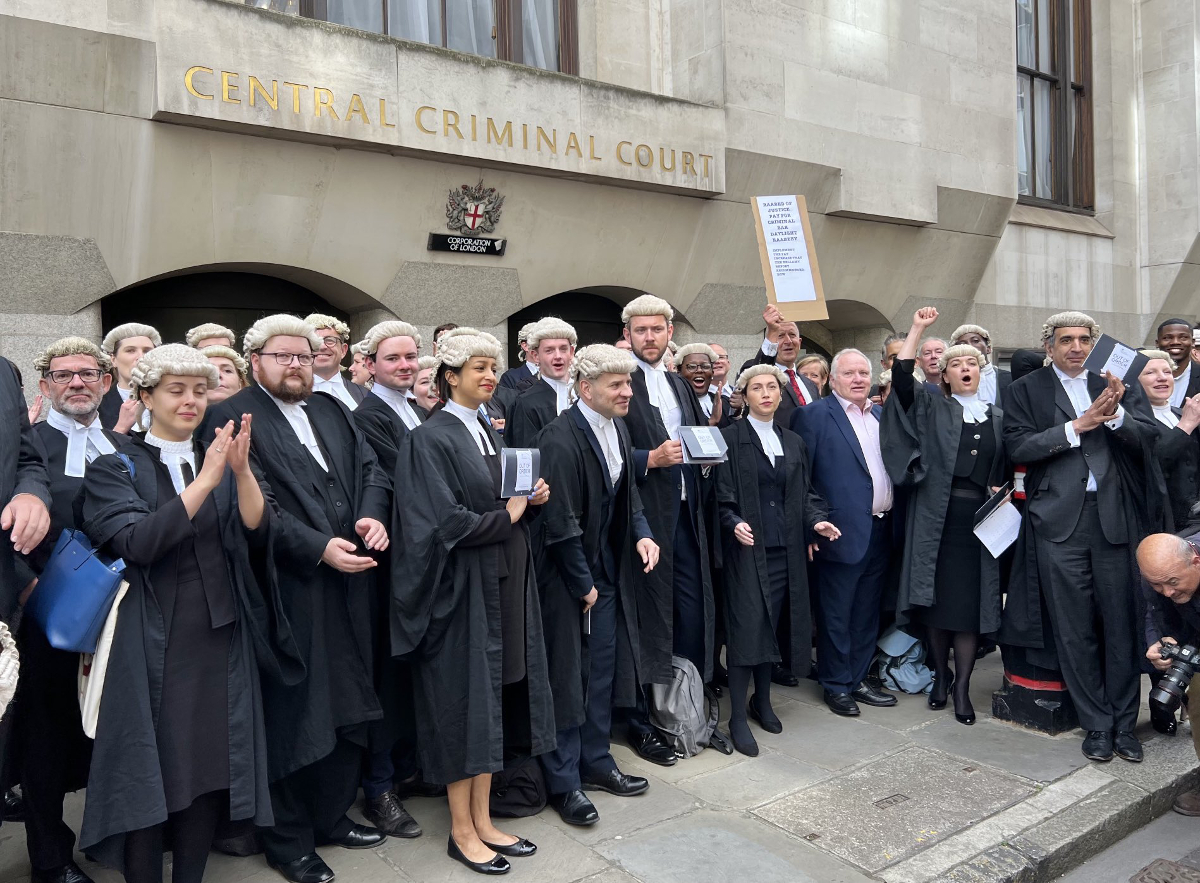
Crown courts disrupted as barristers make plea for decent pay

Credit: Anne Mannion

Eight in 10 Crown Court hearings suffered disruption yesterday as criminal barristers began their first day of strike action over legal aid pay.

The leaders of the Criminal Bar Association (CBA) said that at least six murder trials at the Old Bailey had been delayed due to the strike, which will run sporadically for at least one month.

The Ministry of Justice, however, contradicted the CBA’s claim that 80 per cent of cases had been postponed, saying instead that up to 30 per cent had been “disrupted”.

Barristers demonstrated outside crown courts across the country, from Manchester and Leeds to Birmingham, Cardiff and Bristol.

Jo Sidhu QC, chairman of the CBA, told pickets at the Old Bailey: “They pay to get to court out of their pockets. By the time they come home of an evening, they’ve often got less in their pocket than they started the day with.”

Daniel Calder, a criminal barrister on the picket line, said: “The current system is unsustainable. I don’t think you’ll find any criminal barrister in practice who has not at some point thought about leaving. I think about leaving, to be honest, pretty much every day. We stick around because if we don’t, there will be nobody left.”

Christian Fox, a barrister at Becket Chambers, said: “The assets that are needed for justice have been depleted. Over 250 courts have closed since 2010. That not only means less cases being heard but also increased difficulty for those who rely on public transport to reach a court. Where I live, they closed the court and it is now a hotel. In the next town, they have opened a Nightingale court in a hotel, which at least shows the Ministry of Justice has an ironic sense of humour, however misplaced.”

The CBA said incomes have declined by nearly 30 per cent over the past 20 years and that criminal barristers make an average of £12,200 after expenses during their first three years in practice. The poor remuneration has driven 22 per cent of the junior bar out of the profession since 2016.

Fred Banning: Pro bono and the rewarding opportunities it offers

Fred Banning: Pro bono and the rewarding opportunities it offers

Fred Banning

In 2018, unbeknown to anyone but my wife, I applied for a non-executive role with a leading cancer charity. I was thrilled to make the shortlist.

Two weeks before the interview – in a bitter twist of fate – I was myself diagnosed with stage 4 cancer. It was, I was told, incurable.

It’s a cliche, but illness makes you reflect on your life and your choices. I spent 10 very happy years at Pinsent Masons, working with an excellent team and fulfilling many of my professional ambitions as the firm transitioned from a primarily UK-focussed firm to a truly multinational player.

However, I found myself wishing I had found a way to combine a career I loved with a role that enabled me to give more back. Commuting from a nice suburb into Bothwell Street sometimes felt like living in a somewhat genteel bubble.

I wish I’d had the confidence to realise that my skills and experience could be valuable to others.

The legal profession is really good at this. There’s a recognition that pro bono work is good for your skills, your network and your soul. Many firms have targets for how many hours of pro bono their lawyers should do, and report on those hours annually. Some take pro bono contribution into account as part of decisions around promotion, not least into partnership.

However, that culture of pro bono does not permeate the sector in its entirety. There are believed to be around 30,000 business operations professionals working in the top 100 UK law firms, with experience in everything from HR to finance, marketing, IT, facilities and more. These people are highly skilled.

Yet, how many law services firms prioritise and promote pro bono work by those allied professionals in the same way as they do for their legal experts?

Often, volunteering opportunities are based around civic activity which – though entirely worthwhile – risk selling both charities and volunteers short.

Fifth Day hopes to change that. Our mission is to create a movement that makes pro bono as valued and accepted among allied business professionals within law firms as it is for lawyers. We are a non-profit organisation.

Working in partnership with Reach Volunteering, the UK’s leading skills-based volunteering charity, we connect skilled personnel in law firms with opportunities for rewarding trustee and pro bono work.

Further, we are partnering with law firms to promote and recognise the many benefits that skills-based volunteering brings.

It isn’t necessarily about asking people to do more; it’s about asking them to use what they have.

Many law firms offer their people a number of volunteering days a year, and Fifth Day aims to make it easier to use them fruitfully.

There is an impression out there that charity work is too time-consuming, however most of the opportunities I see are from organisations asking people to offer whatever time they can spare. There is huge flexibility.

I would encourage individuals to actively consider whether pro bono is for them, and visit www.Fifth-Day.org to satisfy any curiosity they have.

Further, we are asking law and professional services firms to sign-up for corporate membership of Fifth Day. There are no fees involved, instead all we’re asking of participating firms is to:

  • Actively promote pro bono activities within operational teams for the purposes of developing skills, experience and contributing positively to society.
  • Recognise the experience gained through skills-based volunteering in the context of recruitment, people development, promotion processes and as a tool to attract and retain the best talent.
  • Introduce their own charity partners to the concept of skill-based volunteering and promote its use as a means to access a ‘bank’ of City-calibre professionals.
    Already, a number of major law firms have come forward to make this pledge.

The potential benefits to third sector organisations and the people they support are self-evident.

Meanwhile, the law firms themselves will benefit from a pool of more widely-experienced, more innovative and more deeply-engaged operational talent.

Fred Banning is founder and director of Fifth Day, www.fifth-day.org

Opinion: Repeat customers – CMA uncovers yet more competition law breaches in the construction sector

Opinion: Repeat customers – CMA uncovers yet more competition law breaches in the construction sector

Charles Livingstone

Charles Livingstone and Jamie Dunne respond to last week’s announcement from the Competition and Markets Authority (CMA) which provisionally found more competition law breaches in the construction sector.

The UK’s competition law enforcement body, the Competition and Markets Authority (CMA) has announced a provisional finding that 10 construction firms broke competition law by colluding to rig bids for demolition and asbestos removal contracts tendered by customers in London and the Midlands, including Selfridges, Oxford University and Bow Street Magistrates Court.

The provisional finding (which remains to be confirmed) is that the firms engaged in “cover bidding” – an illegal practice where firms agree among themselves which of them will try to win a contract, with the others agreeing to submit deliberately uncompetitive bids to ensure they will lose. Those “losers” will then be designated as the winner on other contracts, or in some cases receive a payment from the winner. In this case, one compensation payment found by the CMA exceeded £500,000.

The arrangement was brought to the CMA’s attention by two of the firms involved, under the CMA’s leniency scheme. Those firms will receive a significant discount on, or even blanket immunity from, CMA fines. This is very often how breaches of competition law come to the authorities’ attention – one of the parties involved, perhaps following training or a change of personnel or ownership, realises an employee has broken the law and protects its own position by blowing the whistle.

The other firms involved – six of which have admitted breaking the law, and two of which have not – can, if the CMA confirms this provisional decision, expect to be fined up to 10% of their total group turnover. Such fines can run into the millions, even for relatively small companies. Their directors could also be disqualified, and individuals can face criminal fines and/or imprisonment. Customers who have paid more as a result of a breach can, and frequently do, sue the companies involved for damages (which can sometimes exceed the cost of fines). Competition breaches will also disqualify firms from public tenders.

The construction sector has been here before many times. We previously wrote here about fines, disqualifications and prison sentences for firms and individuals involved in competition breaches, including the exact same conduct involved here (and despite 103 firms being fined almost £130m for cover bidding across England back in 2009). From the sector’s perspective this produces a vicious cycle – the more illegality uncovered in the sector the more regulatory attention it receives, which then uncovers even more. There are reasons construction is frequently identified – in the UK and globally – as one of the highest-risk sectors for competition breaches.

These repeat infringements could stem from firms simply finding the perceived benefits of collusion too hard to resist, or from ignorance of the law and/or a lack of controls on employee behaviour. The former is a problem of deliberate conduct, but construction firms not knowing that their employees are breaking the law, or firms and/or their employees not knowing what the law is, are risks that can be managed and reduced like any other. A bespoke competition compliance policy, together with training for key staff, will demonstrate to clients that a firm has its house in order while also helping prevent breaches (and providing a defence to director disqualification, and sometimes a reduced fine, if a breach happens anyway). It can also help uncover previous wrongdoing, allowing a company involved in a breach to report it first and escape fines, leaving the other participants to carry the can. As the CMA continues to crack down on the sector, firms will not want to be left without a chair when the music stops.

Any firm requiring support with these issues should seek independent legal advice.

Charles Livingstone and Jamie Dunne are lawyers at Brodies.

Experts recommend public interest test for significant land transactions

Experts recommend public interest test for significant land transactions

The Scottish Land Commission has today published recommendations to Scottish ministers to shape the land market and the carbon markets so that they work in the public interest.

The recommendations are:

  • Shaping market frameworks and putting in place regulatory steps.
  • New models of governance and leadership to realise the opportunities for participation and engagement.
  • Using fiscal and tax policy to influence behaviour within the markets.

Chief executive of the Scottish Land commission, Hamish Trench, said: “Scotland has an opportunity to attract significant investment into its land and natural capital. Doing this in a fair and effective way is key to making a just transition to net zero.

“Carbon and natural capital are shining a fresh spotlight on Scotland’s land but the issues are not wholly new.”

The recommendations to the Scottish government address Scotland’s longstanding pattern of concentrated land ownership and include a public interest test at the point of significant land transactions.

Against a trend of increasing off-market sales, the commission also proposes that the intention to sell large landholdings should be publicly advertised ahead of time to improve market participation.

The commission proposes stronger leadership across public, private and voluntary sectors to introduce new forms of collaborative governance and ownership to increase community participation and build on the strengths of each sector to share risk and benefit.

Mr Trench added: “The commission’s recommendations set out practical steps that can be taken to shape these markets and realise the opportunities on the ground. They help deliver on the Scottish government’s land reform programme and its commitment to establishing high integrity, values-led natural capital markets.

“We are addressing not just the risks and opportunities of immediate changes associated with carbon but how the ways we own and manage Scotland’s land can adapt to other new influences, investment and value in future.

“Our advice is for all parties involved in the land sector, who together can shape a responsible approach to Scotland’s land to benefit all.”

The commission will also be publishing a protocol on responsible practice for investment, alongside further work looking at ways to secure community benefit from natural capital.

The Scottish Land commission provides advice and recommendations for law and policy as well as leadership for change in culture and practice and works to create a Scotland where everybody can benefit from the ownership and use of the nation’s land and buildings.

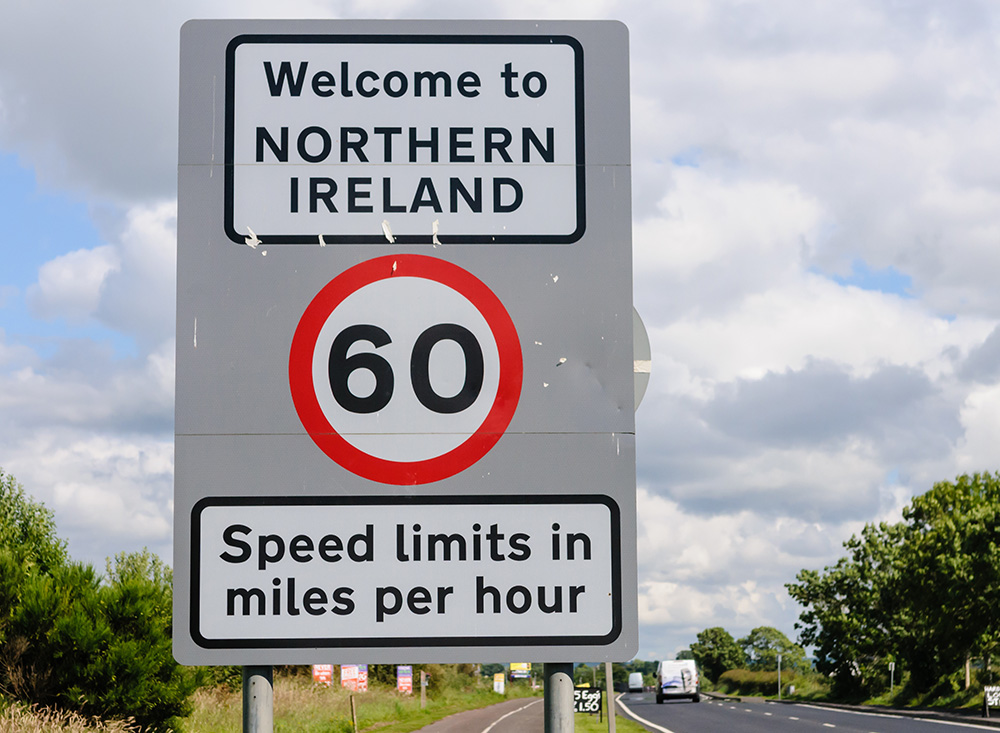
Northern Ireland protocol legislation backed by Westminster MPs

Northern Ireland protocol legislation backed by Westminster MPs

Controversial legislation which will allow the UK government to unilaterally disapply parts of the Northern Ireland protocol has cleared a major parliamentary hurdle.

The Northern Ireland Protocol Bill was approved at second reading in the House of Commons by 295-221, with Conservative and DUP MPs voting in favour and opposition MPs, including Alliance and SDLP MPs, voting against.

Foreign Secretary Liz Truss told MPs that the bill was “both necessary and legal”, rejecting criticism from a majority of MLAs, the Irish government and the European Commission that any unilateral changes to the protocol would breach the UK’s obligations under international law.

Jim Shannon, DUP MP for Strangford, claimed that Northern Ireland “needs this bill not simply for cultural identity, which is imperative, but for financial viability for small businesses due to the effects of the EU’s vindictive approach to block VAT and state aid”.

However, Stephen Farry, Alliance MP for North Down, said the bill was “unwanted, unnecessary and, indeed, dangerous”, adding that it “risks a trade war with the European Union … and undermines relations with the United States of America”.

The European Commission is currently pursuing infringement proceedings against the UK for its failure to fully implement the protocol, which will likely reach the Court of Justice of the European Union (CJEU) within months.

The UK government’s bill includes provision that any disputes over the protocol will have to be resolved by arbitration and not by the CJEU.

Alexandra Dumble: Pride Month – London’s history

Alexandra Dumble: Pride Month – London’s history

Alexandra Dumble

Alexandra Dumble writes about the evolution of Pride in London.

The first official UK Gay Pride rally took place in London on 1 July 1972. This date was chosen as it was the nearest Saturday to the three-year anniversary of the Stonewall riots of 1969. This uprising was a consequence of police harassment at the Stonewall Inn, a popular bar among New York’s gay, lesbian, transgender and crossdressing community.

The 1972 Pride rally was attended by approximately 2,000 people and was met with violence and police hostility. The badges below were created during the 1970s and 1980s and wearing them on the streets was a powerful and dangerous political statement – sometimes met with abuse or violence. The fourth badge, featuring the slogan “Scrap the Section!” refers to Section 28 of the Local Government Act 1988, which prohibited local authorities and schools from “promoting homosexuality by teaching or by publishing material”, depriving generations of LGBT pupils the chance of seeing people like them in books, plays, leaflets or films.

Alexandra Dumble: Pride Month – London’s history

Teachers weren’t allowed to teach about same-sex relationships, and anyone who broke the law could face disciplinary action. This prompted protestors to abseil into the House of Lords and storm the BBC newsroom, as well as a mass campaign to repeal Section 28, which provided the catalyst for the establishment of the gay rights organisation Stonewall. The legislation was finally repealed on 18 November 2003.

The 35th anniversary of the London Pride parade took place in 2007 and by then the event had become one of the largest Pride celebrations in the world. The promotional material had become celebratory rather than combative, illustrating the huge progress achieved by those hungry for change. Ten years later, the 2017 Pride celebrations were particularly significant as they marked the 50-year anniversary of it becoming legal for two men to be in a relationship in England and Wales.

The 2015 London Gay Pride parade attracted one million people, making it the 7th largest gay event in the world and the largest Pride march and gay celebration ever held in the UK. This was trumped in 2019, when London Pride attracted over 1.5 million people, making it the biggest Pride event in Great Britain.

This year marks half a century since London’s first Gay Pride march and is expected to be one of the world’s biggest Pride events this year. The Pride in London parade will commemorate the past 50 years and the evolution of the movement, celebrating and looking forward to the next 50 years while recognising the challenges still faced by the community. In particular, the parade will call on the UK government to:

  • ban conversion therapy for all LGBT+ people;
  • reform the Gender Recognition Act;
  • provide equal protection for LGBT+ communities against hate crime, by making homophobic, biphobic or transphobic hate crime an aggravated offence in line with religious and racial hate crimes;
  • establish a national AIDS memorial which honours and remembers those we have lost and the impact of HIV and Aids and;
  • take a leading role in tacking the violence and discrimination against LGBT+ people around the globe.

Alexandra Dumble is a trainee at Shepherd and Wedderburn

Macnabs raises almost £9,000 through charity will-writing scheme

Macnabs raises almost £9,000 through charity will-writing scheme

Pictured (L-R): Aimee Young, Alan Roughead, Lauren McIntosh, Anita Ovenstone, Sarah Mitchell and Brian Sharkey of the British Red Cross

Macnabs has raised almost £9,000 to support vulnerable people through a charity will-writing scheme.

The firm raised a total of £8,960 for charity will-writing campaign Will Aid last November, after its staff volunteered their time and expertise in return for a voluntary donation.

Donations raised by participating firms during Will Aid month are shared between the campaign’s nine partner charities – one of which being the British Red Cross. The charity is currently one of many ramping up support for people affected by the war in Ukraine, which has seen millions flee their home to escape the conflict. Its vital role includes reuniting refugees with their families.

As well as supporting victims of the war, the charity is also aiding children in Afghanistan and is on hand to provide emergency response here in the UK in the wake of natural disasters or extremism.

Sarah Mitchell, partner at Macnabs, said taking part in Will Aid is an important part of the firm’s community outreach.

She added: “It’s a great way for clients to put their finances in order, think about their future, and make a will, while at the same time donate to some very worthy charities.

“We are happy to give up our time to help the cause.”

The suggested voluntary donation for a single will at a participating firm is £100 and £180 for a pair of mirror wills.

That money can help buy chlorine tablets to provide families with safe drinking water, or urgent medical supplies. It could also fund sleeping mats and blankets for those forced to flee their homes in countries around the world – as well as those in crisis in the UK.

Brian Sharkey, community legacy manager at the British Red Cross, said: “Every day, charities are helping people around the world in desperate need. Initiatives like Will Aid are vital to help charities like ours continue to be there for those through the worst of times.

“We are incredibly grateful to Macnabs for their support.”

Landmark launches Scotland’s first customer onboarding solution – LandmarkAgent

Landmark launches Scotland’s first customer onboarding solution – LandmarkAgent

Richard Hepburn

Landmark Information Group has announced the next generation of its customer onboarding solution, LandmarkAgent – the first one-stop platform in Scotland to bring together core onboarding tools to help estate agents reduce admin, assure compliance, and speed up the transaction process.

LandmarkAgent is the first onboarding solution in the Scottish market to bring together the currently fragmented and siloed processes involved in a property transaction all in one place. It will automate AML and property information collection, with full Scottish title checks through Millar & Bryce.

By removing and centralising the administrative burden and complexity, LandmarkAgent will help agents save time and free up valuable resources so they can focus on better servicing clients and sourcing new properties. For agents navigating an increasingly complex compliance landscape, LandmarkAgent will also alleviate tedious, but critical, processes needed to onboard clients and progress a sale to success with minimised risk. At a time where cybersecurity in the property market is making headlines and brining enhanced regulatory scrutiny this is a valuable evolution for the whole market.

With access to the biggest resource for land and property data in the UK, the platform will automatically surface information and insights on the property and customer, meaning agents become aware of any potential blockers to a transaction’s success as early as possible – mitigating the risk and waste of transactions stalling or falling through.

Informed by decades of experience across the depth and breadth of the property market, LandmarkAgent has been built, managed and maintained by property experts from across Landmark Information Group. It is designed with agents in mind and will enable estate agents across the country to define a solution that best fits their needs: self-service, outsourced to Landmark, or integrated with existing client systems. Clients will have a dedicated customer success manager for expert support, as well as access to a range of training and support - including webinars, AML training and policy templates.

Richard Hepburn, managing director for Landmark’s Millar & Bryce, said: “Estate agents are more stretched than ever before – an increasingly demanding regulatory landscape, coupled with soaring workloads and greater competition has meant that agents who are unable to innovate quickly will soon get left behind.

“We know this is a huge concern for estate agents wanting to stand out in a crowded market and focus on what matters to them – progressing sales whilst finding new listings and filling the sales pipeline.

“Following the launch of Landmark Scotland earlier in the year, our LandmarkAgent solution will enable estate agents in Scotland to carry out the core onboarding tasks in one place for the first time - minimising time-consuming admin, whilst removing risk, and ensuring they stay compliant in the process.”

Quote of the day

Man can find meaning in life, short and perilous as it is, only through devoting himself to society.

Einstein

And finally… liquid courage

A court has been set afizz with the presence of a defendant who turned up sipping champagne.

Cameroon’s former defence minister appeared in court in the capital, Yaoundé, to face corruption charges – with a glass in hand.

Edgar Alain Mebe Ngo’o was charged with diverting public funds and corruption in 2019. He denied the charges and has been on remand since.

At the Special Criminal Court last week, however, photos published by local outlet Actu Cameroun showed him in a double-breasted grey suit and holding a full champagne flute.

James McCrone, Lynsey Morgan and Alistair Sloan join Optimum Advocates

James McCrone, Lynsey Morgan and Alistair Sloan join Optimum Advocates

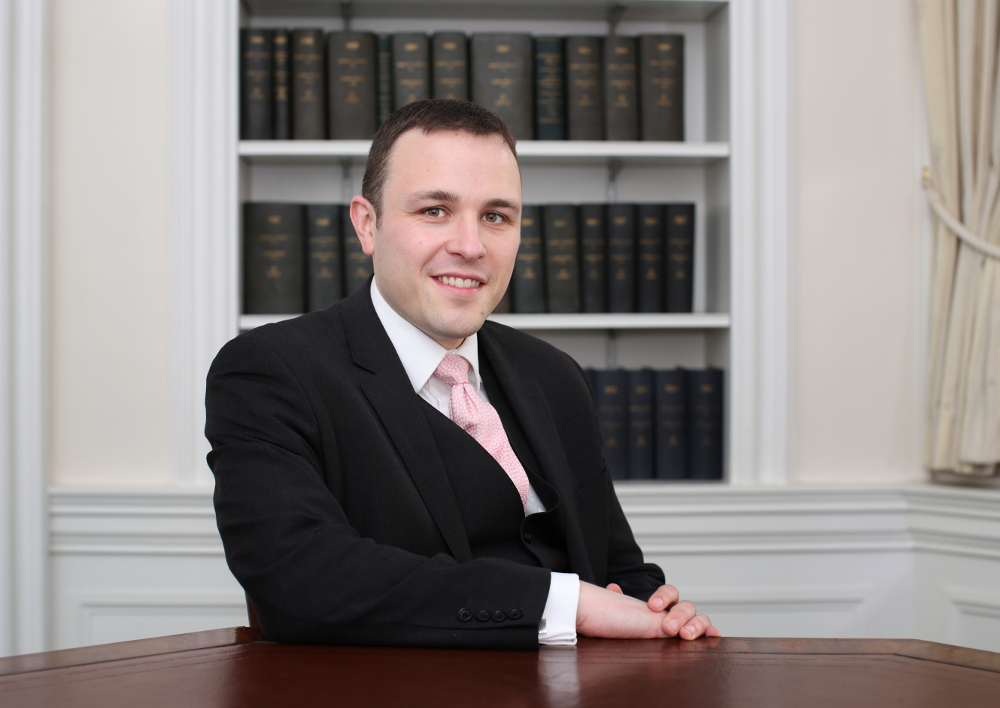
James McCrone

Three new advocates have been received into the ranks of Optimum Advocates.

After the rigour of the examinations and practical training, the stable has welcomed James McCrone, Lynsey Morgan and Alistair Sloan.

Mr McCrone has practised in personal injury law for the last four years. He qualified at one of Scotland’s leading personal injury firms and gained considerable experience acting on behalf of pursuers. Thereafter, he practised in a defender firm where he predominantly acted on behalf of insurance companies. He also conducted numerous debates and proofs at Sheriff Court level during that time. As a devil, he gained experience in criminal law and comes to the bar with a keen interest in developing his knowledge in this type of work.

James McCrone, Lynsey Morgan and Alistair Sloan join Optimum Advocates

Lynsey Morgan

Ms Morgan calls to the bar as a Lord Hope scholar. Prior to calling, she gained six years’ experience as a litigation solicitor, where she specialised in family and child law. As a solicitor, she had a busy practice, advising clients on a broad range of matters including divorce, financial provision, cohabitation, residence, contact and relocation. She was frequently instructed in applications under the Adults with Incapacity (Scotland) Act 2000. Ms Morgan has considerable experience appearing in the sheriff courts. During her devilling, she gained significant experience in criminal law, developing a keen interest in the area.

James McCrone, Lynsey Morgan and Alistair Sloan join Optimum Advocates

Alistair Sloan

Another Lord Hope scholar, Mr Sloan calls after having been a solicitor for five years, primarily in civil litigation. He worked in-house on matters concerning the regulation of care services. In this role he advised on both the civil and criminal aspects of the regulation of care services. When in private practice, he focussed primarily on matters relating to family law, data protection, privacy, freedom of information and property disputes. He has a particular interest in data protection and freedom of information law.

Optimum Advocates stable director, Sarah Livingstone, said: “This is an exciting time for newly called advocates to contribute to our members efforts to return the justice system to normality, after the huge disruption caused by the pandemic.”

Angela Bath, practice manager, said: “I am looking forward to working with James, Lynsey and Alistair as they begin their career at the bar.”

Themis Advocates welcomes new members

Themis Advocates welcomes new members

Pictured: David James (left) and Iain Halliday

Themis Advocates has welcomed its newest members David James, Iain Halliday, Chris Stephen and Jordanna Blockley, after they were admitted to the Faculty of Advocates.

Mr James joins Themis with vast experience in employment law having conducted case management hearings to multi-week evidential hearings, not only on complex discrimination matters but also advising on large commercial transactions and contractual disputes. In addition, David has gained significant experience as a solicitor in clinical negligence and personal injury matters and public and fatal accident inquiries.

Mr Halliday spent eight years as a solicitor specialising in public law, including immigration and asylum law, retained EU law, human rights, and judicial review. He has been instructed in complex deportation, asylum, and human rights appeals including appeals against refusals of returning resident visas, spouse visas, and mental health based private life claims.

Themis Advocates welcomes new members

Pictured: Chris Stephen and Jordanna Blockley

Mr Stephen comes to the bar with a wealth of experience having been a solicitor for 12 years, 10 of which were spent in London working for the UK government, both in the Foreign, Commonwealth & Development Office (FCDO) and Office of the Advocate General for Scotland. He is in the process of becoming dual qualified as counsel and specialises in dispute resolution, employment, commercial property and public law

Ms Blockley has experience in asylum and immigration matters having appeared regularly in tribunals representing clients in asylum, immigration and deportation appeals and has a particular interest in refugee law. She has also recently gained experience in personal injury actions such as workplace accidents, industrial disease claims, product liability actions, stress at work claims, and occupier and public liability claims both for pursuers and defenders.

Welcoming them to Themis Advocates, stable director Andrew Webster QC said: “We are delighted that out new members have chosen to join Themis and we welcome them heartily. Themis Advocates is committed to servicing the needs of our clients and to provide informed and effective advice and representation at all levels. Our new members add to the strength of our provision and we have every confidence that they will flourish in practise. We wish them well in their new career.”

Full profiles can be found at www.themis-advocates.co.uk

Axiom welcomes Neil Deacon and Emma Boffey

Axiom welcomes Neil Deacon and Emma Boffey

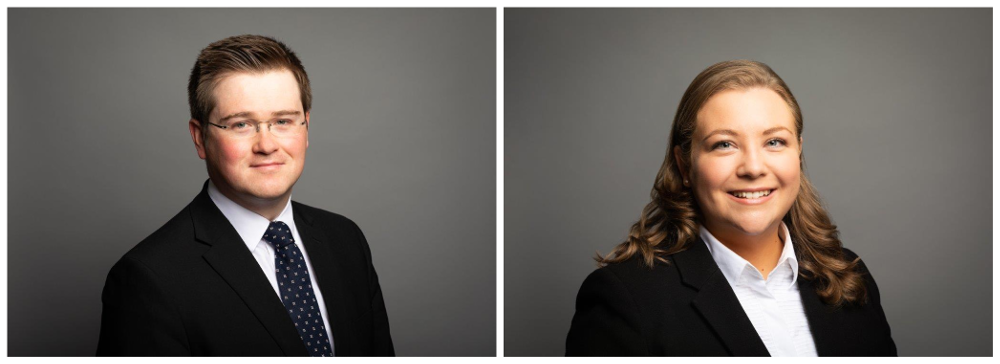
Pictured: Neil Deacon and Emma Boffey

Axiom Advocates is delighted to welcome Neil Deacon and Emma Boffey to the stable.

Neil called to the bar on 23rd June after serving for three years as Law Clerk to the Lord President of the Court of Session. In that role, he assisted Inner House judges in appellate matters across civil law. As a qualified solicitor on secondment to the Lord President’s Private Office, Neil drafted procedural rules for civil courts and tribunals, and advised the Scottish Civil Justice Council and its sub-committees. In particular, Neil worked on a considerable number of cases concerning each of commercial contracts, public law, planning and tax and has more recently during devilling gained greater experience of professional and product liability, as well as commercial and company law. Previously, Neil spent 12 months of his traineeship as a solicitor in litigation teams within the Government Legal Service for Scotland and in the Office of the Advocate General dealing; and has a particular interest in competition law, which he studied at postgraduate level.

Emma Boffey called as a Faculty Scholar on 24th June, following seven years’ experience as a solicitor practising with international law firm, CMS. Emma was qualified as a solicitor in both Scotland and in England & Wales. She specialises in commercial dispute resolution, including contract, technology and financial services matters. She also has a keen interest in company/corporate matters, where she acted as solicitor in a number of leading reported decisions. As a solicitor, Emma was regularly involved in high value and complex first instance litigation before the Commercial Court and appellate proceedings before the Inner House of the Court of Session. She also has experience of resolving matters through mediation. Emma served as president of the Scottish Young Lawyers’ Association from 2014-2016.

Kenny McBrearty QC, director of Axiom said: “Axiom is delighted to welcome both Neil and Emma to the stable, given their backgrounds and experience both are without doubt valuable additions to Axiom. I wish them every success in their chosen paths at the bar”.

Westcor International Limited triples its Scottish team

Westcor International Limited triples its Scottish team

Pictured: Laura Lapsley (left) and Caroline Tait

Demonstrating further commitment to the Scottish market, Westcor is delighted to welcome Laura Lapsley and Caroline Tait to its office in Glasgow

Laura joins as a Commercial Underwriter having worked previously at another major title insurer for the last 7 years.

Laura says “I am thrilled to have joined Westcor at such an exciting time and I am proud to be part of such an experienced and innovative team. I’m looking forward to serving our Scottish clients and delivering creative title indemnity solutions.”

Caroline joins as Westcor’s new Head of Claims with over 30 years’ experience, and has spent the last 9 years at Lyons Davidson as a Senior Manager.

Caroline says “I am delighted to have joined Westcor and to have been given the opportunity to utilise my claims and legal experience. Having the support of our highly experienced national & international team, fills me with overwhelming confidence and excitement.”
Kirsty Noble, Westcor’s Senior Underwriter & Solicitor in Scotland says “It is wonderful to have Laura and Caroline join our team. Both have a wealth of experience in their respective fields that will prove hugely valuable to our clients. Laura joins at time of growth in Scotland. Her appointment bolsters the depth of our Underwriting expertise and enhances our ability to provide a quick and effective service to the profession. Caroline brings years of experience in claims handling and insurance-related disputes. Her addition to the team means that Westcor is the first legal indemnity provider to locate their Claims department in Scotland.”

Should you have any title insurance enquiries, please contact the Scottish team on 0141 737 3079 or email enquiries@westcorintl.com

In Case You Missed It...

Please note that Scottish Legal News accepts no responsibility for viruses. It's your responsibility to scan attachments.

Scottish Legal News strives to be accurate. If you see anything in our publication which is misleading or wrong, please contact us.

You can find the most up-to-date information about how to contact Scottish Legal News on our website.

© E-News Now Ltd 2026
You are receiving this email because you are subscribed to Scottish Legal News.